


Oil prices are at their highest levels since 2022 due to the war in Iran. Brent crude oil, while not the most commonly produced or consumed oil, serves as the world’s most widely used oil price benchmark. In March of 2026, the price of a barrel of Brent crude oil surged to $126/barrel. The average price of a barrel over the past three years has been ~$78/barrel. Let’s take a look.
The Impact Of The Iran War
On February 28, 2026, the U.S. and Israel launched coordinated surprise strikes on Iran. This marked the beginning of the 2026 Iran war. The U.S. and Israel attacked Iran primarily to stop its nuclear program, destroy its missile and drone capabilities, cripple its military and naval power, especially around the Strait of Hormuz, and reassert deterrence. Pundits debate regime change as a secondary or implicit goal. Immediately after the war began, oil prices jumped sharply once markets reopened, reflecting fears of a major supply impact.
Strategic Objectives of the War
- Prevent Iran from acquiring nuclear weapons. The primary stated objective was to deny Iran a nuclear weapons capability. Both governments argued that diplomacy had failed after stalled nuclear talks and that Iran’s uranium enrichment and nuclear infrastructure posed an unacceptable security risk.
- Destroy Iran’s missile and drone capabilities. A second key aim was to degrade Iran’s ballistic‑missile and drone programs, which the U.S. and Israel described as immediate regional threats. Early waves of the campaign focused on missile launchers, production facilities, storage depots, and command‑and‑control nodes to reduce Iran’s retaliatory capacity.
- Cripple Iran’s conventional military and naval power. The campaign also aimed to weaken Iran’s ability to project military power, particularly in the Persian Gulf. Strikes targeted Islamic Revolutionary Guard Corps (IRGC) facilities, air defenses, and naval assets, especially those threatening shipping and U.S. allies.
- Restore freedom of navigation and regional deterrence. U.S. and Israeli officials framed the war as necessary to protect maritime trade and allies after Iran threatened or restricted transit through the Strait of Hormuz. The Strait is a strategic waterway that passes ~20% of the world’s oil. Degrading the IRGC Navy was intended to deter future Iranian attempts to close or militarize the strait and to re‑establish U.S.‑led deterrence in the region.
Where Are We Now?
To date, traffic through the Strait of Hormuz has been severely limited. Iran has gone back and forth on whether the Strait is open. This is largely due to fractured leadership in the country. U.S. officials and multiple news outlets report that Iran laid naval mines in the Strait of Hormuz, prompting U.S.‑led mine‑countermeasures operations. The U.S. Navy has publicly acknowledged it is hunting for and clearing Iranian mines to reopen the waterway safely.
The U.S. Navy implemented a naval blockade that restricts Iran’s ability to sell oil and import goods by sea by blocking all vessels entering or exiting Iranian ports, regardless of flag. This directly interrupts Iran’s seaborne oil exports (and imports) because tankers cannot legally load or unload at Iranian ports under U.S. enforcement. This is reportedly devastating Iran’s economy as the U.S. tries to drive Iran to the negotiating table to agree to a peace deal. All of these activities have driven oil prices up or kept them at higher levels.
How Oil is Priced
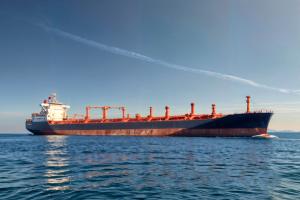
Oil is priced globally because the market treats it as a single interconnected pool rather than separate national markets. That happens for the following main reasons:
- Oil is easy to move and trade. If oil were cheaper in one country than another, traders would buy it where it’s cheap and sell it where it’s expensive. Pricing globally equalizes prices worldwide, aside from transport costs.
- The world uses common price benchmarks. Most deals don’t price oil from scratch. Instead, it’s priced off global benchmarks. Since everyone references the same benchmarks, prices move together globally.
- Financial markets link prices instantly. Oil trades heavily in futures and derivatives markets that operate nearly 24/7. These markets price oil based on expected global supply and demand, not local conditions.
- Refined fuels are global too. Gasoline, diesel, and jet fuel are widely traded internationally. Since crude oil’s value comes from what it can be refined into, global fuel markets force crude prices to be global as well.
If it seems like oil prices go up immediately and take forever to reflect lower prices, you are correct. Economists even have a name for it: the “rockets and feathers” effect. This means:
“Oil (and fuel) prices rise like rockets and fall like feathers.”
My initial thought was that this is price-gouging. Price gouging, in legal and regulatory terms, usually requires:
- Exploitation of an emergency plus,
- Prices that are unconscionably excessive,
- Evidence of intent, collusion, or abuse of market power.
I get the legal definition, but it sure does feel like price gouging to me. I am certain I am not alone.
The Catholic View
As Jesus teaches us, we must always consider how a situation affects people first. In this situation, people are greatly affected by fighting and the subsequent oil prices. The impact is felt more by the poor and those who struggle to make ends meet. Escalating gas prices have put too many people in the U.S. and other countries in the position of deciding whether to buy gas to get to work or buy essentials like food.
Ordinary Iranians, not political or military leaders, have borne the greatest cost of the war. They face widespread civilian casualties, mass displacement, damaged infrastructure, economic hardship, and deep psychological stress. International agencies consistently describe the situation as a major humanitarian crisis, even during periods of reduced fighting or ceasefire.
We have been in this war for two months, and there is little light at the end of the tunnel. The impact on the people globally has been horrific. While the goals are critical, the impact on people must take top priority. While the U.S. tries to force the leadership to the negotiating table, the Iranian leaders cling to their ideology at the expense of their people. Where is the United Nations during the conflict? Where are the global religious leaders from all faiths working to end the conflict? Sitting here at an impasse while the people suffer is not acceptable.
Please share your thoughts about this article in the “Comments” section.
Peace
If you like this article, you might also enjoy:
The Christian Genocide in Nigeria, the World Ignores
Hate Crimes: Understanding the Rising Trends
God Builds His Community Through Christ










 Ad-Free & Subscriber Log-In