


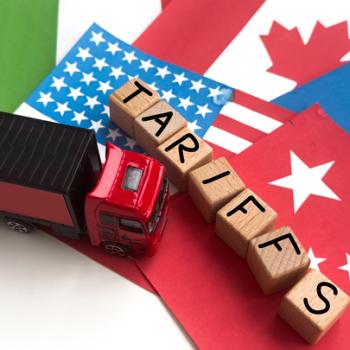
On April 2, 2025, President Trump declared a “national economic independence day, or Liberation Day,” and imposed sweeping reciprocal tariffs on imports, framing it as the rebirth of American industry. Since then, several trade deals have been completed, but there has been some pain for the American consumer. Let’s take a look.
What was “Liberation Day?”
The U.S. has run a persistent trade deficit since the mid‑1970s, with huge gaps beginning in the 1980s and continuing almost every year to the present. Liberation Day on April 2, 2025, was the name President Donald Trump gave to the rollout of sweeping new U.S. tariffs, framed as a “reciprocal” trade policy to counter foreign trade practices. It marked the signing of Executive Order 14257, which declared a national emergency over the U.S. trade deficit and imposed broad import duties. The trade deficit has been driven by:
- Poor trade agreements: They have often been cited as a contributor to the U.S. trade deficit, but economists emphasize that they are not the primary cause.
- Consumer Demand: Americans buy more imported goods than foreign consumers buy U.S. goods.
- Global Supply Chains: U.S. companies rely heavily on overseas production.
- Currency & Policy: The dollar’s strength makes imports cheaper, exports more expensive.
- Energy & Tech: Even with rising oil and tech exports, imports of electronics, vehicles, and pharmaceuticals outweigh them.
Trade Deficits 2000-2023
The U.S. has not run a trade surplus since 1975, and every year from 2000 to 2023 has been a trade deficit:
| Year | Trade Deficit (USD billions) | Notes |
| 2000 | -379 | Beginning of sustained large deficits |
| 2001 | -363 | Slight dip during recession |
| 2002 | -421 | Imports surged post-recession |
| 2003 | -494 | Growing imbalance with China |
| 2004 | -607 | Oil imports drove the deficit higher |
| 2005 | -715 | One of the largest pre-crisis gaps |
| 2006 | -761 | Peak before financial crisis |
| 2007 | -705 | Slight narrowing |
| 2008 | -698 | Global financial crisis reduced imports |
| 2009 | -381 | Sharp drop during recession |
| 2010 | -495 | Recovery widened deficit again |
| 2011 | -559 | Rising oil prices |
| 2012 | -537 | Stabilization |
| 2013 | -476 | Energy exports helped narrow gap |
| 2014 | -508 | Imports rose again |
| 2015 | -500 | Relatively stable |
| 2016 | -502 | Little change |
| 2017 | -552 | Growth widened deficit |
| 2018 | -621 | Tariff battles began |
| 2019 | -577 | Slight narrowing |
| 2020 | -626 | Pandemic disruptions |
| 2021 | -860 | Strong recovery demand |
| 2022 | -959 | Record high deficit |
| 2023 | -797 | Decline from 2022 peak |
Tariff Impact

The impact has been a mixed bag: financial pain for consumers, but more revenue for the U.S. There has been a global impact as well, especially related to influencing behavior to protect the country:
- Job Losses: The U.S. economy has lost about 60,000 manufacturing jobs since Liberation Day, with factory construction down at least 5%.
- Inflation: Consumer prices rose, with inflation climbing to 3.0%, driven by higher import costs.
- Small Business Strain: Smaller firms, lacking lobbying power, shed jobs in large numbers. For example, firms with 1–50 employees cut 40,000 jobs in September and 120,000 in November, while large firms added jobs.
- Consumer Costs: Everyday goods, including groceries like imported fruits, became more expensive. Shoppers reported noticeable price hikes on basics such as strawberries.
- Investment Uncertainty: Arbitrary tariff decisions (e.g., targeting India or Brazil for political reasons) created unpredictability, discouraging business investment.
- Revenue Generation: The U.S. has collected ~$200 billion in revenue since implementing the tariffs.
- Negotiation Leverage: Several major trading partners, including China and the EU, came to the negotiating table after initial tariff shocks, giving the U.S. more bargaining power.
- Stock Market Recovery: After an initial crash (S&P 500 down 10%), markets rebounded strongly. By late 2025, U.S. equities were trading at all‑time highs, as investors adjusted and capitalized on volatility.
- Inflation Stability: Despite fears, inflation has remained around 3%, in line with long‑term averages. Lower energy prices and other import costs helped offset tariff‑driven increases.
- Emerging Market Boost: The tariffs shifted investor attention toward emerging markets, which outperformed developed markets for the first time in a decade, indirectly benefiting U.S. investors with diversified portfolios
The Catholic View
Jesus’ teachings consistently emphasized justice, compassion, and care for the vulnerable. If we apply those teachings to tariffs today:
- Concern for the Poor and Vulnerable: Tariffs that raise consumer prices disproportionately affect the poor, who spend a larger share of their income on necessities. Jesus would likely call attention to how policies burden those least able to bear them.
- Justice and Fairness in Exchange: If tariffs are imposed in ways that exploit or destabilize communities—whether domestic workers or foreign partners—Jesus would challenge leaders to ensure fairness and reciprocity.
- Solidarity and Global Neighborliness: Trade is not just economics—it’s a relationship. Jesus would remind us that our “neighbors” include workers abroad whose livelihoods are affected by U.S. trade decisions. Solidarity means considering their dignity too.
- Stewardship and Responsibility: As a wealthy nation, the U.S. has a responsibility to steward its economic power in ways that promote flourishing, not just profit or dominance.
There have been mixed results from “Liberation Day.” Tariffs have absolutely caused pain for the American consumer. While some prices have come down, many have not, making it difficult for many to make ends meet. They have also generated significant short-term revenue since they have been in place. That revenue indirectly funded the military during the shutdown and will help subsidize the $12 billion Farm Aid package. Let us all continue to pray for economic relief for the country, while removing our trade deficits, and finding common ground with our trading partners.
Please share your thoughts about this article in the “Comments” section.
Peace
If you like this article, you might enjoy:
Fraud Allegations Rock Minnesota’s Nonprofit Sector
The War on Drugs: The Battle for America’s Soul
Obamacare Subsidies: The Great Healthcare Debate














 Ad-Free & Subscriber Log-In