


The United States attacked the compound of Venezuelan Dictator Nicholas Maduro on January 3. Authorities arrested Maduro and his wife, Cilia Flores, and extradited them to New York to face criminal charges. This action was in response to Maduro’s pipeline of drugs coming into the United States. Let’s take a look.
How Did We Get Here?
For much of the 20th century, especially from the 1950s through the 1980s, Venezuela stood among the wealthiest and most stable countries in Latin America. In 1992, Hugo Chavez attempted a military coup. Authorities imprisoned him, and President Rafael Caldera pardoned him in 1994. This was a key turning point that allowed him to re‑enter public life. As the Venezuelan economy collapsed in the mid‑nineties, voter anger fueled Chavez’s election as President. Chavez’s ideology blended Bolivarian nationalism with revolutionary Marxist ideas. After 2005, he explicitly embraced “Socialism of the 21st Century,” and soon afterward, he publicly declared Venezuela’s path toward socialism and began nationalizing major industries.
Nicolas Maduro first assumed the presidency of Venezuela on April 19, 2013, following the death of Hugo Chavez. From that point forward, he has remained in power through multiple contested elections. Observers did not universally label Maduro a dictator when he took office in 2013, but he tightened his control and grew increasingly authoritarian between 2014 and 2019. Maduro’s alleged involvement in drug trafficking dates back to 1999.
The unsealed U.S. indictment states that: “Starting in 1999, the defendants partnered with international drug trafficking organizations to transport thousands of tons of cocaine into the United States.” Maduro allegedly helped manage and ultimately lead the Cartel de los Soles. High‑ranking Venezuelan officials operate this network that traffics cocaine. Prosecutors claim he negotiated multi‑ton cocaine shipments and coordinated with groups such as FARC, the Sinaloa Cartel, and Los Zetas. Prosecutors first brought these allegations in a 2020 U.S. indictment and later expanded them in the 2026 superseding indictment. Meanwhile, analysts increasingly view Venezuela as a “transit hub” for cocaine and fentanyl.
What’s Next for Maduro and His Wife?

Maduro has been captured, transported to New York, and placed in federal detention. The same federal process applies to his wife, Cilia Flores, as she was extradited under the same indictments. Standard federal court processes will be followed:
- Initial Court Appearance / Arraignment – is scheduled for January 5.
- Pre‑Trial Motions and the Defense Strategy – He is expected to file a claim of sovereign immunity (as a former head of state). He is also likely to claim illegal capture or abduction rather than lawful arrest. These motions typically take months to litigate.
- Discovery Phase – The government must turn over evidence to the Defense. Given the scale of the indictment (narco‑terrorism, cocaine importation, weapons charges), discovery could take 6–12 months.
- Pre-Trial Hearings and/or Plea Negotiations – These phases often last months to over a year in complex international cases.
- If convicted, Sentencing and Appeals can be months to years.
The bottom line is that Maduro and his wife will be in the system for months, potentially years. This delays justice to those victims and their families from his drug trafficking.
The Catholic View
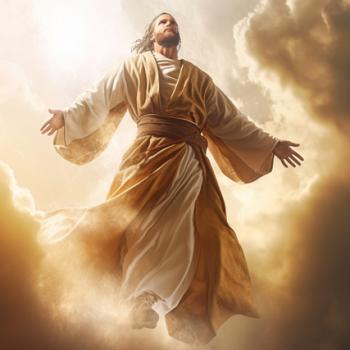
Jesus would confront injustice and corruption directly. Whenever Jesus encountered leaders who exploited the vulnerable, He spoke with piercing clarity:
Luke 11:42 – “Woe to you Pharisees! You pay tithes of mint and of rue and of every garden herb, but you pay no attention to judgment and to love for God. These you should have done, without overlooking the others.”
Given the evidence as well as his violence, oppression, and exploitation of his people, Jesus would call the behavior what it is: sin that destroys lives. Jesus never excused injustice in the name of politics, ideology, or national pride. So how would Jesus view the whole process?
- He would welcome truth.
- He would defend the victims.
- He would call Maduro to repentance.
- He would insist on justice.
- He would never abandon the possibility of redemption.
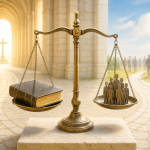
Jesus holds justice and mercy together without diluting either.
Please share your thoughts about this article in the “Comments” section.
Peace
If you like this article, you might enjoy:
Protesting At Abortion Clinics: Balancing Rights and Access
The War on Drugs: The Battle for America’s Soul
It’s a Heart Issue, Not a Gun Issue










 Ad-Free & Subscriber Log-In