


Americans shape Memorial Day through the places we inhabit, the history we carry, and the memories we honor. Observed each year on the last Monday of May, it spans the entire nation—from small-town cemeteries to major national monuments—bringing people together to honor those who died in military service.
In places like Arlington National Cemetery in Virginia or local memorial grounds across the country, the landscape itself becomes a stage for remembrance. Flags line grave sites, ceremonies unfold in public squares, and communities reflect on the sacrifices made in wars fought both at home and abroad.
Memorial Day is more than a federal holiday; it is a shared cultural moment that blends solemn reflection with seasonal transition, marking both remembrance and the unofficial start of summer. For families of loved ones who made the ultimate sacrifice for our country, this is our opportunity to say “Thank You” and honor them on this solemn occasion.
Origins of Memorial Day
The origins of Memorial Day trace back to the aftermath of the American Civil War (1861–1865). This conflict caused unprecedented loss of life, with estimates ranging from 620 K to 750 K soldiers, and reshaped the nation’s geography and identity. Communities across both the North and South began holding springtime ceremonies to honor fallen soldiers by decorating their graves with flowers.
Early observances were often local and spontaneous. Cities such as Charleston, South Carolina, hosted some of the earliest commemorations, where citizens gathered to pay tribute to Union soldiers buried in makeshift cemeteries. In 1868, General John A. Logan formalized these practices by proclaiming May 30 as a national day of remembrance, known as “Decoration Day.” The first large-scale observance took place at Arlington National Cemetery, where thousands gathered to decorate graves with flowers and flags.
Over time, the name evolved into “Memorial Day,” especially after World War I, when the holiday expanded to honor all American service members who died in any war. Congress officially recognized Memorial Day in 1971, moving the holiday to the last Monday in May.
The Meaning of Memorial Day
At its core, Memorial Day honors U.S. military personnel who died while serving their country. Moreover, unlike Veterans Day, which honors all who have served, Memorial Day specifically recognizes those who made the ultimate sacrifice. Our national identity ties deeply to the meaning of the holiday. It represents gratitude, respect, and reflection on the cost of freedom. The act of placing flags or flowers on graves symbolizes a connection between the living and those who have fallen in battle. America celebrates the meaning of this occasion across the country—from national cemeteries in Washington, D.C., to small rural burial sites. Each location reflects a piece of American history and underscores the widespread impact of military service on communities.
Americans Celebrate Memorial Day
Today, Americans observe Memorial Day through a mix of solemn traditions and community activities that vary by region. One of the most widespread practices is visiting cemeteries and memorials, where families place flowers, flags, and wreaths on the graves of fallen soldiers. Public ceremonies are also common. Many towns and cities host parades featuring veterans, active-duty service members, and marching bands. These events often include speeches, moments of silence, and commemorative rituals that bring communities together.
At the national level, officials lay a wreath at the Tomb of the Unknown Soldier in Arlington National Cemetery to honor the nation’s unidentified fallen service members. President Trump will join the ceremony honoring the heroes buried in Arlington, and Americans pause for one minute at 3 PM local time to remember those who died in service.
The Catholic View
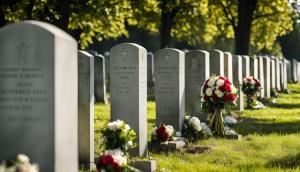
For many Americans, especially those with Christian beliefs, Memorial Day also carries a profound spiritual dimension. The sacrifice of Jesus Christ is often seen as a powerful parallel to the sacrifices made by fallen soldiers. Jesus’ death is understood as an act of ultimate love and selflessness, offering humanity redemption and hope. This idea of laying down one’s life for others resonates deeply with the purpose of Memorial Day, which honors those who gave their lives in service to their country.
Across the United States, Americans express this connection in churches, memorial services, and personal reflection. Sermons and prayers during Memorial Day weekend often highlight themes of sacrifice, service, and love for others, thereby drawing a symbolic link between spiritual devotion and national duty. Moreover, this spiritual reflection becomes especially visible in local congregations, national cathedrals, and military chapels. It is there that communities gather to remember both the fallen and the broader meaning of sacrifice. Consequently, for many, this connection reinforces the idea that the freedoms enjoyed today are protected by military service. It is also rooted in deeper moral and spiritual principles.
Please share your thoughts or any questions about this article in the “Comments” section below.
Stay updated on the latest articles and insights from the column. Subscribe to my newsletter to ensure you receive every new post. Click here to subscribe to the newsletter.
Peace
If you like this article, you might also enjoy:
Are Christians Pro-Life or Pro-Birth? A Closer Look
Pentecost Meaning: A Global Reflection on the Holy Spirit
Forced Organ Harvesting in China: A Disturbing Reality









 Ad-Free & Subscriber Log-In