


The Setting For What John Saw
A time of sweeping persecution of the church preceded John’s writing of Revelation. Domitian, the Roman emperor at that time, targeted John for preaching the gospel and making disciples. As punishment, the ruler exiled John to a small penal colony on the island of Patmos. Revelation 1:9 specifically identifies John’s location there.
Situated in the Aegean Sea, the ten mile long and six mile wide island might seem to be an idyllic spot. Nevertheless, the rugged terrain and relative isolation of Patmos made it more suitable for punishment than enjoyment. Bible commentary describes Patmos as the Roman Empire’s Alcatraz Island. The penal colony housed minimal infrastructure with the prison island functioning as a jail without bars. In fact, it is believed John lived in a dingy cave or grotto while there. Further, the remote, seldom-visited, small, barren island sat out of the way at the northernmost point of the Greek Dodecanese Islands.
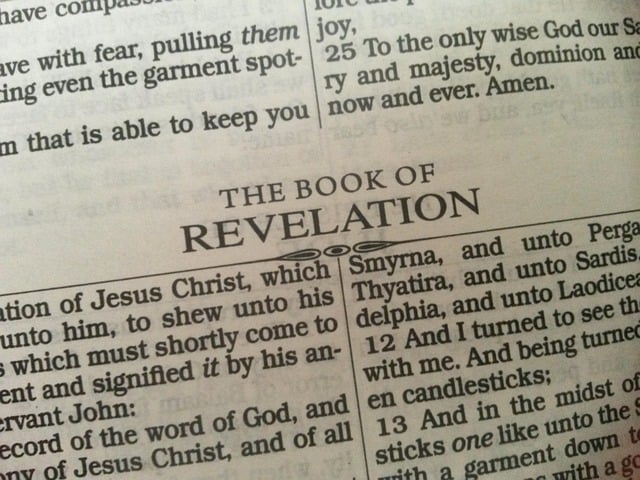
John Receives Instructions To Write What He Saw
In Revelation 1, John explains how he came to write a letter to the seven churches he addresses in that book. While in the spirit on the Lord’s Day, John heard a loud voice behind him like a trumpet. The voice provided John with specific instructions as to what to do. He should write down what he saw and send it to the seven churches in Ephesus, Smyrna, Pergamum, Thyatira, Sardis, Philadelphia and Laodicea.
And who commanded John to undertake this writing? John describes the speaker in great detail in Revelation 1:12-16. He wore a long robe with a golden sash around his chest and was someone like a son of man. The white-haired speaker’s face shone like the sun, and his eyes blazed with fire. Commentators identify the speaker as Jesus based on the description and context. For Jesus Himself to provide these instructions indicates the importance of making a written record of what God revealed to John.
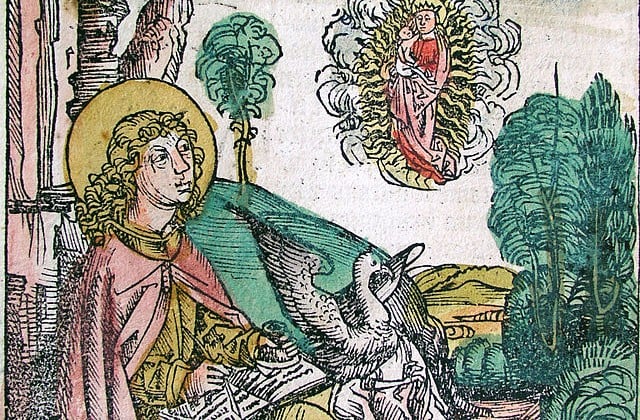
How What John Saw Relates To Believers Today
Today believers recognize Revelation as the final book of the Bible. However, they usually do not spend much time reading it because it scares, overhwhelms, or mystifies them, if not all three. But the fact remains that Jesus commanded John to record these heavenly visions and share them with other believers. Those to receive this written record may seem limited in that Revelation only addresses seven churches. However, the scope intended was actually much broader as the number seven represents completeness. Therefore, the aim was to share what John saw with the entire church and beyond through the apocalyptic writing in Revelation.
While Christians may not fully comprehend all Revelation signifies, at least one takeaway seems evident. Writing down what God has shown a believer stands as a way to fulfill Jesus’s command to go into all the world to share the Good News. Only John experienced his heavenly vision, yet God expected him to record it and pass it along. What any believer experiences with God is unique to them as well. Wouldn’t God likewise want that believer to share what he saw of God’s hand in his life? The command to John sought a written record to document and preserve those lessons and experiences. People of faith today may not write on a scroll or write apocalyptic literature, but they can keep a prayer journal showing answers from God, send communications to others (text, emails, letters) about faith experiences, or write articles, devotions, and books if they have a talent for writing. Once written, share it.

A Personal Example Of Write What You See
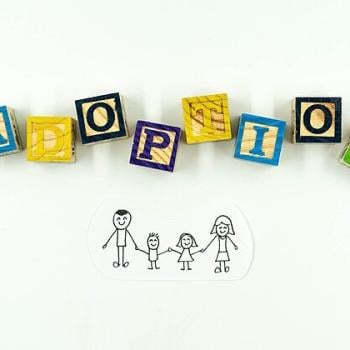
Revelation 1:11 resonated with me in a different way as I retired and concentrated on pursuing my passion for writing. For over three decades, I worked as an adoption attorney placing infants with adoptive parents, usually directly from the hospital following delivery. Over the years, God’s hand working in people’s lives on a regular basis in that context was clear. It offered me numerous faith lessons and a desire to understand the biblical view of adoption. I began writing down the “adventures” experienced in my work with the aim of compiling a book to share with others.
Of course, putting together a book took time and effort. But since God, I believed, directed me to write down and share what I’d seen, I obeyed and kept at the task, trusting the project would come to fruition in His time. Oh, happy day when a publisher offered me a book contract for God Adopted Us First: Faith Lessons From An Adoption Attorney’s Adventures. The book releases on October 7th, and I pray that its words recording what I saw will help believers to understand we were all adopted by God through Jesus as Romans 8:15 states. But if I didn’t write my experiences down, how could other learn and benefit from what God has done? I followed John’s example by writing them down and am putting that writing out in the world. The results are in God’s hands as is John’s written record of his vision. Will you write what you see like John and I did?
JOHN’S VISION IN REVELAITON










 Ad-Free & Subscriber Log-In