

What’s The Moon’s Dark Side?
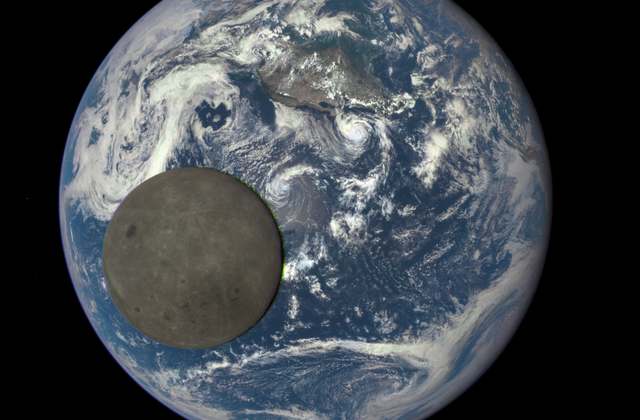
From the Earth’s surface humans only ever see one side of the moon, called the near side. A phenomenon known as tidal locking keeps one side of the moon permanently turned away from Earth, the “far side.” Interestingly, the major moons of our solar system, including Saturn’s Titan and Jupiter’s Galilean moons, are all tidally locked to their parent planet.
Despite the name, though, the unseen part of the moon is not dark. The sun lights up both sides of the moon, with each experiencing day and night in half-month intervals. Although each side of the moon receives the same amount of light, their surfaces are quite different. Large, dark seas of cooled lava, called maria, cover much of the near side’s surface. In contrast, this lava is absent on the far side which features a rugged terrain, many impact craters, a thicker crust, and less seas. Key features of the moon’s dark side include the Sea of Moscow and the Tsiolkovskiy crater, named by Soviet scientists. Additionally, it holds one of the largest craters in the solar system, the South Pole-Aitken Basin, which stretches some 1,500 miles across and 8 miles deep.
Why The Name “Dark”?
The characterization of the far side being the moon’s dark side holds no connection to illumination. Instead, the name simply indicates this side is unseen and thus mysterious. Because of tidal locking, the moon orbits the Earth once in the time it takes for the moon to rotate once. As a result, the moon’s far side never fully comes into view from Earth’s surface.
In reality, the near side of the moon, the one visible from Earth, reflects less light than the far side. Its surface, comprised of an abundance of dark, smooth, low-lying plains arising from ancient seas of molten magma do not reflect light as well.
History Of Viewing The Mysterious Side
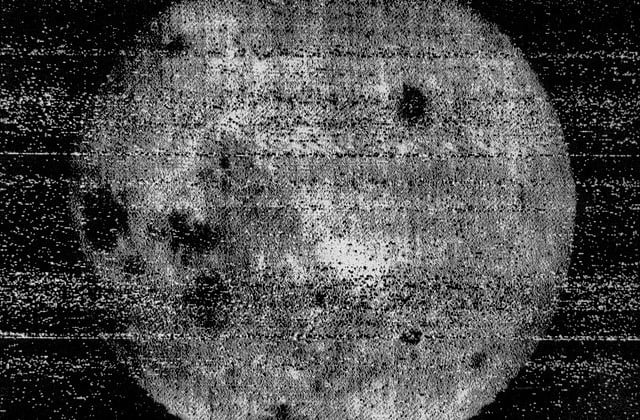
Humans on Earth cannot see it, but spacecraft and astronauts have photographed and studied the moon’s dark side extensively. The first glimpse of the mysterious face came in October 1959 from the Soviet’s Luna 3 spacecraft. The 29 photographs it took captured around 70% of that side of the moon. Human eyes first viewed the moon’s dark side in December 196 when the crew of Apollo 8 orbited the moon.
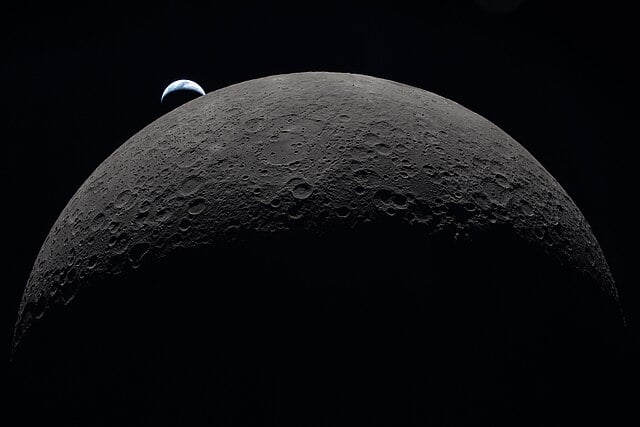
Most recently the Artemis 2 mission gave its four-person crew the chance to get a good view of that side during their lunar flyby on April 6, 2026. As the Orion spacecraft traveled behind the moon, the astronauts witnessed an “Earthset” when Earth dipped below the lunar horizon. They viewed an “Earthrise” when the spaceship came out on the opposite edge of the moon. Also making the crew’s time on this side of the moon feel “dark” was the lack of ability to communicate with Earth as signals between their spaceship and Mission Control were blocked. Fortunately, the astronauts quickly reacquired a signal and reconnected with Mission Control when their craft emerged from behind the moon.
Heavenly Revelations From Moon’s Dark Side Mission
Not all the takeaways from the Artemis 2 mission related to the moon’s dark side. For two astronauts, the space journey led to spiritual revelations. Commander Reid Wiseman experienced something powerful from venturing further into space than any humans previously had gone. Although describing himself as not a “religious person,” being in the vastness of space spoke to him. Perhaps the situation arose from the heavens declaring the glory of God and the skies proclaiming the work of His hands as Psalm 91:1 states. Wiseman felt compelled to request a visit from a Navy chaplain once aboard the carrier tasked with the crew’s recovery. He relates that he broke down in tears upon seeing the cross on the chaplain’s collar. Why did Wiseman request a chaplain? He noted,”There was just no other avenue to explain anything….”
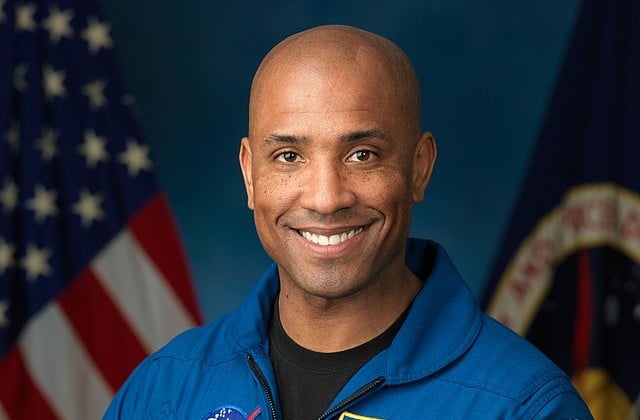
Pilot Victor J. Glover, Jr. sat on the opposite end of the faith spectrum from his fellow crew member Wiseman. An outspoken Christian who attends a Church of Christ congregation in Texas, Glover cites his faith as a major source of inspiration through his career. Accordingly, Glover packed his Bible for a previous stint on the International Space Station. The pilot extended the idea of no atheists being in foxholes to no astronauts flying atop a rocket. His mission to the moon’s dark side provided a reason for Glover to lift prayers to God for protection and the opportunity to speak of his faith openly. Right before the Artemis 2 crew entered the loss-of-signal zone behind the moon, Glover mentioned an important mystery on Earth—that of love. He cited Christ’s commandments about love, to love God with all you are and to love your neighbor. The pilot then sent everyone on Earth love from the moon. The scenes he viewed on the mission merely confirmed, if not deepened, his faith.
Moon’s Dark Side And Other Mysteries
The Artemis 2’s mission to the moon’s dark side achieved success scientifically and in other ways as well. Humans now have more information about and pictures of that mysterious area. Pilot Victor J. Glover, Jr. successfully allowed his faith to shine through in his actions, such as praying in space, and in his words such as referencing Christ’s commands about love. Commander Reid Wiseman began to seriously confront faith based on his celestial journey and trying to explain how what he saw came to be. While mysteries about the moon’s side not visible from Earth and of the specifics of God’s creating the universe may remain, the Artemis 2 mission provides hope man will make it a mission to pursue scientific knowledge as well as faith in and a relationship with the Creator.
New Photos of the Dark Side of the Moon













 Ad-Free & Subscriber Log-In