

“All Scripture is inspired of God…” This is how 2 Timothy 3:16 begins, but what does it mean that Scripture is inspired? And which Scriptures?
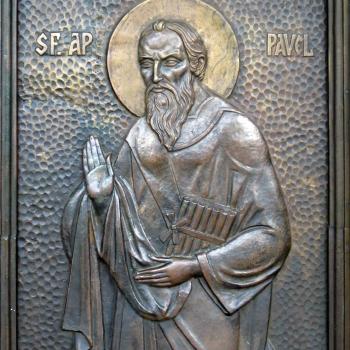
The second question is not too difficult to answer. The letter of 2 Timothy claims to be written by the Apostle Paul who writes to his disciple and colleague, Timothy (2 Tim 1:1–2).* Most scholars agree that this is supposed to be the same Timothy mentioned in Paul’s other letters and the Book of Acts. Timothy became a Jesus believer during Paul’s so-called First Missionary Journey in Southern Galatia during the late 40’s CE.
The holy writings, then, that he has known from childhood (2 Tim 3:15) most likely refer to the Jewish Scriptures—the Old Testament. Timothy probably learned these Scriptures from the Jewish side of his family that included Eunice his mother and Lois his grandmother (2 Tim 1:5).
Nevertheless, New Testament writings also came to be known as “Scripture,” and so there is no reason to deny that “inspiration” in 2 Tim 3:16 would likewise eventually apply to these writings.
We notice already that Paul’s writings are considered “Scripture” in 2 Peter 3:15–16. Perhaps also a primitive Gospel (Q?), if not Luke or Matthew, seems to already be considered “Scripture” in 1 Timothy 5:18 (cp. Luke 10:7/Matthew 10:10 independent of Deuteronomy 25:4).
The first question regarding the meaning of inspiration requires further explanation.

Inspiration as Theopneustos
The Greek term of “inspired of God” is theopneustos (θεόπνευστος), which technically means God-spirited, or as some translate, “God-breathed” (NIV, ISV, AMP, CJB, YLT). Similarly ESV has “breathed out by God.” It appears only here in 2 Tim 3:16 in the Bible. Greek lexicons explain the word in different ways.
-
Eduard Schweizer “πνεῦμα,” in Theological Dictionary of the New Testament. eds. Gerhard Kittel, Gerhard Friedrich, Geoffrey Bromiley, vol. 6, p. 453–55
Schweizer identifies its meaning through various ancient works, the first three of which I confirmed and corrected through the TLG database (Thesaurus Linguae Graecae). The word theopneustos is rare for the first century or thereabouts. It relates to:
- Wisdom as coming from God (Pseudo-Phocylides, Sententiae 129)
- Dreams given by God to dreamers, as opposed to non-inspired dreams/dreamers (Pseudo-Plutarchus, Philosophorum 904–05)
- The divine product or element in all humans (θεῖον δημιούργημα: Vettius Valens Anthologiarum libri ix. 19)
- Streams in the location of Kyme (Cumae?) that apparently assist with divinely inspiring the sybil (prophetess) there (Sibylline Oracles 5:308)
Also, in the Testament of Abraham 20.11[A], theopneustos relates to ointments and perfumes with which angels anoint the dead body of Abraham. This use of the term, though, does not seem to be as relevant for our study as the others, except that it may originate with God.
Given the examples above, we can suggest that theopneustos thus finds its center as a gift from God that enables spiritual insight and revelation.
In light of God-breathed Scripture being beneficial in 2 Tim 3:16, the text is “differentiating the writings ordained by God’s authority from other, secular works.” For Schweizer, “The work of God in the prophets is specifically called inspiration” (Num. 24:2–4; Hos. 9:7). This gives authority to the Prophets and the Writings of Jewish Scripture. For Hellenistic Jewish writers like Philo and Josephus, the writers of these Scriptures are prophets.**
-
Lexham Research Lexicon of the Greek New Testament. Rick Brannan, ed. Bellingham, WA: Lexham Press, 2020: s.v.
This lexicon understands theopnuestos as “produced by the Spirit of God; understood as the air that was physically expelled out of the lungs of God.”
-
Johannes P. Louw and Eugene Albert Nida, in Greek-English Lexicon of the New Testament: Based on Semantic Domains. New York: United Bible Societies, 1996: 417
For Louw and Nida, “In a number of languages it is difficult to find an appropriate term to render ‘inspired.’ In some instances, ‘Scripture inspired by God’ is rendered as ‘Scripture, the writer of which was influenced by God’ or ‘… guided by God.’ It is important, however, to avoid an expression which will mean only ‘dictated by God.’”
-
Moises Silva, ed. New International Dictionary of the New Testament and Exegesis. Grand Rapids: Zondervan, 2015
This work adds that Scripture is “breathed out by God,” regarding theopneustos, and it notes “that Philo describes the giving of the Ten Commandments as the breathing of God’s power.” (1:605; 3:807).
Also, “Sacred Scripture in its wholeness is expressive of the mind of God, but it is so with a view to its practical outworking in life” (1:605).
-
Ceslas Spicq, Theological Lexicon of the New Testament. tr. ed. James D. Ernest. Peabody, MA: Hendrickson Publishers, 1994, 2:193–95.
The adjective theopneustos is understood as “To express the sacred nature of the Scriptures, their divine origin, and their power to sanctify believers.”
The parallel passage for this is 2 Pet 1:20–21, which speaks of the prophets not producing prophecy in Scripture by the “will of humans” but they were “born along by the Holy Spirit, men spoke from God.”
“Underlying this theological conception of a sacred text is the Hellenistic concept whereby the tragic and lyric poets are considered to have written under inspiration from the gods, that they are their spokesmen, addressing their fellow citizens in the name of the divinity.”
Reflections
God chose biblical writers to write the way they did in a manner comparable with other ancient writers, whether writing chronicles, legal material, poetry, wisdom discourses, apocalyptic, biography, or letters. God didn’t send the totality of Scriptures from heaven to humankind on a golden plate! And God does not seem to dictate to humans what to write, as though they were in a trance while God channels his words through them to be written down. There is a very human element to Scripture that is time-bound to the cultures, attitudes, knowledge, and literary methods of the people of their time.
All the same, biblical inspiration considers these writings as sacred rather than common. Scripture is written in a way that seems to reveal the purpose of God through the Spirit, sort of similar to 1 Cor 2:6–16.
The Victorian-era scholar from Princeton, B. B. Warfield, has an understanding that I find very helpful:
Inspiration involves bringing “the right men to the right places at the right times, with the right endowments, impulses, acquirements, to write just the books which were designed for them…. If God wished to give His people a series of letters like Paul’s He prepared a Paul to write them, and the Paul He brought to the task was a Paul who spontaneously would writes just such letters” (Warfield “Inspiration,” International Standard Bible Encyclopedia, 1915, 3:1480; cited from Michael Licona, Jesus Contradicted, 186, who adds that this process included the secretaries who wrote for the authors).
Finally, the context of 2 Tim 3:16 is likewise helpful for understanding theopneustos. Inspired Scripture is beneficial for teaching, for reproof, for correction, for instruction in righteousness, so that the person of God may be proficient, equipped for every good work (2 Tim 3:16b–17).
Notes
* 2 Timothy is among the disputed Pauline writings—scholars disagree among themselves on whether Paul is the actual author of the letter. On this issue, see my post, B. J. Oropeza, “Which Letters of Paul Did Paul Really Write?”
** For Philo, Who is the Divine Heir? 259–266; Life of Moses II.188, 246–292; Decalogue 175. For Josephus, Against Apian 1:37, 40.
It should be added that regarding the Vettius Valens source referenced above, the divine element is aether, which includes air: cf. Michael Licona, Jesus Contradicted, p. 182.













 Ad-Free & Subscriber Log-In