

Why is it so hard to be good? Don’t we sometimes have the impression that Christian life is like running on a treadmill and that no matter what we do, it is never enough?
Nature of Grace
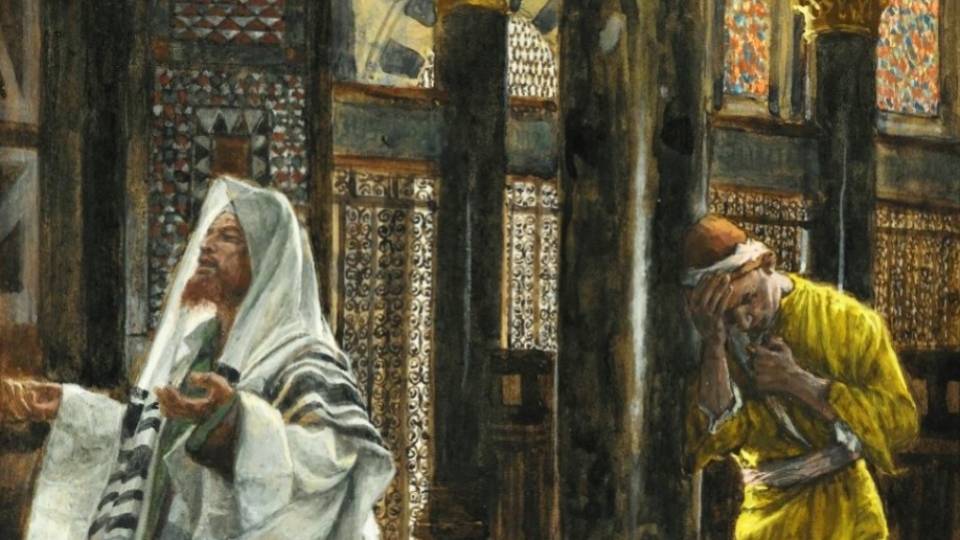
Grace is not an abstract ideal, but a way of life to be actively lived. Jesus illustrates this truth in the parable of the Pharisee and the Tax Collector (cf. Lk. 18:9-14). The Pharisee could have defined grace, but his heart was hardened to the point that he could not receive grace. The Tax Collector, however, knew of his own sinfulness and opened his heart up to receive grace from God.
The Catechism of the Catholic Church reminds us that
Our justification comes from the grace of God. Grace is favor, the free and undeserved help that God gives us to respond to his call to become children of God, adoptive sons, partakers of the divine nature and of eternal life (Catechism of the Catholic Church, 1996).
A Lutheran Martyr?
Dietrich Bonhoeffer was a Lutheran pastor during the Second World War. He joined different resistance groups to try to stop Hitler. He reflected deeply on the meaning of the Christian message in a world torn apart by hate and war. The Cost of Discipleship is probably his most famous work, particularly through his reflection on cheap grace.
Cheap grace is the preaching of forgiveness without requiring repentance, baptism without church discipline. Communion without confession. Cheap grace is grace without discipleship, grace without the cross, grace without Jesus Christ, living and incarnate (Dietrich Bonhoeffer, Cost of Discipleship, p. 4).
Bonhoeffer’s words bring the parable into sharp relief: the Pharisee embodies cheap grace – religion without conversion – while the tax collector reveals costly grace – repentance that leads to life.
Not Sure How to Pray
When the Pharisee and the tax collector walk into the Temple, they face a difficulty that we all face at times. We are not quite sure what to say. We are not sure how to pray. They make up things according to what they have learned and experienced, but one does it better than the other. What can we learn from them?
The Pharisee looks inwardly at himself, but not honestly and sincerely. He brainstorms a list of his own qualities, but without a discerning mind. He believes all the good that he can think about himself. The tax collector looks at himself, but with humility and objectivity. He knows the ways he has fallen short of the ideal. He is ashamed and approaches God, knowing that he is unworthy of so great a God.
Self-Righteousness
The Pharisee judges himself to be righteous. St. Paul writes that “the one who is righteous by faith will live” (Rm. 1:17). The Pharisee assumes his own righteousness because he checks off all the boxes. He knows exactly what is required of him as far as religious duties. He does not seem to worry much, however, about what is going on with his heart. The tax collector approaches God from a different perspective. He does not assume that he is justified in his actions. He may have had reasons for his actions, even the immoral ones, but he never pretends it isn’t God’s place to judge him.
In one of his homilies, St. John Chrysostom offers a vivid image to help evaluate the two men. He compares it to a chariot race. Each chariot is being pulled by two horses. The Pharisee’s chariot is pulled by justice and arrogance. Meanwhile, the tax collector’s chariot is pulled by sin and humility. The chariot pulled by sin will win every time. This is not because of its own power, but by the other horse’s strength: humility. The Pharisee’s chariot falls behind, not because justice is weak, but because arrogance is heavy.
So, humility, by its surpassing loftiness, overcomes the heaviness of sin and is the first to rise up to God. In the same manner, because of its great weight and mass, pride can overcome the lightness of justice and easily drag it down to earth (St. John Chrysostom, Serm. De fariseo ed de publicano).
We Cannot Earn Heaven
The parable emphasizes the fact that we are saved by God’s grace and not merely through our own efforts. We cannot earn Heaven. This does not mean, however, that what we do in this life is unimportant. God invites us to collaborate in our own salvation through the good things that we do. Our justification comes from the grace of God. It is a free gift from him, but one which we must embrace and make our own.
When you interview for a job, are you like the Pharisee or the tax collector? Do you communicate a series of incredible qualities that you do not even fully possess, or are you able to communicate who you truly are? We can think about this from the other side of the table. Would I rather hire someone who can say good things about himself or herself, or someone who can connect deeply on a human level?
In our personal relationships, in our academic career, and even in our relationship with God, we can be like the Pharisee or the tax collector. What are we going to choose?
Maybe it would be good to take a piece of paper and divide it into four quadrants. Write down the names of the four horses in the example from St. John Chrysostom: justice, arrogance, sin, and humility. What in your life identifies with each of these areas? This can help you see where you want to invest your efforts to become holier and more united to Christ. Grace is God’s invitation – but humility is our way of opening the door. Seek justice, love humility, and God will transform your life.
Subscribe to the newsletter to never miss an article.
Check out my Substack.















 Ad-Free & Subscriber Log-In