

Are we building up the Church or breaking it down? Sometimes, it can feel embarrassing to be Catholic. Maybe there is a comment in class that makes fun of some Catholic teaching. Or we are with friends and they say something that is offensive to Catholics and we are not sure how to respond. How can we stand up for the faith in a world that often seems openly hostile to our religion?
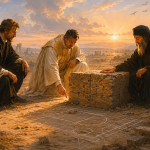
Today, we celebrate the Basilica of St. John Lateran, the bishop’s seat of the See of Rome. This beautiful building was built from the spoils of the Battle of Milvian Bridge. The first centuries were critical for the growth of Christianity within the Roman Empire. Persecution marked many of those years. It seemed like things might take a different turn when the son of a Christian woman rose to become emperor. One major rival stood between Constantine and total power in the West: Maxentius. Their armies clashed at the Battle of Milvian Bridge in 312 and Constantine came away victorious.
Battle of Melvin Bridge
The next year, he made the Edict of Milan, legalizing Christianity in the Roman Empire and proceeded to build the Lateran Basilica on the site of the former palace of the Laterani family, which was confiscated from the sister of Maxentius. All throughout the history of Christianity, we find men and women who build up the Church, just like we find men and women who are tearing it down. If we are not building up the Church, we end up tearing it down.
The first centuries of Christianity were kept to the catacombs (underground burial sites) and private houses in Rome. With the Edict of Milan, Christianity was finally practiced publicly and the first churches were established. The dedication of a Church recalls the worship of the Jewish people at the Temple of Jerusalem and evokes a sense of the sacred. In the Gospel of John, Jesus cleanses the Temple and the disciples recognize the reverence he has for the holy halls of this place of worship.
His disciples recalled the words of Scripture,
Zeal for your house will consume me (Jn. 2:17).
Growth of Churches
Over the centuries, the churches became more elaborate, as people saw this as an opportunity to show their devotion to God in a real way. We should be showing our zeal for God’s presence in the world, in our soul, and in the Church.
We show our zeal for God’s presence in the world when we give witness to who we are as Christians. In the first letter of St. Paul to the Corinthians, we hear that we are “God’s building” (cf. 1 Cor. 3:9). We are called to be a visible sign of God’s presence in the world. Pope Leo reminds us to
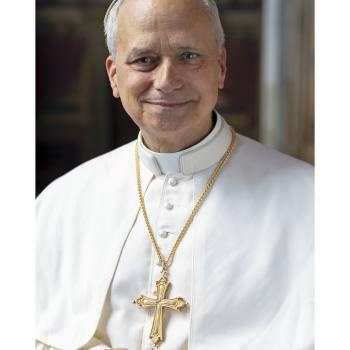
contemplate and rediscover the mystery of the Church. She is not merely a religious institution, nor is she simply identified with hierarchies and structures (Pope Leo XIV, 26 October 2025).
We do a disservice to the Church when we think of this as an external organization rather than the living Body of Christ in which we participate through our Baptism. We either build up the Church through our faith and action or tear her down by our divisive comments and politicization of the Gospel.
Firm Foundations
Paul reminds the Corinthians that he build them up by laying a foundation but that others would continue the process of building. Being Catholic, we are deeply aware that we exist within the context of a tradition. This is not simply a collection of liturgical instruments, songs and rituals, but is rather the continuing work of building up the Body of Christ. Paul remarks
You are God’s building. According to the grace of God given to me, like a master builder I laid a foundation, and another is building upon it (1 Cor. 3:9-10).
We also have to see ourselves within the context of the continuity of the Church. Too often, when we hear conversations about the Church, we can feel more like a bystander than a member of the Church. We are, however, the living stones of the Church (cf. 1 Peter 2:4-5). When we go through Rome, it feels impossible to turn a corner without discovering a new church. Nevertheless, the Church is much more the people than the buildings. The Church is
where God intends to bring us all together into one family of brothers and sisters and make us his people: a people made up of beloved children, all united in the one embrace of his love (Pope Leo XIV, 26 October 2025).
Building up the Church is not a self-serving prospect. It is not about improving statistics of the Church, because it is completely meaningless without the cornerstone, who is Jesus Christ. We have to be careful about how we build up the Church, because we are always building on Christ.
Each one must be careful how he builds upon it, for no one can lay a foundation other than the one that is there,namely, Jesus Christ (1 Cor. 3:10-11).
Standing Up to Peer Pressure
Social pressures can lead us to hide our faith, to politicize the faith, or to make jokes at the expense of the Church. This is not what a Catholic does. We want to give witness to faith and do not want to make comments that tear down the faith. What we think, what we say, and what we do should reflect our desire to build up the Church. We are able to do this because the Holy Spirit is working within us. St. Paul encourages the Corinthians by saying:
Do you not know that you are the temple of God, and that the Spirit of God dwells in you? If anyone destroys God’s temple, God will destroy that person; for the temple of God, which you are, is holy (1 Cor. 3:16-17).
We can’t tear down the Church because to do so would be to tear down ourselves. We are part of the Church. To say “the Church” as if it is a set of cardinals and buildings in Rome is reductionistic. We are the Church by virtue of our Baptism. This doesn’t meant that we can decide Church doctrine on a whim. Rather, we are called to loving obedience to the teaching of Christ and the Apostles that has been handed down to us through the centuries. This week, take some time to speak to one friend about the Church. Be a builder, not a bystander; a cornerstone, not a critic.
Subscribe to the newsletter to never miss an article.
Check out my Substack.













 Ad-Free & Subscriber Log-In