

I am an unabashed beer snob. I am also a single-malt scotch snob, but that’s a conversation for another day. My preferences are for craft beer, dark (porter or stout), with an alcohol percentage of at least 9%. I will wander from this in a pinch, but those are my strongest preferences. There are some iconic beer related stories in my family, beginning with my sons’ introduction to beer more than three decades ago.
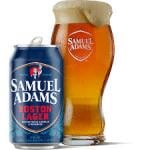 My sons learned early on that although I was generally a laid back and flexible parent, I do have some rules that are not to be violated. Rule number one is no Budweiser, Miller or Coors product is allowed in the house. They learned that we start with Samuel Adams Boston Lager as our base line libation below which we will not descend. My sons learned the rules and carried them with them to college. My youngest son Justin reports that he would bring a six-pack (or two) of Sam Adams with him to his fraternity’s keg parties, six-packs that undoubtedly cost significantly more than a whole keg of the Natty Lite that everyone else was drinking. If you are going to get wasted at a keg party, at least do it in style by drinking something that tastes and smells better than donkey piss.
Rule number two: beer is always poured into a glass or (in a pinch) a plastic cup; it is never to be consumed directly from the bottle. Justin once reported that he had observed his older brother Caleb and Caleb’s homies drinking Guinness straight from a can. This passes rule one, but is a direct violation of rule two. I had to be talked out of disowning Caleb on the spot.
I have long believed that you can tell a lot about a person just by observing what beer that person drinks. Well over two decades ago, my good friend Michael showed up for a get-together at my house with a six-pack of Bud Light. Michael and I had not been friends for that long; had I observed his serious lack of taste and taste buds earlier, we probably would not have become friends in the first place. Stopping him at the door, I said “Oh no, you’re not bringing that shit into my house.” Michael’s confused expression let me know that his beer choice was a result of extreme ignorance rather than misguided taste, so I made it my project from that moment on to be his personal beer tutor and guru.
For the weeks and months following his failed attempt to bring a Budweiser product into my house, Michael and I would meet regularly at the Abbey, a local watering hole five blocks from campus in one direction and five blocks from my house in another. The Abbey has a reasonably good selection of brews on tap for a small establishment, supported by over one hundred more varieties of beer in bottles. During each visit I would introduce Michael to two more acceptable members of the beer community; his training was facilitated by the Abbey’s beer club. The Abbey’s beer menu numbered its beers; as each beer was consumed you got to cross the number off your membership card.
I never got to find out what prize we would receive when all numbers were crossed off, nor did I have to figure out what to do when the only numbers left corresponded to Budweiser, Miller or Coors products, because Michael took a teaching job at a university in Florida and moved away. Jeanne and I visit Michael and Suzy at least once every year. Upon arrival at their house I always check the extra refrigerator in the garage where the beer is kept, just to make sure that Michael is not regressing. It is gratifying to see nothing but Sam Adams products and better in there, as it is also gratifying when Michael takes me to yet another microbrewery in the Tampa area that he has discovered since the last time I visited. It is truly a success story.
So why this discussion of my beer snobbery? Because a week from today I will be headed to the one academic conference I will be attending this academic year: Theology Beer Camp–my son Justin will be joining me there from Colorado. We attended for the first time last year when it was in Denver; we had such a great time that we decided to make it an annual event. Here’s a report that I wrote a year ago upon returning from Denver:
Theology Beer Camp is the brainchild of Tripp Fuller, an important theologian who in 2008 began the podcast Homebrewed Christianity, one of the most downloaded podcasts in theology. It is one of my favorite podcasts. I heard about Theology Beer Camp while listening to an episode early last year, thought it would provide a chance for my son and I to rendezvous while also hearing some progressive theology–we were not disappointed. Here’s a description of Theology Beer Camp (it’s AI generated, just for the fun of it, and it’s pretty accurate).
Theology Beer Camp is an annual event organized by the progressive theological podcast Homebrewed Christianity that brings together scholars, podcasters, and theology enthusiasts for three days of lectures, live podcasts, and discussions—all centered on faith, progressive theology, and craft beer. The event is designed for people to “nerd out” about theology in a fun, communal setting.
In a recent episode of Homebrewed Christianity, Tripp Fuller explained to his conversation partner the inspiration both behind the name of the podcast and Theology Beer Camp.
Underneath the metaphor of home brewed Christianity, when I started it, was a sense that most people’s experience of Christianity is kind of like most people’s experience of beer. Like you think, oh, it’s Miller Lite or it’s Pabst Blue Ribbon. But . . . many people laughh when they think of beer being really light, tasteless American lager. They look like, what are you talking about? There are so many styles and so many flavors and all these ingredients. Why would you judge beer on the worst example?
And a lot of people judge Christianity like that. So I wanted to give people ingredients to brew their own faith by interviewing academics. Where I go, the church has all these resources in the Academy, but they don’t get to go to seminary . . . Hopefully we’ll have more tasty expressions of the faith. Why should we judge Christianity on the most insipid and untasty versions of it?
That’s similar to the thinking behind the title of this blog. Instead of purchasing Christianity in a tasteless, stale, traditional package, what if a person was free to create their own version of the faith using the most attractive ingredients from the many different options? Many non-Christians, for instance, look at what publicly and loudly claims to be Christianity (Christian nationalism, evangelical, fundamentalist, and so on) and recoil, saying “If that’s Christianity, I want no part of it.” Similarly, after one taste of Bud Light or Miller Lite, someone might say “if that’s beer, I don’t want it.”
Fair enough. At Theology Beer Camp you get to experience both faith in its many forms and beer options at the same event. I’m sure I’ll have much to report in a couple of weeks!















 Ad-Free & Subscriber Log-In