

A colleague and friend from the English department contacted me a few months ago and asked if I would be interested in developing a team-taught course with him to be taught for the first time in the Spring 2018 semester. This is one of the things I love about teaching at my college. Because the core program at the center of our extensive core curriculum–a program that I directed for the four years that ended just before my sabbatical last year–is taught by teams of colleagues from all over campus, the opportunities for collaboration across disciplines are abundant, as are the chances to create new courses from scratch. My colleague, with whom I taught for a semester several years ago during his first semester at the college, suggested to me that we create a course called “Apocalypse,” which we eventually described in our official proposal as follows:
This colloquium asks students to think about how civilization – and even humanity itself – might end. With a bang? A whimper? A rapture? A zombie apocalypse? Visions of the destruction of civilization are currently experiencing a renaissance, from literature to television, film, and video games. The “Apocalypse” colloquium is designed to connect this contemporary moment with the long tradition of apocalyptic writing and thinking. Since their appearance, human beings have expressed their fears and hopes about the end of the world. By asking students to think about the end of civilization and its aftermaths, we invite them to reconsider some of the fundamental questions their earlier core classes: what is civilization? what responsibilities do human beings have to each other? what role does the divine play in promoting moral behavior? what is virtue, and does it apply in all circumstances? what things are essential in life? At a time when a poor internet connection or missed flight or speeding ticket can seem like a minor catastrophe, it can be instructive to imagine life in a world without electricity, planes, cars, police, or laws.
Truth be told, this topic is well outside my areas of expertise–I agreed to develop the course with my colleague because I thought it would be fun to teach with him again. In addition, I do have some experience with apocalyptic thinking–I was raised in it.
A new HBO miniseries called “The Leftovers” began a few years ago. T his is the sort of series that I usually have no interest in—something weird has happened (like a huge invisible dome randomly dropping on top of a town) and the entertainment of the series is to see how people deal with the new situation. As my father would have said, it’s fun to observe a cow’s reaction to a new barn door. Shows with such premises are generally too Stephen King-ish for my taste. But the idea kernel behind “The Leftovers” is different.
 On a seemingly unimportant day, October 14th to be exact, millions of people worldwide inexplicably disappear into thin air. Here one moment, gone the next. The first episode of “The Leftovers” drops us three years later into a small Pennsylvania community as they prepare for a third year anniversary celebration (wake? remembrance?) of the dozens of friends and family members who evaporated on October 14. So what makes this bizarre premise any more interesting than a giant dome falling out of the sky? This one hits close to home, because in the parlance of the people I grew up with, the October 14 event that is at the heart of this show is the Rapture.
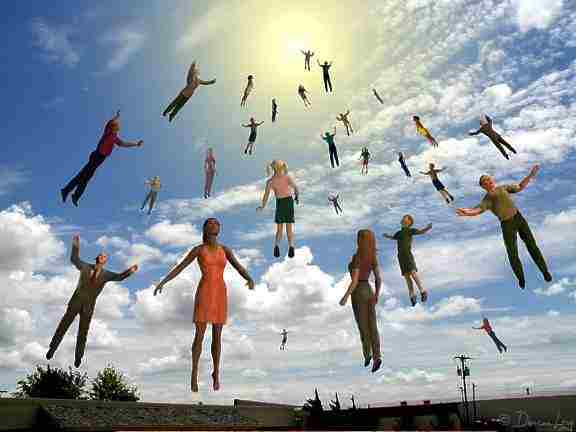 I don’t know if “Rapture Obsession” is an official medical diagnosis, but whether it is or not my family, my church, and just about everyone I knew growing up had it. In spades. The basic idea is simple—Jesus is coming back. And when he does, he’s going to take those who believe in him, who have “accepted Christ as their personal savior,” with him back to heaven (the Rapture) and leave the billions of unraptured losers here on earth for a seven-year period known as the Tribulation during which, literally, all hell will break loose. Armageddon. The Antichrist. The Apocalypse. All of these are triggered by the massive in-gathering of the faithful. At least in my youthful understanding, the primary reason to put up with all of the restrictions, limitations, and general annoyance of being a Christian was to guarantee that one is going and not staying when the Rapture occurs. Not that there was any solid guarantee that I was “in” rather than “out.” I spent many panicked moments as a youngster when my mother wasn’t where I expected her to be thinking that the Rapture had occurred and I was screwed.
Where did people get such a ridiculous idea from? The textual evidence in the Bible, surprisingly, is relatively thin and mixed at best. There are a few cryptic comments in the Gospels, a few more hints in Paul’s letters, but the bulk of the relevant material is in the Bible-closing Book of Revelation and the Book of Daniel from the Hebrew scriptures (as read through Christian filters), material containing predictions so cryptic and visions so strange as to suggest that the authors were on hallucinogenics.  There’s enough there to draw one’s attention if one is so inclined, but not enough for anyone to be sure about what the texts actually mean.
But that didn’t stop my church community from being sure as hell (!) that we were in and just about everyone else (including Catholics, Universalists, and tons of other people who claimed to be Christians) was out. There was plenty of debate about the details. We believed that the Rapture would be the official kick-off of the Tribulation (we were “Pre-Trib” people), but some Rapture believers thought it would happen half-way through the Tribulation (“Mid-Trib”) and some even thought it would happen at the end, just before the Final Judgment (“Post-Trib”—I never saw the point of a Post-Trib Rapture). Pastors preached on it, Bible scholars and experts gave week-long conferences piggy-backed on revivals (my Dad was one of these experts),  and we all went into a tizzy when in 1970 evangelical minister Hal Lindsey’s The Late Great Planet Earth, called “the number one non-fiction bestseller of the decade” by the New York Times, exploded on the scene. And this is not a dated phenomenon. Hal Lindsey’1972 bestselling sequel had the eye-catching title Satan is Alive and Well on Planet Earth; a brief Internet search or a Sunday road trip to the closest megachurch will confirm that Rapture mania is also alive and well on planet Earth. “The Leftovers” is likely to be a big hit.
 I first became aware of the series when Tom Perotta, whose novel the series is based on, made the rounds of my favorite NPR shows the week before its debut. In one of the interviews, Perotta said that part of his research for the book was living as an embedded person in a fundamentalist, evangelical Christian community and church for a certain amount of time, sort of like how the Soviet spies in “The Americans” live embedded in Maryland as a typical middle-class 1980s American couple. Assuming that, as always, the book would be better than the television series (it is), I ordered The Leftovers, published in 2011, from Amazon. It is clear from the outset that Perotta had done his homework well; on page 3 of the novel’s Prologue, the narrator describes that, as one might expect, there is a great deal of confusion and debate about “what just happened” in the weeks following October 14th—was it the Rapture or not? Many argued that it couldn’t have been.
Interestingly, some of the loudest voices making this argument belonged to Christians themselves, who couldn’t help noticing that many of the people who’d disappeared on October 14th—Hindus and Buddhists and Muslims and Jews and atheists and animists and homosexuals and Eskimos and Mormons and Zoroastrians, whatever the heck they were—hadn’t accepted Jesus Christ as their personal savior.  As far as anyone could tell, it was a random harvest, and the one thing the Rapture couldn’t be was random. The whole point was to separate the wheat from the chaff, to reward the true believers and put the rest of the world on notice. An indiscriminate Rapture was no Rapture at all.
My church would have been at the forefront of those who denied that this was the Rapture on theological grounds. It would be understandable if not everyone in our congregation was raptured—not everyone was a good enough Christian. Those in the inner circle would have even been happy to predict who was not sufficiently up to snuff. But non-Christians? Atheists? Catholics, for God’s sake? Underlying Rapture obsession and mania is the very familiar human attempt to put God in a box, to figure out ahead of time what God is up to, what God is like, and what God likes best—then to act accordingly. A rapture such as fictionalized in The Leftovers is such an affront to our best efforts at putting the divine in a straitjacket that it has to be rejected as something other than the real thing. 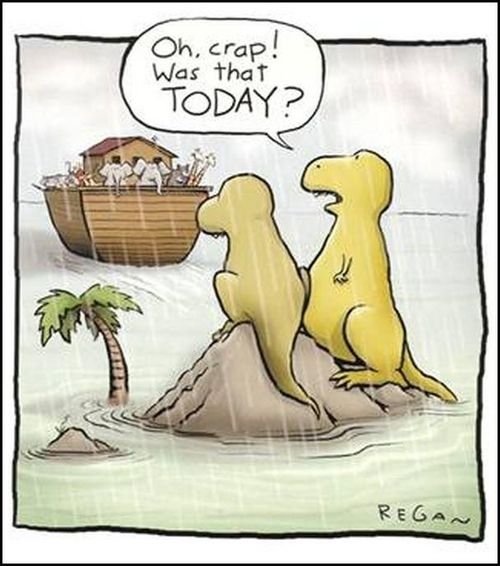 Maybe God threw this pseudo-rapture into the mix early just to test our faith, I can hear someone suggesting, sort of like God planted dinosaur fossils and made the earth appear to be several billion years old rather than the few thousand that the Bible says, just to fuck us up (for a good reason, of course).
Truth be told, though, the random harvest described in The Leftovers sounds exactly like something God might do, once as many human boxes and straitjackets for the divine as possible are left behind. God’s apparent randomness and lack of respect for our human obsession with fairness and justice is on display everywhere. It is entirely understandable that Why Do Bad Things Happen to Good People? has been a record-breaking bestseller. The very process of natural selection that has and continues to produce the vast diversity of living things is energized by randomness and chance. For those who insist on going to their favorite sacred text to get a handle on the divine, you need go no further than Jesus’ observations that “it rains on the just and the unjust” and “the first shall be last, and the last shall be first.” Every time we believe we have God figured out, it is good to remember that if you want to give God a good laugh, just tell her your plans.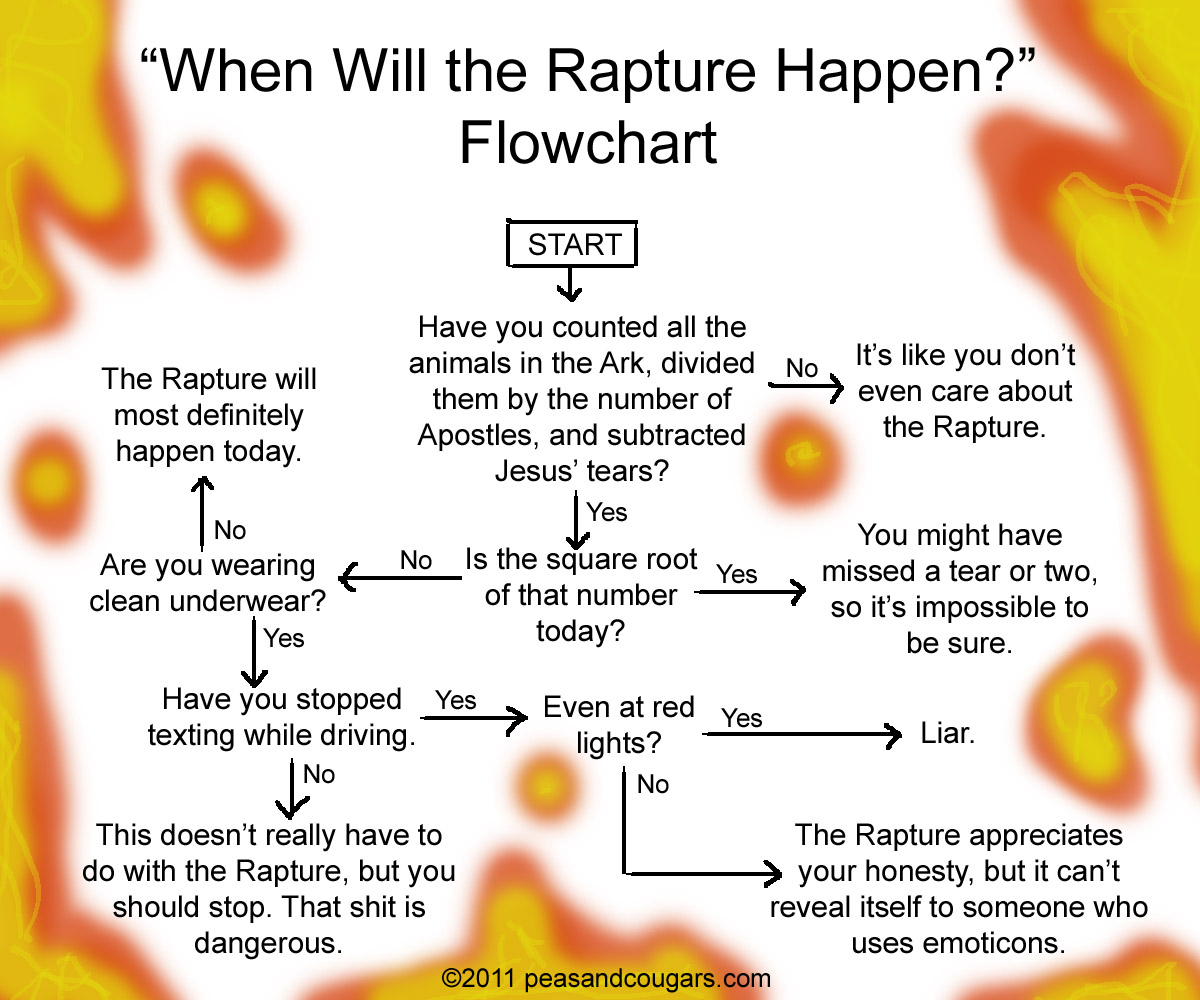











 Ad-Free & Subscriber Log-In