

Many years ago I read a paragraph in Vera Brittain’s Testament of Youth that was the single most helpful piece of advice I ever received concerning teaching. Brittain writes that
There is still, I think, not enough recognition by teachers of the fact that the desire to think–which is fundamentally a moral problem–must be awakened before learning can occur. Most people wish above all else to be comfortable, and thought is a pre-eminently uncomfortable process.
The idea of thinking and learning as being intimately connected to the desire to think and learn has driven my pedagogy for a long time, but perhaps even more important in this passage is Brittain’s claim that wanting to think and learn is a moral issue. In our contemporary world, learning is often understood in terms of processing information and then applying it, usually with a view to becoming a more and more efficient and productive member of society. But how might the cultivation of thought and learning be transformed if we paid close attention to the moral aspects of these foundational human activities?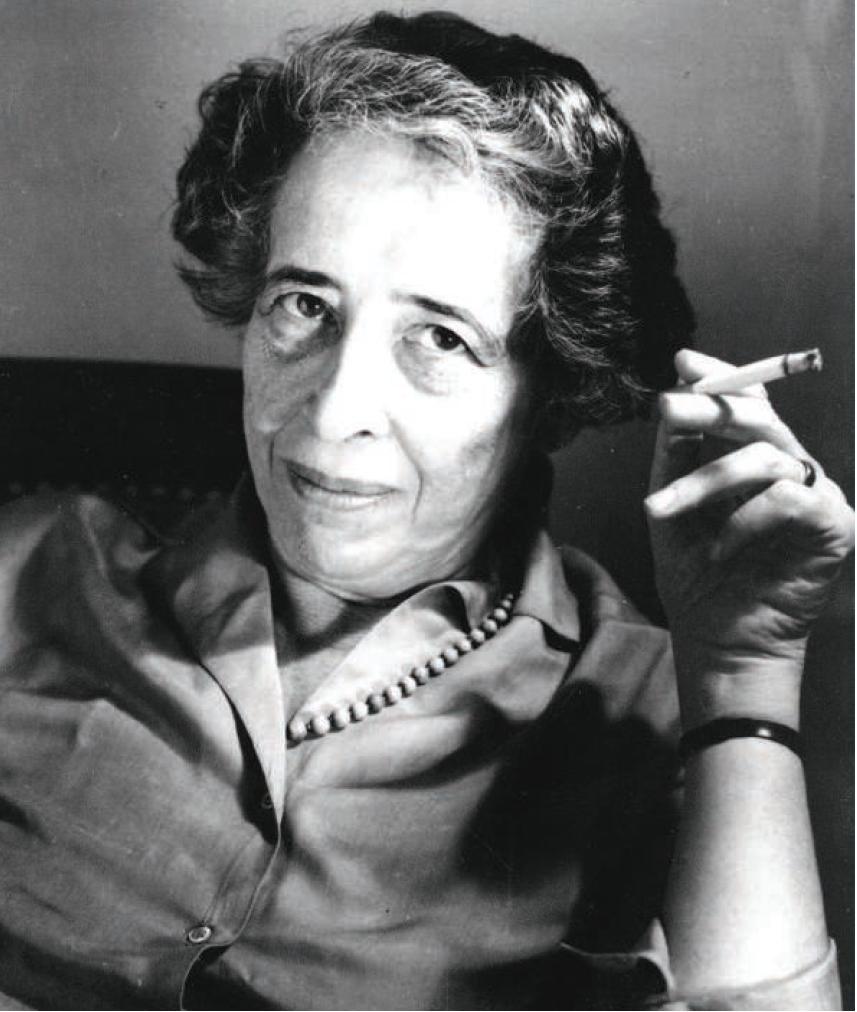
Hannah Arendt once said that “every year the world is invaded by millions of tiny barbarians. We call them children.” We all know that part of the process of civilizing these little barbarians is equipping them with values and with a moral compass, as well as providing training in how to use these moral tools. If thinking well and being committed to lifetime learning is part of being a moral human being, then muddled and sloppy thinking, as well as the attitude that no further learning is necessary, are moral failings of the same order as lying, cheating, and stealing. We live in a world in which we are in danger of—if we have not already arrived at—cognitive immorality. Not because of the immoral contents of our thoughts, but rather because of our collective unwillingness to commit to the hard work of thinking clearly, work that takes the sort of time and commitment that modern human beings are often loathe to engage with.
I began thinking anew about the moral features of thinking and learning after listening to an interview that Krista Tippett did on her On Being radio program with Maria Popova.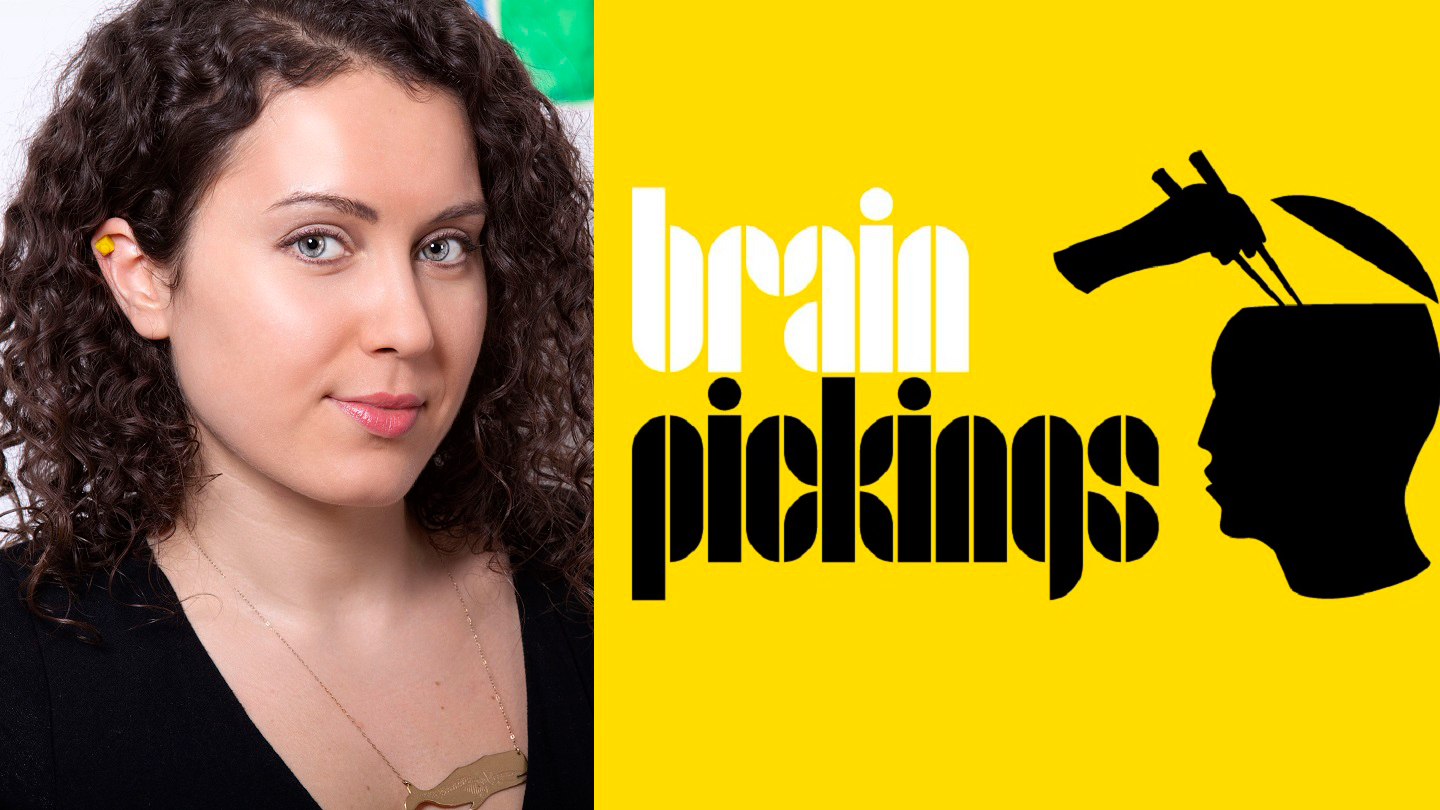
Maria Popova: Cartographer of Meaning in a Digital Age
Popova is a bit of social media phenomenon; she is most notable for Brain Pickings, a popular blog that began as a weekly email to seven of her friends. Now a website, Twitter feed and weekly digest, Brain Pickings covers a wide variety of cultural topics: history, current events, and images and texts from the past. In the introduction to their conversation, Tippett called Popova a “cartographer of meaning in a digital age.” Popova observes that
As a culture, we seem somehow bored with thinking. We want to instantly know. We’ve been infected with this kind of pathological impatience that makes us want to have the knowledge but not do the work of claiming it. The true material of knowledge is meaning. And the meaningful is the opposite of the trivial. And the only thing that we have gleaned by skimming and skipping forward is really trivia. The only way to glean knowledge is contemplation. And the road to that is time. There’s nothing else.
I can think of no better contemporary example of this than our current political cycle. The sense I get is not so much that candidates and voters are incapable of thinking. Rather, there appears to be general agreement with  Violet, Dowager Countess of Downton Abbey, who once quipped that “All this thinking is overrated.” Donald Trump or Bernie Sanders telling us “I will do this” should be enough—why insist on an explanation or account of how this will be done? Most of us remember being told on a middle or high school mathematics exam to “show your work”—no shortcuts allowed, in other words. How then have we come collectively to a place where we cannot be bothered to “show our work” when it comes to some of the most important decisions we will make in the next several years?
During my childhood and adolescent years I was occasionally told, particularly by family members and people who attended our church, that “you think too much.” A corollary was often that “things really aren’t that complicated.” The truth, of course, is that there are very few times in life where more thought is unnecessary, and things really are that complicated. There is a strong tendency in human nature to want things simplified; even more, there is a strong desire to move from premise to conclusion without having to do any of the nasty and time-consuming work in between. Part of moral and cognitive maturity is to move forward with intelligence and conviction through a very complicated and messy world. We would like everything to be reducible to a bumper sticker or sound bite but, as  William James reminds us, “Nature is not bound to satisfy our presuppositions. In the great boarding house of nature, the cakes and the butter and the syrup seldom come out so even and leave the plates so clean.”
The moral aspects of teaching often begin with resisting the temptation to deliver a product, to give the customer what she wants. Sometimes, Maria Popova suggests, what people want is the last thing they should get.
Giving people what they want isn’t nearly as powerful as teaching people what they need. There’s always a shortcut available, a way to be a little more ironic, cheaper, more instantly understandable. There’s the chance to play into our desire to be entertained and distracted regardless of the cost. Most of all, there’s the temptation to encourage people to be selfish, afraid, and angry. Or you can dig in, take your time, and invest in a process that helps people see what they truly need.
I try to focus on the importance of “digging in” every time I’m in the classroom. But observing myself outside of the classroom, I find that I have a lot of work to do. I spend time on Twitter, even though communicating in 120 characters or less is hardly an example of in-depth discourse. I quickly block or unfriend Facebook people who clearly hold political views that are radically different from mine. I bristle when someone challenges me in the “Comments” section of this blog. If I am going to call for moral maturity in thinking and learning, that maturation process begins with me.














 Ad-Free & Subscriber Log-In