

I wrote this essay last Saturday as a reflection on Muhammad Ali’s memorial service that I had watched the day before and scheduled it to go out on Monday morning. Then the Orlando massacre happened early Sunday morning; I moved this post to this morning and posted something different on Monday.
As I reread today’s essay this morning, it strikes me that we can learn a great deal from the life of Muhammad Ali about how to respond as individuals and communities to such horrific events. The life of one of the greatest boxers ever should inspire us to come out of our corners.
T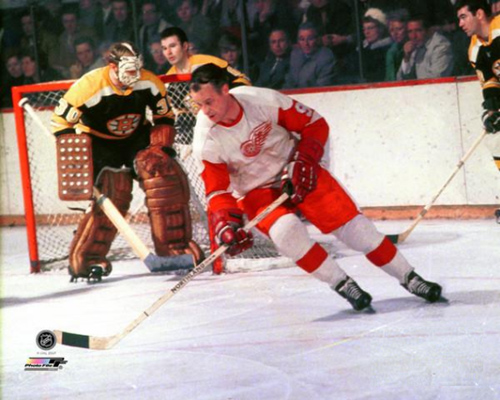 wo of the greatest sports stars of their generation—indeed, of any generation—passed away last week. Gordie Howe, known as “Mister Hockey,” died at the ripe old age of eighty-eight; he was a star on the Detroit Red Wings when I was a kid, so long ago that there were only six teams in the National Hockey League. Each team had a large collection of stars, but Howe was the greatest of them all. He played for so long (well into his fifties) that he described his play toward the end of his career as “poetry in slow motion.” He was not only one of the greatest scorers in hockey history, but he was also tough as nails—as players from bench warmers to superstars tended to be in those days. Scoring three goals in one game is called a “hat trick;”
  Howe patented the “Howe hat trick,” which was awarded to a player (often him) who scored a goal, got an assist, and got into a fight in one game.
Then there was the champ. I spent three hours on Friday afternoon watching the remarkable memorial celebration of Muhammad Ali’s life in Louisville, Kentucky. I wrote last Saturday about my admiration for Ali and the subtle influences that his life had on mine during my formative years. I am not usually inclined to watch an interminably long memorial service, even one for a man who was one of my heroes. I’m not sure that I would have sat through such an event for Jesus had there been one and had I been invited. But the service was riveting—it should be required viewing for any person who believes that our world is beyond hope. Just the visual of representatives of five different faiths on stage and delivering eulogies at a memorial celebrating the life of the world’s most famous Muslim was beautiful to behold. 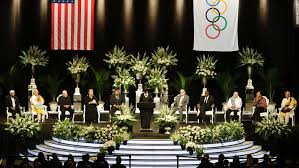 There was not a false note in any person’s remarks—there was nothing perfunctory going on. I turned coverage on as Ali’s funeral procession was still inching toward the downtown sports arena in Louisville where the memorial took place. Thousands of people lined the nineteen-mile route from Ali’s childhood home to the arena; many ran up to the hearse bearing Ali’s casket just to touch the side of the vehicle or to run alongside while shadow boxing as the champ used to do. Inside the arena there was no decoration other than an American flag hung with an Olympic flag next to it hanging over the stage. No pictures, no video montage of Ali’s life. Simply as many thousands of Louisvillians as could be stuffed into the arena to share in the celebration of a remarkable life.
Eulogies from two presidents were part of the program. President Obama, unable to attend because his oldest daughter was graduating from high school on Friday, sent his senior advisor Loretta Lynch to read his remarks. The program concluded with a beautiful ten-minute remembrance from Bill Clinton. 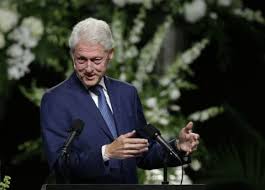 Clinton, who is as good at capturing the mood and emotion of a room as any person—president or otherwise—that I have ever seen, did not disappoint. Describing Ali as “a universal soldier for our common humanity,” the former President chose to focus his remarks, not primarily on what made Ali unique and remarkable, but rather on what every one of us shares in common—both with the champion and with each other.
The first half of Muhammad Ali’s life was energized by his many stunning natural gifts, from physical speed and strength to intelligence and eloquence, gifts that set a unique trajectory to his story. He chose to write his own narrative and embraced the consequences of the story he lived. But Clinton’s eulogy focused on the second half of the champ’s life.
The first part of his life was dominated by the triumph of his truly unique gifts. The second part of his life was more important because he refused to be imprisoned . . . 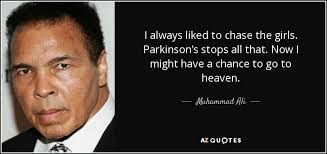 In the second half of his life, he perfected gifts that we all have, gifts of mind and heart. It’s just that he found a way to release them in ways large and small.
The second half of Ali’s life, of a course, was lived with Parkinson’s disease, a fate which, from the outside at least, seemed particularly cruel. It was painful to see such brilliant physical and mental abilities slowly and inexorably eroded. But those who knew him, whose lives were touched by the ailing champion, experienced something quite different.
Muhammad was a truly free man of faith. Being a man of faith, he realized that he would never be fully in control of his life. Being free he realized that there would still be opportunity for choices. It is the choices that Muhammad Ali made that have brought us all here today.
Muhammad Ali was as free as a human being can be, free because he dared to choose and to embrace the responsibility for those choices. But, as President Clinton pointed out, it was his profound and deep faith, the faith for which he was willing to sacrifice his title and place his freedom at risk, that caused him to flourish in the midst of adversity.
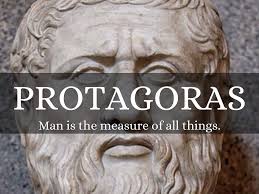 Clinton’s insight is a powerful one—“Being a man of faith, he realized that he would never be fully in control of his life.” Each human individual’s natural orientation reflects what Ali so often said publicly: “I am the greatest.” As Protagoras reportedly said, each of us believes that we “are the measure of all things,” and few of us ever have as much empirical evidence to support the claim as Ali did. But a person of faith knows that there is a great deal more going on in heaven and earth than meets the eye. There is much that is beyond the control of even the most powerful and charismatic person, much that limits the choices of even the most influential and effective individual. But our choices are never entirely taken away, even when the scope of our freedom is severely limited. With his remarkable physical and intellectual gifts reduced, Ali’s choices were those that are available to even mere mortals—the choice of how to respond freely to what is beyond our control. Ali chose to release the gifts of love, gratitude, joy and peace into the world, rather than bitterness, anger, and regret. And, as Bill Clinton noted, it was those choices that defined his life and made him a beloved figure and icon in a world badly in need of something good to embrace.
The outpouring of love for Muhammad Ali over the past week is an appropriate tribute to a man who was “The Greatest” in many ways. But as several people on the platform at the memorial service reminded us, Ali’s greatness was not primarily because of his special gifts and abilities. His greatness was rather due to his having made extraordinary use, throughout a life marked both by great triumph and crushing adversity, of choices and gifts that are available to all of us on a daily basis.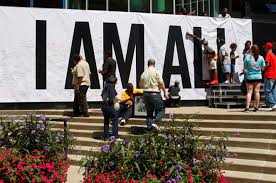
We all have an Ali story. It is the gifts we all have that should be honored today. Because he released them to the world. We should honor him by letting our gifts out into the world as he did.












 Ad-Free & Subscriber Log-In