

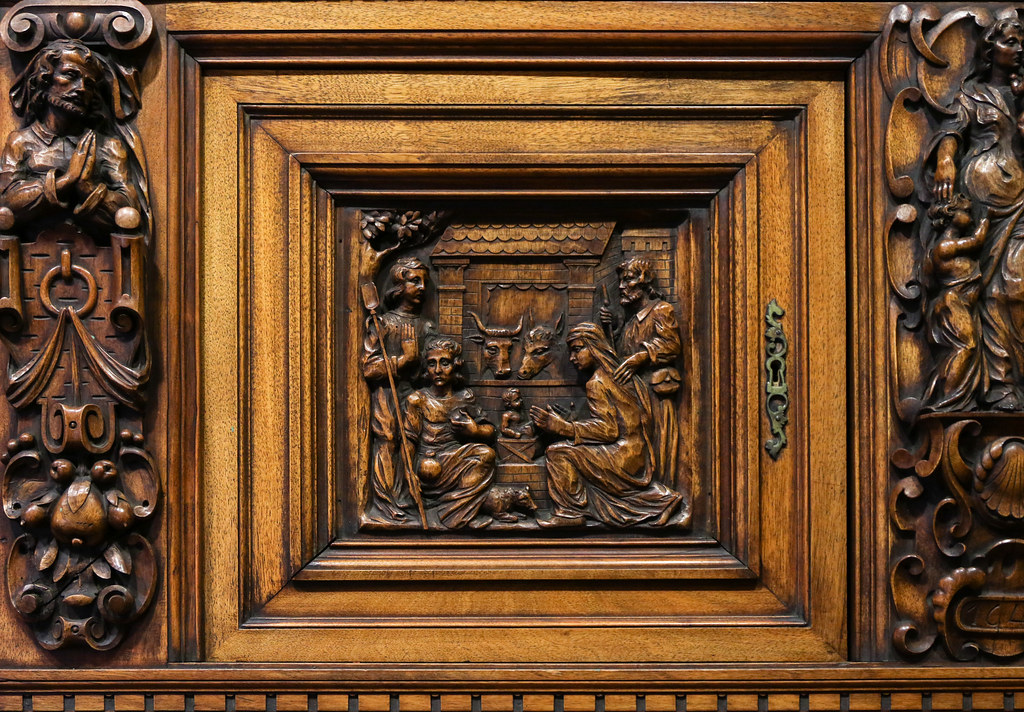
Many Christians, after reading or hearing that Jesus said, “For you always have the poor with you, but you will not always have me” (Matt. 26:11 RSV), come to the conclusion that Jesus wants the poor to always exist. They think he doesn’t want us to help or care for them because if we did so, we might end up making Jesus a liar by wiping out poverty in the world. They misunderstand the point. Jesus, when he said this, was defending a woman who showed him love. She used her money to buy a jar of perfume so she could pour it over Christ’s head and honor him. Some, led by Judas (who liked to keep track of the money Christ’s followers had) wished she had donated the money. Jesus rebuked him saying the woman was right to honor him. It was a special situation. His physical presence was not always going to be with them; they had a short time in which to honor him through it, but the poor will always be there, that is, they will always have someone to take care of later. Indeed, far from suggesting they shouldn’t be concerned about the poor, the implication is they should be, not just once, but throughout all their lives. The poor will always be there. Christians should care for them, but the care should be real, not performative, which is why they can be and should be helped in many ways, and not just by giving them money. This is why those who care for the poor should be concerned with the causes of poverty and work to eliminate them as best they can. And, as Terry Veling wrote, the poor can be and should be classified as all those in some sort of extreme need:
The poor are always in our midst. They are not only the “economically poor,” but all those “who cannot cope” and who find themselves suddenly burdened or stricken for one reason or another – the unemployed worker, the single parent, the illegal immigrant, those overwhelmed by debt, or evicted by the landlord, or arrested on the streets. [1]
Christ does not want us to ignore the poor; indeed, he indicated our care and concern for the poor represents caring for him. The woman who came to him likely was among the poor, burdened by society and its unjust impositions upon her; anyone being critical of her action in the name of the poor ultimately shows they do not truly care for the poor, because they would not act in such hostility towards her if they did. We see something similar today; many like to pretend to be charitable, but do so in a way to dishonor or belittle those they help, such as those who say the poor should never, even for a brief moment, enjoy the fine things in life so long as they are poor but instead accept the leftovers they are given. Thus, those who were critical of her doubly dishonored Jesus, both by saying he should not have been shown love by the woman, but also, by dishonoring him through belittling her, for she was one of the poor in whom he is to be found. In this way, we can find her story serves as an example of the way people reveal their true selves: many will speak the right things, but their words are tools being used for the exact opposite of what they say, which is shown by the way they act. It confirms what Paul said when he wrote to the Corinthians, that is, God chooses the foolish things of the world to shame those who viewed themselves to be wise. Theodoret, understanding this, reveals the implications of Paul’s words:
I mean, consider your calling, brethren, that not many of you were wise according to the flesh, not many powerful, not many of noble birth (v.26). He did not say, None wise, none powerful, none of noble birth: some believers did come from these, but not many, the majority happening to be form poorer classes. But God chose the foolish things of the world to shame the wise, God chose the weak things of the world to shame the strong, and God chose the lowly and despised things of things of the world and what is not to abolish what is (vv. 27-28). By foolish, weak and lowly he referred to people’s opinion: real folly is not lack of verbal skills but absence of faith, weakness and lowly birth are not poverty but impiety and vicious habits. The God of all, at any rate, overcame the learned through the unlearned, and the rich through the poor, and through fishermen he snared the world. [2]
We must be concerned for the poor. They can be found to be with us in a variety of ways. They will always be with us because there will be no utopia within history. There will be times when things will be better, and other times, when they will be worse. We must struggle to make things as best they can be. We must not use the fact that we cannot make things perfect as an excuse for not trying to make things better. This is a common temptation, and it is one which too many fall for, which is why we find people often making the perfect the enemy of the good. We must not do so. We must recognize the poor is with us, and with the poor, Jesus is also present. What we would do for Jesus we should do for them. We must, indeed, try to make things the best it can be for them, making them happy or blessed, realizing it is what God wants for them:
This is what “making the poor happy” means: rescuing them from their anonymous solitude, giving back to them a name and face, prompting them to be open to a new awareness of themselves and their dignity. To do all that, we must love them. A poor person is not happy just because he is given shelter, fed, and care for, but also — and most importantly – because he feels loved and given consideration. Without that quality of a relationship, a home for the elderly can be a sad place, so sad it may kill.[3]
We must love the poor. If we love them, we will want the best for them, physically, emotionally, and spiritually. We will not pit their physical well-being against their emotional or spiritual ones. We will try to help them holistically, and if we find they are not ready for one way we can help them (such as giving them spiritual comfort) we will not push it on them. We will love them in the ways they will accept, such as making sure their physical needs are met. We will do what we can to make them feel as a person who is an invaluable members of society. We must always make sure they are treated with the dignity they deserve.
[1] Terry A. Veling, Practical Theology (Maryknoll, NY: Orbis Books. 2005), 182.
[2] Theodoret of Cyrus, Commentary on the Letters of St. Paul. Volume One. Trans. Robert Charles Hill (Brookline, MA: Holy Cross Orthodox Press, 2001), 164 [First Corinthians].
[3] Éloi Leclerc, Song of Silence: The Journey of Saint Jeanne Jugan. Trans. Claire Trocmé (Boston: Pauline Books & Media, 2002), 69.
Stay in touch! Like A Little Bit of Nothing on Facebook.
If you liked what you read, please consider sharing it with your friends and family!
N.B.: While I read comments to moderate them, I rarely respond to them. If I don’t respond to your comment directly, don’t assume I am unthankful for it. I appreciate it. But I want readers to feel free to ask questions, and hopefully, dialogue with each other. I have shared what I wanted to say, though some responses will get a brief reply by me, or, if I find it interesting and something I can engage fully, as the foundation for another post. I have had many posts inspired or improved upon thanks to my readers.












 Ad-Free & Subscriber Log-In