

In The Brother’s Karamazov, Ivan Karamazov, the would-be positivist, had a break down, and during it, he believed he encountered the devil. It was due to that experience he came to believe God must exist. He reasoned that if the devil exists, so must God. To carry the logic further, it is the notion that if evil exists (in a conventional sense, because, ontologically, evil does not exist), then so must the good, and if the good exists, then the Ultimate Good, the source and foundation for every good, the Good in which every other good participates, must exist. That Good is God. While some might think this means the reverse must be true, that if the Good exists, if God exists, so must the devil, this is not the case. The good can exist without evil, but evil cannot “exist” without the good because evil is a parasite which comes to be out of the corruption of some good. It is in this spirit I find it can be spiritually (and psychologically) healthy for people to be exposed to the evil of the world, not, of course, in a way to glorify evil, but rather, to see through the evil, to see its strengths but also is inherent weakness. It is invaluable to see that behind every evil, there is some good which has been abused, some good which wants to be freed, some good which points to the absolute Good, and with it, God.
This is one of the reasons why I appreciate the way October, thanks to Halloween serving as the end of the month, has become the month which we, as a society, embrace the macabre. People decorate their homes, their work places, even schools, with signs and symbols which represent the darkness and various kinds of horrors underlying our temporal existence. To be sure, much of the horror which is displayed is of an extreme, or exaggerated kind; this exposes even more the weakness of evil, demonstrating the more corrupted something is thanks to evil, the more exaggerated and comical it becomes in that corruption. That is, such exaggeration helps us in better understanding evil for it shows us how ridiculous it is (even as it makes those who embrace it comical in their degradation). Is that not one of the reasons why Gothic Cathedrals had all kinds of horrific (and yet often humorous) gargoyles on them? Long before modern cinematic horror presented its own form of body horror, horror which both terrifies but also revels in the distortion of the body, we see churches themselves showing various kinds of bodily horror on them (demonstrating even more the connection between Gothic imagery and modern horror).
I have always loved the horror genre, even before I reflected upon it and its implications. I was attracted to movie monsters by the time I was seven, and when I grew, I found myself drawn to literary horror. Now, the horror genre remains one of my favorite genres for film and for fiction, and throughout the year, I like to read horror stories and watch horror movies. But, during October, I go further with this, as I focus my attention on the genre; I embrace the season and its spirit, reading horror stories and watching horror movies I have yet to read and watch. Last year, I played catch-up with Stephen King; when I was younger, I had gone through all his major works available at the time, but eventually, as I found myself drawn to other authors. I still paid attention to what he was writing. I would watch movies based upon books or stories I had not read. Then, last year, I decided to read some of those books and stories I had yet to read, those which either looked the most interesting to me, or those which were favored by his readers. I went through a great number of them, though, to be sure, there are many more to read. This year, I decided to take a side-turn and read some of the works of Peter Straub, a friend and co-author of two books with King. I prefer King’s style to Straub, but I can see why they could and would collaborate. They have similar ideas in their stories, though, to be sure, they take those ideas in different directions. I just finished reading Floating Dragon, a novel written around the same time King was writing It, and a novel, which while having a different tone, connects in many ways to the themes of It (and I would also say The Shining and even The Dark Tower). Floating Dragon, like It, is about a town which, over the centuries, has a pattern of killings which takes place in it, a pattern which is connected to an evil persona or force reappearing in it every thirty years (and becoming a major force every hundred years). In the book, we find a group of connected people learn about that evil, which they call the Dragon, and come together to confront it. Some of them have special powers (they could be said to have “the shine”), and others, with other skills or abilities which help (like an elderly historian/writer who encountered the evil force before and took it out in his youth). The further I have read in the book, the more that evil force reminded me of It (Pennywise) and the way It would confront (and play with) its victims. I would say the “Dragon” is like the combination of Randall Flagg and Pennywise, sharing characteristics of each. Straub and King did not intend to write similar stories, but when it became clear they did, Straub would later suggest Floating Dragon, It and The Talisman form a trilogy (which now, of course, is more than a trilogy, thanks to Black House ). One thing with Floating Dragon and It which is important is that the characters have to come to realize their inner strength, but also, the strength they have when they come together, knowing that together, they can confront and overcome (in some way) the evil at hand. This element of the stories is an important one found in many horror stories, and is an important one, for it shows us that despite the kind of power and great ability for destruction evil possess, it is not invincible, it can be stopped (at least temporarily).
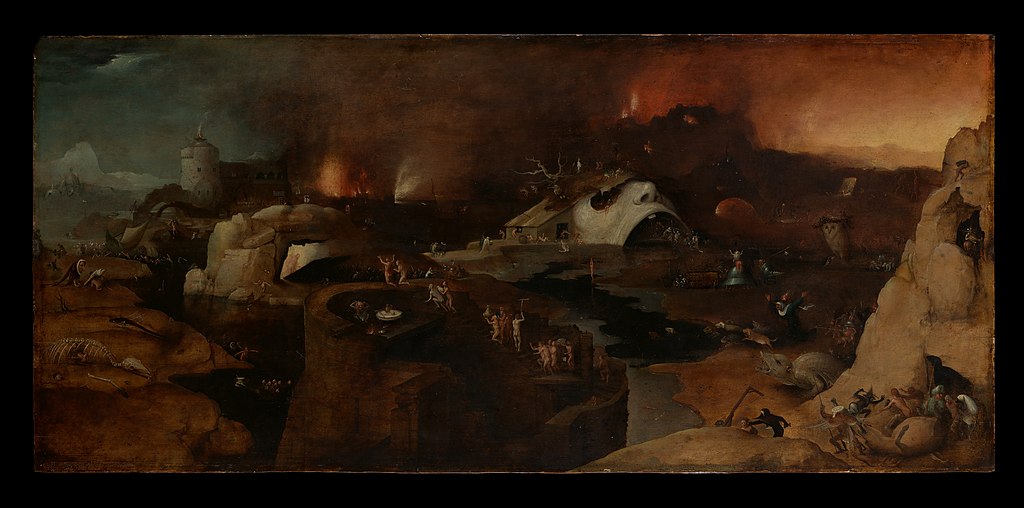
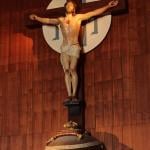
As October ends with Halloween, that is, with the Eve of All Saints (at least, on the Western Calendar, which I engage with the rest of society even if it is not All Saints for Byzantine Catholics), the evil and horror seen throughout the month comes to an end as we are shown the victory of the saints, that is, the victory of the good over evil. We are shown the kind of triumphs evil can have, but we are also shown how fragile that victory will always be. Evil never has the final say. And in this fashion, we can see the presentation of horror throughout the month of October to point to and reflect the greatest horror story, and with it, the greatest victory of the good over evil, the story of the death of Christ and his descent into hell. In his death, Christ went through and experienced the full range of being, including its diminishment and destruction, going all the way to the edge of being itself. He does so in order to encounter all that exists, taking in beings throughout the realm of existence into himself, so they can then be taken with him in his resurrection from the dead, allowing all that exists to be taken into a new mode of being. In that descent into hell, he experiences and sees all the horrors of creation, all the potentiality for evil, all the ways the good could be corrupted, and knowing the cause of that corruption, he knows what he has to offer all things to be healed from the damage such corruption has done to them, the offer which will be fully realized in the restoration of all things in the eschaton. He gives us all the healing salve we need, even as we find, our own experience of hell, we are not alone, as he is already there waiting for us, already there with his offer to help us: all we need to do is allow him to take us into himself, to be incorporated in him, so that we can confront and fight against the evil, all the horrors, reflected in our private hell and find ourselves victorious through him. If we take his hand, so to speak, we will find ourselves joining with him in his resurrection from the dead, transcending the horror of evil and enjoying, with all the saints, the glory of the kingdom of God.
* This Is Another Post From My Personal (Informal) Reflections And Speculations Series
Stay in touch! Like A Little Bit of Nothing on Facebook.
If you liked what you read, please consider sharing it with your friends and family!
N.B.: While I read comments to moderate them, I rarely respond to them. If I don’t respond to your comment directly, don’t assume I am unthankful for it. I appreciate it. But I want readers to feel free to ask questions, and hopefully, dialogue with each other. I have shared what I wanted to say, though some responses will get a brief reply by me, or, if I find it interesting and something I can engage fully, as the foundation for another post. I have had many posts inspired or improved upon thanks to my readers.









 Ad-Free & Subscriber Log-In