

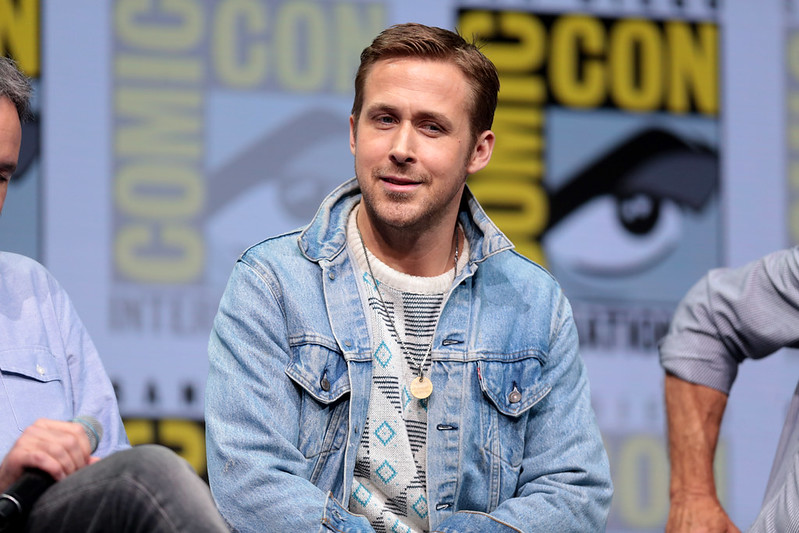
Source: Flickr/Gage Skidmore
License
My journey with Project Hail Mary (2026) began when a student asked if we could read the novel on which the film is based. I said “no,” because we were in the middle of The Tempest and had Mrs. Dalloway on the horizon. But color me surprised when I didn’t stop hearing about the movie adaptation only a couple months later.
And so, I watched it. The all-ages crowd loved it. Laughs, tears—you name it. I could tell I was in the presence of a modern-day Spielbergian blockbuster. That warmed my heart. Even if the movies will never be “back” for good, Project Hail Mary stands as a small victory in the slow defeat of cinema. I treasure that.
But why didn’t I enjoy it? I fell asleep for a solid 20 minutes. The end had me asking my wife who the hell thought this was a good idea.
I’ve had some time to think about it, and I could make a list, a rather pedantic one. For a film all about the socially and metaphysically unifying powers of science and technology, it plays fast and loose with scientific realities. It thinks an alien language and English could be translated more easily than Chinese into Basque. It’s a movie without friction or real danger. Ryan Gosling plays the most Millennial man ever born to woman. I could go on.
But these are nit-picks. I’m not interested in doing CinemaSins. The fundamental issue, I believe, has to do with its status as a blockbuster. When I think about the original Star Wars trilogy or Jaws (1975), I feel something. My mind drifts back to danger, legitimate risk. Yes, good will win. Evil will be crushed underfoot. But people die. Evil, whether the result of incompetence or malice, is real. Victory comes with pain.
None of these apply in Project Hail Mary. Gosling’s character lives under a shadow of sadness (though we only learn its origin—which has nothing to do with evil—after the film’s plot resolves). But mostly he just solves the problem at the movie’s center. He does so methodically and with the help of an alien scientist named Rocky. He glides along, does what needs to be done, and does it because, even if he’s a screw up, he’s nice deep down. That’s about it. No bad guys. No ill will. No misguided malcontents. No real or immediate danger. Just good ole Gosling.
It feels almost insulting to say this is the moral universe of a children’s film. Bambi’s mom dies, and the Queen in Snow White (1937) scared me as a kid. But what else can I call it? Project Hail Mary feels like the blockbuster for our moment, for good and ill. I’m glad it’s here. But, boy, is that an indictment.












 Ad-Free & Subscriber Log-In