

The Credentials of the Crucified: Touch, Trauma and the Wounded God
The Gospel of John gives us a scene we have domesticated almost beyond recognition. We have turned it into a story about doubt and belief, about a stubborn disciple who needed proof and a patient Lord who provided it. We have made it pleasant. We have made it about us and our private struggles with certainty. But the text itself resists this softening at every turn. It begins not in a sanctuary but in a safehouse. It begins with people who have watched their friend tortured to death by the state and who now sit behind locked doors waiting to see if they are next.
The Locked Room
Fear as Evidence
Any honest reading has to start there. Before resurrection means anything, it has to mean something to bodies that are afraid. And these bodies are afraid for reasons that have nothing to do with metaphysics. The empire has just demonstrated, in public and with great care, what it does to people who imagine the world otherwise. Crucifixion was not merely an execution. It was a sermon preached in flesh, addressed to anyone who might be tempted to follow. The disciples have heard that sermon. They have understood it perfectly. And so they hide.
This is the locked-room hour, that period in any movement, any grief, any survival, when the doors are still shut and the breath is still held. The fear in this room is the fear any colonized people know: the fear of the collaborators who enforce the occupier’s terms, the fear of being identified, named, handed over. It is the fear of the informant and the checkpoint. Liberation theology has always insisted that we read these texts with our eyes open to how empire actually works…how it co-opts religious authority to do its dirtiest work.
The Verse That Has Killed
We cannot move past that phrase, “for fear of the Jews,” without staying with what it has done in the world. This single line…and lines like it scattered through John…has been used as a weapon for nearly two thousand years. It has been read aloud in churches and then followed by pogroms. It has hung in the air over expulsions and ghettos and yellow stars. It has provided cover for the Crusades, for the Inquisition, for the blood libels of medieval Europe, for the silence of too many Christians during the Shoah. The line itself did not commit those atrocities. But Christians weaponized it…the body count is real…any sermon on this passage that does not say so plainly is a sermon that has not yet told the truth.
So let us tell it. The Jews did not kill Jesus. Rome killed Jesus. Crucifixion was a Roman punishment, carried out by Roman soldiers, on the order of a Roman governor, for a crime against Roman order. The cross is an imperial instrument, not a Jewish one. The disciples in this room are themselves Jews. Jesus is a Jew. Mary is a Jew. The collaborators among the Temple elite played their part, as collaborators always do under occupation, but to read their participation as the guilt of an entire people across all time is not exegesis. It is slander. It is the oldest and bloodiest libel in Christian history…it must be named as the lie it is, every time this text is opened.
A liberation reading has no patience for this distortion, because liberation reading begins by asking who benefits. The answer here is unmistakable. The people who benefited from blaming the Jews were never the poor, never the colonized, never the suffering. The people who benefited were Christian empires looking for a scapegoat that would protect them from confronting their own complicity with Rome’s heirs. Anti-Jewish theology has always served the same function: it lets Christians off the hook for the violence we ourselves are doing, by pointing at someone else and calling them the killers of God. To read John honestly is to refuse that maneuver. The crucifiers in this story are us, whenever we side with empire against the prophets it sends.
A Presence That Refuses Enclosure
Into this room, Jesus comes. The doors are locked…still he stands among them. John is not interested in explaining the mechanics. He is interested in the fact that no system of enclosure can finally keep the risen one out. This is the first scandal of the passage. Not that Jesus is alive…but that aliveness itself refuses to honor the boundaries fear has built. The locked door is not only a literal barrier. It is every wall we construct when we have learned that the world is unsafe. It is the shutdown of the body, the closing of the heart, the small interior rooms where survivors go when survival is all they can manage. The gospel says: even there. Especially there.
“Peace be with you.” He says it twice. We should not hear this as a pleasantry. In a room full of people who have just watched their friend murdered by the state, peace is a confrontation. Shalom in the Hebrew imagination was never the absence of trouble; it was the presence of right relationship, of wholeness, of a world set right. Shalom in that locked room was counter-peace, peace as a verdict, not a feeling, a verdict spoken against the empire’s verdict. To say it twice was to declare that the cross was not the end of the story…that fear, however reasonable, does not get to write the future.
The Wounds He Brings With Him
Resurrection Without Amnesia
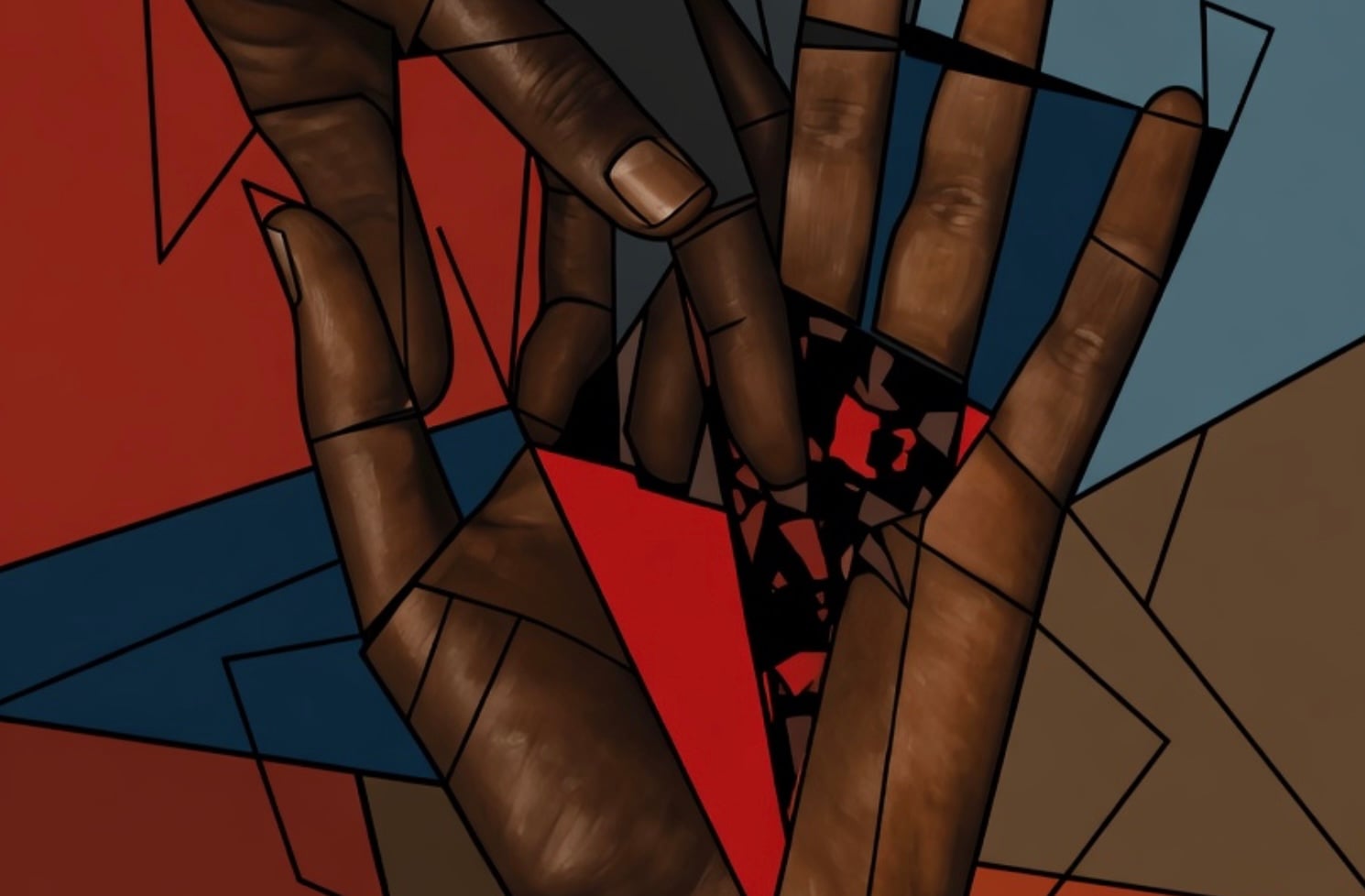
Then comes the gesture that breaks open everything. He shows them his hands and his side.
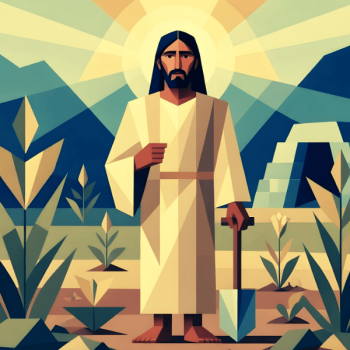
Stay with this. The risen Christ does not appear unmarked. He does not return polished, restored, cleaned up for company. He carries the wounds. He brings the evidence of what was done to him into the room…he makes it visible. This is not incidental. This is the entire theological argument of the passage. Resurrection is not the erasure of suffering. It is not amnesia about violence. It is not the comfortable forgetting that lets perpetrators sleep at night. The risen one is the crucified one…the marks remain.
This matters because the powerful have always preferred a resurrection without wounds. What they want from Easter is scarmnesia, a clean rising with the body politely repaired, a Jesus who has moved on, who has forgiven everyone in advance, who can be invoked to tell the suffering to stop bringing up the past. A wounded Christ refuses this. A wounded Christ insists that what was done to him was real, that it mattered, that no triumph can be claimed by pretending the violence away. This is a gospel that bleeds in public. By extension, a wounded Christ stands in solidarity with every body that still bears marks: the bodies of the tortured, the trafficked, the bombed, the deported, the incarcerated, the lynched, the disappeared. Their wounds are not embarrassments to be hidden in the name of moving forward. They are sites of revelation.
The Credentials of the Crucified: A God Who Saves Because of His Wounds
We have to say this plainly, because the tradition has so often said the opposite. Christ does not save us in spite of his wounds. He saves us because of them. This is not a small adjustment in emphasis. It is a different gospel from the one many of us were handed. The version we inherited tends to treat the crucifixion as an unfortunate detour, a price that had to be paid so that the real business of resurrection could get underway. On that reading, the wounds are an embarrassment the resurrection is supposed to clean up. God triumphs by getting past them. Easter is the moment we can finally stop talking about Good Friday.
But John will not let us read it that way. The risen Christ in this room is recognized by his scars. The disciples do not know him by his face or his voice. They know him by his hands…his side. The marks are not residue left over from a defeat that has been overcome. They are the credentials of the crucified, the qualifications of the one who is alive. Henri Nouwen called him the wounded healer…the phrase has been quoted so often it has lost its edge…but the edge is still there if we let it cut. A healer whose own body has not been broken can only offer technique. A healer who has been broken and has not turned away from it can offer something else: companionship in the place where words run out. Christ heals from inside the wound, not from above it. He saves the wounded by being one of them…by refusing to pretend otherwise. This is a theology with calluses, shaped by actual labor and actual harm, not by speculation.
The Answer to What Ails Us
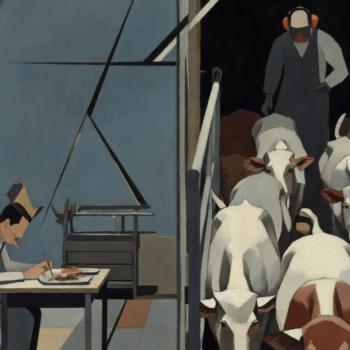
Here is where this stops being a private devotional matter and becomes the answer to nearly every social ill we face. Look at how the world tries to address its broken places. We send experts who have never lived the problem. We pass policies written by people who will never feel their effects. We prefer our healers untouched. We prefer our saviors unscarred. The crisis of our institutions is a crisis of unwoundedness. Poverty is studied from offices. War is debated from think tanks. Addiction is moralized from pulpits whose occupants have never trembled in the dark at four in the morning. The official healers keep failing because they are trying to heal from above…there is no healing from above. There is only management from above. There is only containment from above. Healing happens at the level of the wound, or it does not happen at all.
The risen Christ overturns this entire arrangement. He does not heal from a safe distance. He heals by carrying the marks of the very violence he is undoing. He saves the executed by having been executed. He saves the abandoned by having been abandoned. He saves the tortured by having been tortured. There is no social ill on this earth, no structural sin, no inherited trauma, no machinery of cruelty, that the wounded Christ does not meet from the inside. This is why the gospel cannot finally be co-opted by empire, no matter how often empire tries. The unscarred god of empire is the one the powerful want, the one available to bless their unwounded power. The God who shows up in this locked room is not available for that work.
It means something for those of us who would follow him. It means we cannot heal what we will not touch. It means the wounded among us are not problems to be solved by the unwounded. They are, more often than not, the only ones who actually know the way through. The recovering addict reaches the using addict in a way the clinician cannot. The survivor of violence reaches the trembling victim in a way the advocate cannot. The bereaved mother reaches the newly bereaved in a way the chaplain cannot. This is not because credentials are useless. It is because some doors only open from the inside…only the wounded carry the key. The church, when it forgets this, becomes another office of expert distance, another shop of healers who have rented their wounds rather than bled them. The church, when it remembers, becomes what it was always meant to be: a gathering of wounded healers sent into a wounded world by a wounded God.
The Credentials of the Crucified: Sent and Breathed Upon
The disciples rejoice when they see him…immediately he sends them. “As the Father has sent me, so I send you.” There is no pause here, no period of recovery, no spiritual retreat before the work begins. The commissioning is the encounter. To meet the risen one is to be sent into the same world that killed him, on the same terms, with the same risks. This is why it takes a breath. He breathes on them…gives them the Spirit, because no one could accept this sending on their own strength. The breath that hovered over the waters at creation, the breath that filled dry bones in Ezekiel’s valley, is now given to a small group of frightened people so they can do what frightened people cannot do alone. It is borrowed breath, the life of one body becoming the life of another.
Then the strange word about sins. “Whose sins you forgive are forgiven; whose sins you retain are retained.” The church has often read this as the founding of priestly authority, a transaction managed at the altar. But in the context of a community being sent into an unjust world, something else is happening. The Spirit is giving this community the authority to name reality. To say what is broken…what is mended. To refuse the false absolutions that empires hand out to themselves. To withhold the easy forgiveness that lets violence continue uninterrupted. This is the power Bonhoeffer named when he wrote about cheap grace, the grace that costs nothing because it confronts nothing. The Spirit gives the community a costlier authority: to discern, to expose, to release, to refuse to release.
The Credentials of the Crucified: Thomas, Who Refused Secondhand Faith
The Patron Saint of Honest Questions
Then the camera moves…we meet Thomas.
Thomas was not there. We are not told why. Perhaps he was braver than the others…went out for supplies. Perhaps he was more devastated…could not bear company. Perhaps he was simply somewhere else when the moment came. Whatever the reason, when his friends tell him what happened, he does not believe them. Here we have to be honest about how the tradition has treated him. We have called him doubting Thomas. We have made him the cautionary tale, the one who got it wrong, the negative example against which faithful belief is measured.
This is not what the text shows us. Thomas is not faithless. Thomas is refusing to inherit a faith he has not encountered. He is telling his friends, who love him, that their testimony is not enough. He needs his own meeting. He needs the wounds in his own hands. In a tradition that has too often demanded that the suffering accept on authority what they have never been allowed to verify in their own bodies, Thomas is a hero. He is the patron saint of everyone who has been told to believe in a God who has never seemed to show up for them. He is the patron saint of everyone whose questions have been treated as betrayals. He is asking for what every honest person eventually asks for: not a story about God…but God.
The Invitation to Touch
A week passes. The doors are still locked. Notice this. The first encounter did not magically solve fear. The disciples are still hiding, even after seeing the risen Christ, because liberation is not a single event…it is a long unlearning. Again, Jesus comes. Again, peace. Then, without rebuke, he turns to Thomas and offers exactly what Thomas asked for. Put your finger here. Put your hand here. Touch.
This is the heart of it. The risen Christ does not shame the one who needed evidence. He does not lecture about the superiority of belief over sight. He extends his wounded body…invites contact. Thomas, who in the tradition has been mocked for centuries, becomes the first person in John’s gospel to confess Jesus as God outright. “My Lord and my God.” No one else gets there this fast. No one else says it this clearly. The one who refused secondhand faith arrives at the deepest confession in the book.
When we fail to see…are allowed to touch…something happens that sight alone could never accomplish. Sight keeps a distance. Sight can be deceived by curated images and managed narratives. Touch is closer. Touch implicates the body. Touch is the difference between hearing about a war and holding the hand of someone who survived it. It is the difference between reading a statistic and sitting with a mother who has buried her child. The gospel is telling us that God is willing to be touched. That divinity is not too dignified for the intimacy of fingers in a wound. That the holy is found, finally, not in the heights but in the marked flesh of a body that did not deserve what was done to it.
The Credentials of the Crucified: Blessing and Witness
Then comes the line that has been used to scold every Thomas since. “Blessed are those who have not seen and have believed.” We hear this as a rebuke…it does not have to be. It can be read as an opening, an extension of the community to all those who will come later, who will not have the chance to touch the wounds themselves…will have to rely on the testimony of those who did. The blessing is not for ignorance. It is not a pious endorsement of credulity. It is for trust grounded in faithful witness. That places an enormous responsibility on the witnesses. If the story we tell sanitizes the wounds, hides the violence, smooths over the terror of that locked room, then the belief that follows is built on a lie. The blessing depends on the truthfulness of the telling.
The Credentials of the Crucified: Wounded Glory
So we come back to the room. Back to the doors that are still locked somewhere, in some city, in some heart. Back to the disciples who needed peace spoken twice before they could hear it once. Back to Thomas, who asked the question we are all afraid to ask out loud. Back to the wounded Christ who keeps showing up anyway, who does not need our certainty to be present, who offers his scars to anyone willing to come close enough to feel them.
The call of this passage is not to admire belief from a distance. It is to move toward wounds. Our own…other people’s. To stop pretending that resurrection means forgetting. To let ourselves be sent, breathing borrowed breath, into a world that is still locking doors…still crucifying people…still very much in need of someone who will say peace in a way that means it. Some doors only open from the inside. The wounded carry the key.
That is the gospel. Not escape from the room…but a presence that joins us in it. Not a faith that shames our questions…but a Christ who extends his hands. Not a triumph that hides its cost…but a wounded glory that finally…at last…lets us touch.










 Ad-Free & Subscriber Log-In