

The Teacher said, “Blessed is the one who exists before existing, for those who are were, and they will be.”
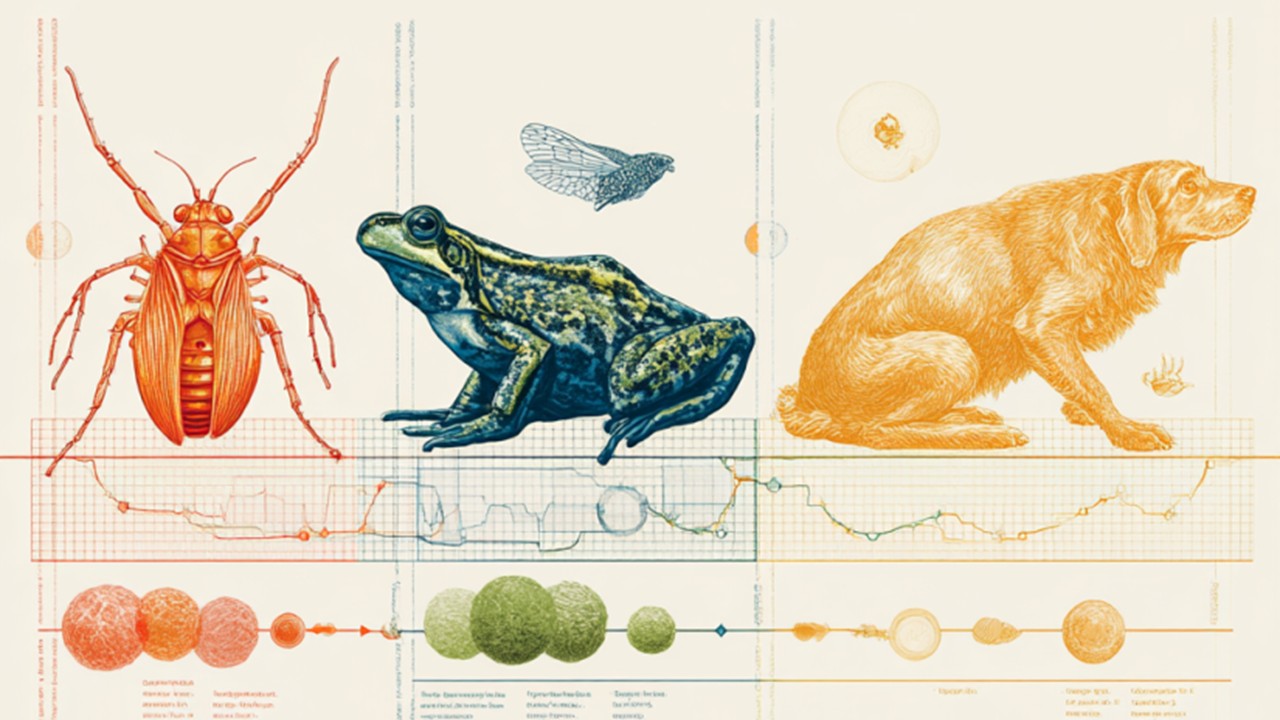
The superiority of humanity isn’t revealed, but exists in what’s hidden. So, it (humanity) masters animals that are stronger, that are greater in terms of that which is revealed and that which is hidden. This allows them to survive; but if humanity separates from them (the animals), they kill, bite, and devour each other, because they didn’t find food. But now they’ve found food because humanity has cultivated the earth.
(The Gospel of Philip vs. 57-58)
This passage echoes one of the sayings of Jesus from the Gospel of Thomas which reads: “Blessed is he who was before he came into being” (Saying 19). In that passage, Jesus is affirming that we pre-existed before being born into this world. Therefore, the one who realizes that they were One with God and all things before being found in a physical manifestation of the Divine is truly blessed.
When Jesus expresses this reality in the Gospel of John, he is nearly stoned to death for suggesting that he was with God before the beginning of time: “Most assuredly, I say to you, before Abraham was, I am.” (John 8:58)
Here, the words are different, but the idea is the same: “Blessed is the one who exists before existing, for those who are were, and they will be.”
The only difference in this passage from Philip’s Gospel is that Jesus emphasizes the eternal quality of our being. Those who exist before existing will also exist forever. They are those who “were, and are, and ever more shall be.” This is exactly how John speaks of God and Christ in the book of Revelation when he reports that, in his vision, he hears:
“I am the Alpha and the Omega,” says the Lord God, “who is, and who was, and who is to come, the Almighty.” (Rev. 1:8)
However, in this Gospel, we learn that God and Christ are not the only ones who can say this. We, too, are those who are, and who were, and who are to be. We are created in the image of the Divine and so what is true of Christ is true of us, as well, because Christ is all and is in all, and because we are all filled with the fullness of Christ who fills everything in every way.
There is no separation between us and God, or Christ, or one another. We are all One with all things and all things are One with all of us.
In the next verse, Philip says that “The superiority of humanity isn’t revealed, but exists in what’s hidden.” In other words, we must observe how human consciousness elevates the consciousness of other living things. Humans, though we have no claws or sharp teeth, can tame the lion and domesticate the wolf. We can coerce the elephant to dance, or the whale to jump, literally, through hoops, if we want to. How is this possible?
Humans also raise the consciousness of animals when we teach them the difference between right and wrong. Without human interaction, animals do not consider the suffering of others; they do not feel shame when they behave in selfish ways. But the more animals remain in contact with humans, the more they can learn to respect other living things.
For example, researchers have used sign language to communicate with apes. In one case, such as with Koko, a gorilla who was taught a modified version of American Sign Language (ASL) by psychologist Francine Patterson, the primate was observed to use the signs creatively to express her thoughts and emotions, and to invent new compound words on her own for objects and concepts that had not been taught to her. Another ape, the chimpanzee Washoe, was taught ASL and in turn passed on some of her signs to her adopted son, Loulis.
Reptiles have also shown significant cognitive improvements when confined to enriched environments. One study showed that the brains of hognose snakes grow larger when they have a more stimulating habitat. Tortoises can also display optimism, while reptiles in general can show play behavior, suggesting a capacity for both positive and negative emotional states.
These things are only possible because humans have a higher level of consciousness than animals do. The more connection animals have with humans, the more likely they are to experience an elevation of their own consciousness.
Remember, the Divine Consciousness is everything, and everything is the Divine Consciousness. We shouldn’t be surprised that a higher consciousness can elevate a lower consciousness, especially if all consciousness is the same consciousness.
Christ is all and is in all, and Christ fills everything in every way.
The new book, “The Quantum Gospel of Mary and the Lost Gospel of Truth” is now available on Amazon.
The book from Keith Giles, “The Quantum Sayings of Jesus: Decoding the Lost Gospel of Thomas” is available now on Amazon. Order HERE>
Keith Giles is the best-selling author of the Jesus Un series. He has been interviewed on CNN with Anderson Cooper, Coast to Coast Radio with George Noory, USA Today, BuzzFeed, and John Fugelsang’s “Tell Me Everything.” He co-hosts The Heretic Happy Hour Podcast and his solo podcast, Second Cup With Keith which are both available on Spotify, Amazon, Apple, Podbean or wherever you find great podcasts.









 Ad-Free & Subscriber Log-In