


There is a quiet revolution hidden inside the words of Thích Nhất Hạnh.
It does not announce itself with spectacle or force. It does not arrive with thunder or crowns or armies.
Instead, it whispers something almost too simple, too human, to believe:
“The next Buddha will be the Sangha (the community of practitioners).”
And elsewhere, he reminds us that:
“Changing the world looks more like caregiving than war.”
If we take these words seriously, they dismantle one of our oldest assumptions, that salvation, transformation, or enlightenment will arrive through a singular figure.
A hero. A prophet. A messiah.
Someone else.
But what if that expectation is the very illusion we must outgrow?
The Myth of the Lone Savior
History has trained us to look upward and outward for deliverance.
We are conditioned to wait for the next enlightened teacher, the next political savior, the next revolutionary voice who will set things right.
But this mindset carries a hidden cost: it keeps us passive.
It tells us that the power to heal the world belongs to someone else. Someone wiser. Someone chosen.
Yet, across spiritual traditions, a different truth has always been present. One that points not to the elevation of an individual, but to the transformation of a community.
Compassion as a Collective Practice
In Buddhism, the concept of Karuṇā speaks to a deep, active compassion and a willingness to suffer with others and to alleviate that suffering wherever possible. It is not abstract. It is embodied.
In Judaism, Chesed calls for loving-kindness expressed through tangible acts of care, generosity, and mercy.
In Christianity, Diakonia emphasizes service. It’s about meeting the needs of others, not as charity from above, but as solidarity alongside.
In Sikhism, Seva becomes a sacred duty: selfless service performed without expectation of reward, rooted in humility and unity.
Different names. Different languages. The same essential truth.
Transformation happens not through domination, but through devotion to one another.
The Sangha as Savior
When Thích Nhất Hạnh speaks of the Sangha as the next Buddha, he is looking into the future and establishing the next phase of human consciousness.
It is the Buddha in all of us that can save us.
It is Christ in us that is the hope of glory.
The Sangha is not just a gathering of individuals. It is a living organism; a body of shared awareness, mutual care, and collective awakening.
In this vision, enlightenment is no longer an individual achievement. It becomes relational.
It happens in how we listen.
In how we forgive.
In how we show up for one another when it’s inconvenient, uncomfortable, or costly.
Caregiving as Resistance
To say that “changing the world looks more like caregiving than war” is a radical redefinition of power.
War divides the world into allies and enemies.
Care dissolves those boundaries and insists on shared humanity.
In a culture addicted to conflict, whether political, ideological, or spiritual, caregiving becomes a form of resistance. It refuses the logic of domination. It interrupts cycles of violence, not with greater force, but with deeper compassion.
To feed someone.
To sit with someone in grief.
To advocate for the vulnerable.
To choose patience over outrage, understanding over judgment.
These are not small acts. They are revolutionary.
The Future Is Everyone
If the next Buddha is the Sangha, then the future of awakening is not waiting somewhere ahead of us. It is emerging between us.
Right here.
Right now.
In every moment, we choose connection over isolation.
In every act of kindness that expects nothing in return.
In every community that refuses to let anyone be forgotten.
The next Messiah will not arrive as a single person to follow.
It will rise as a people who have learned how to love.
Not perfectly. But persistently.
Not all at once. But together.
The future is not coming to save us.
The future is us.
**
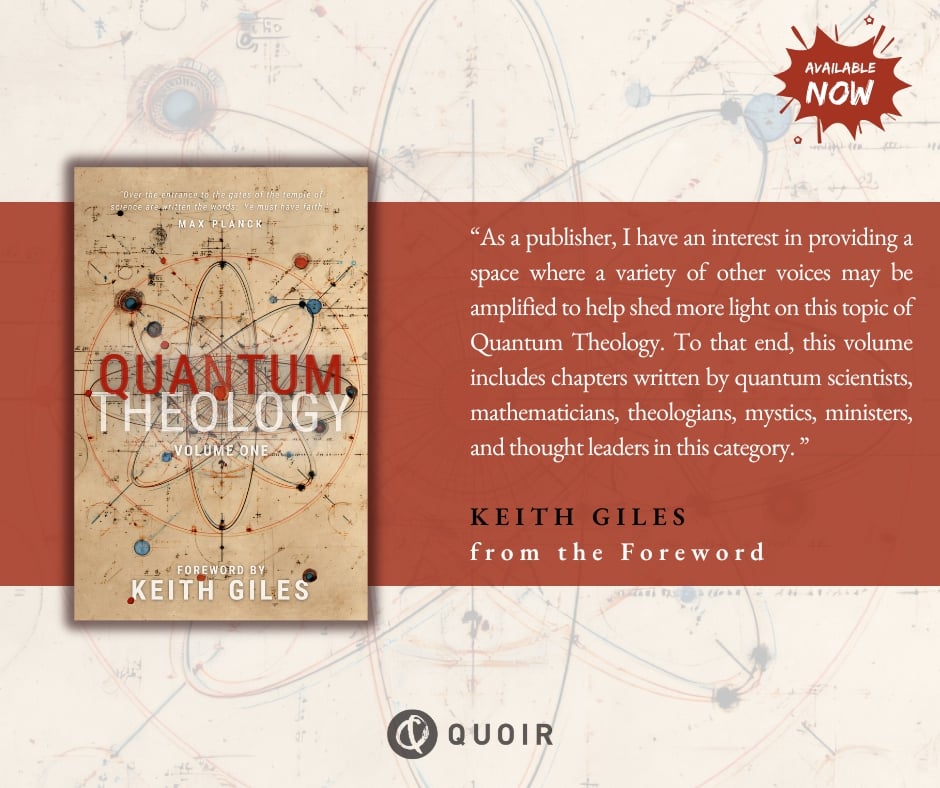
Quantum Theology: Volume One brings together an extraordinary and diverse group of scientists, mathematicians, theologians, mystics, authors, and cultural commentators to explore one of the most provocative conversations of our time: What happens when Quantum Physics and Theology begin to overlap?
Edited and curated by author Keith Giles, this book explores the intersection between science and faith.
My book, “The Quantum Gospel of Mary and the Lost Gospel of Truth” is now available on Amazon.
The book from Keith Giles, “The Quantum Sayings of Jesus: Decoding the Lost Gospel of Thomas” is available now on Amazon. Order HERE>








 Ad-Free & Subscriber Log-In