

Chapter 5: Quest for the Architect’s Blueprint
The Architect’s Blueprint and the Thermodynamics of Grace
The students encounter a theological crisis that demands a new perspective. They move beyond the “courtroom” model of judgment (Augustine) to the “nursery” model of development (Irenaeus). But the deeper breakthrough is realizing that they are looking for the Architect’s Blueprint, not just a creation myth. They conclude that Biblical truth isn’t just about empirical facts—it is an overarching reality of Divine love and relationship that transcends time.
They also discover the “Thermodynamics of Grace.” In the physical world, closed systems drift toward chaos (entropy). But grace is kinetic; it is an open system that requires circulation. When we hoard it, or when we impose labels of “shame” and “depravity” upon ourselves and others, we clog the system and create a “closed loop” of exile. Grace only grows when it is shared.
The Insight: You cannot fix a systemic problem—like the “exile” of the man on the street—if you view the world through the lens of judgment. When you identify the “Blueprint,” you realize that humanity isn’t a criminal class, but a work in progress. Exile isn’t a divine punishment; it is a self-imposed prison of shame and “garments of skin” that we hide behind because we fear we are useless.
The Action: Recognize that your life is not a trial to be judged, but a project of growth. If your internal narrative is dominated by “guilt” and “depravity,” you are operating in a closed system. Shift to an open system: embrace the role of “God’s child” rather than “God’s nemesis.” Seek the truth that transcends facts—look for the love, the longing, and the grace that moves people toward restoration.
The Task: Practice the circulation of grace. If you feel “stuck” in a cycle of shame or perfectionism, take one small action that helps another person step out of their own exile. Grace is kinetic—it only becomes real when it is in motion. It means helping others whether they deserve it or not, reaching out in forgiveness—forgiving seven times seventy—and actively wishing good for your enemy.
Themes: The Architect’s Blueprint, Narrative Truth, Thermodynamics of Grace, and Human Potential.
The Whisper in the Ear
The interior of the black sedan was silent, save for the hum of the electric engine. Loki gripped the leather-wrapped steering wheel, his eyes tracking the road with practiced indifference. In the back seat sat Regent Vance, a man whose portfolio controlled the university’s largest research endowments.
Loki was Vance’s listener. Where he couldn’t go, Loki could, a low-key listener to every conversation because everyone needed transportation, and they talked on buses, in the backs of cars, in limos, everywhere. Loki was the undercover informant. He had even used listening devices on occasion.
“They’re talking about ‘exile,’” Vance muttered, staring at a tablet displaying a summary of the students’ early field notes. “Humanitarian metrics. Exile. It sounds like a protest slogan, not a research project.”
Loki didn’t look in the mirror, but his tone was smooth. “It’s a distraction, Regent. The university’s mandate is to secure the future of the manufacturing sector. Foreign competition is eating our lunch. That’s a real problem. But these students? They’re busy chasing ghosts on the sidewalk.”
Vance sighed, pinching the bridge of his nose. “Humanitarian work is for the city, for the NGOs. It’s not for our academic pipeline. If they keep focusing on the ‘systemic failure’ of the city, the local council will have my head. They see it as a critique of their law-and-order funding.”
“Exactly,” Loki agreed, easing the car into a turn. “If they prove the system is a closed loop, they’re essentially telling the public that the current funding is a waste. That creates volatility. And volatility doesn’t secure grants.”
“They need to be steered,” Vance said, his voice hardening. “They have potential, but they’re misaligned. Manufacturing, economic competitiveness, international trade strategies—that’s where the money goes. That’s where the power is. If they can’t see the bread-and-butter issues, they’re a liability.”
“The Dean is a reasonable man,” Loki said, a faint smile touching his lips. “He just needs a nudge. A reminder of what happens when a department goes off-script. Money has a way of drying up very quickly when the focus drifts from the primary objectives.”
“I’ll make sure he understands the stakes,” Vance said, closing the tablet. “If they want the Vault, they work on our problems. If they want to be activists, they can do it on their own dime. I don’t pay to destabilize society; I pay to secure it.”
Loki pulled up to the Dean’s office entrance. “I’m going to put a word to the wise in Torn’s ear,” the Regent muttered as he stepped out, Loki sat for a moment, watching the university skyline. He tapped a finger against the wheel, humming the opening notes of the ‘Three Trees’ melody, but pitched in a minor, dissonant key.
* * *
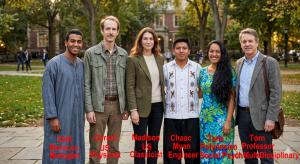
The amber light in the Vault felt less like a classroom now and more like a sanctuary. The heavy oak doors had muffled the city, but the silence inside was filled with the memory of the destitute man exiled to a milk crate on the street.
Professor Torn stood by the chalkboard, where he had written one word: Irenaeus.
“You’re all reeling from the street,” Torn said softly. “You see a broken man and you want to fix the system. You see the exile and you want it reconciled.”
“I’m trying to fit this into Augustine’s shadow over the Western mind,” Madison said. “It fits our view of people living on the street perfectly. They suffer because it’s their fault. I mean, really. Is that what we saw today?”
The others shook their head no.
She continued. “I promised I would research this. Let’s look at the perspective from the East, from Irenaeus, a man who actually sat at the feet of those who knew the Apostles.”
Torn nodded in approval and sat down to let Madison lead the discussion.
“Irenaeus, who was a student of Polycarp, an actual disciple of the Apostle John—I mean this goes directly back to Jesus—he says that God isn’t devoid of justice. If a hostile force—the enemy, the disorder—leads humanity captive, God enters into the captivity. He embraces and restates them to their original status. He gives us acceptance in spite of the things we do that miss the mark and gives us the path back. He re-walks the path to liberate us from the inside.”
“Very insightful, Madison,” Torn said. “This sounds to me like a very different perspective. Well done. Let’s look deeper.”
Madison leaned forward, a sudden spark in her eyes. “Perspective? Are we looking at a very different blueprint from our creator? Not people who are born in exile to be exiled over and over because they are inherently bad. But instead people who do natural things and miss the mark of perfection.”
”I think that could be said.”
“Professor, wait. If we’re looking at Irenaeus and the Eastern view, doesn’t that change the goal of our quest?”
Torn paused, chalk in hand. “How so, Madison?”
“We aren’t looking for a creation myth to explain our origins. We’re looking for the Architect’s Blueprint. It’s not about who the ancients say we are in their stories, even if there is a kernel of truth in them. It’s about who God says we are.”
Torn smiled, gesturing for her to continue.
“And that requires a different kind of truth,” she added, looking around the room. “Not just facts. It’s not philosophical truth, and it’s not just ‘my truth’ or ‘your truth.’ It’s about the overarching reality of Divine love and relationship.”
“Exactly.” Torn picked up the chalk, writing quickly. “Truth here transcends empirical fact and our observation and interpretation of events. Truth in this sense lives in the realm of spiritual longing, justice, and mercy. These aren’t pots and pans, solid things you buy at the local store.
The group nodded in assent.
Torn continued. “Look at the Hebrew: ‘adam’ and ‘adama’—man and earth. One is derived from the other. And ‘eden’—bliss, delight. These aren’t historical transcripts that we can fact-check; they are narrative truths. They reveal God as Creator, Judge, and Redeemer, who has supreme authority over life and death. God’s purpose—God’s love—stands above all, and it is never thwarted by human sin, shadow, or interpretation.”
“So their sin wasn’t a crime?” Zaid asked. “It was a developmental error?”
Torn nodded.
Tane traced a circle on her notebook. “That changes everything. If it’s not about paying a ransom for a sin but about being liberated from a captivity… then the man on the street isn’t a ‘sinner’ needing condemnation. He’s a captive of the exile.”
“Exactly,” Torn said. “The Jewish tradition, the Eastern Orthodox tradition—they read this story as an etiological parable. We are earth beings, striving for bliss, trying to find our way back to the Garden but impeded by our shame. God comes to the rescue with God’s grace.”
”We’re victims of our disdain for the things we do,” Tane offered. “We violate our moral code, the God within us, and because we have compassion for others and can look at our own behavior and judge it, we cast ourselves into prison and are held there by shame.”
Torn smiled at her. “That is possibly an exact psychological characterization. Maybe you nailed it.”
Chaac looked up, his expression shifting from frustration to concentration. “It’s about re-entry. The flaming sword isn’t there to keep us out because we’re ‘bad.’ It’s a firewall representing truth we can’t hide from because the fire purifies. Maybe we can’t handle the Garden until we learn how to live in the reality of these ‘garments of skin’—until we learn to survive in the world without destroying it.”
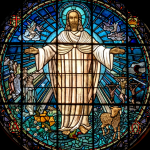
“You’re describing the Paschal icon,” Torn said. “The descent into Sheol. The Second Adam, Jesus, reaching down into the realm of the dead to grasp the hands of the first man, Adam. It’s not about rejection by the Divine; it’s about the Divine moving into the exile with us, meeting us where we are.”
“But what about the shame?” Gerard asked, his voice raw. “The man today… he was so full of shame. He wouldn’t even let me touch his shoulder.”
“Those are the garments of skin,” Madison said quietly. “We hide because we think we’re ‘naked,’ or ‘useless.’ We think if we show our poverty, we’ll be rejected. Augustine’s version made us fear God as a judge. He has us always in court being judged for every action. But Irenaeus’s version… it makes me think of a parent searching for a lost child. Yeah, didn’t Jesus use exactly that imagery in finding the lost sheep and in the Prodigal Son?”
”Someone knows their Bible,” Chaac said. “And yes, he did.”
”I’ve been exposed. Or drowned. I survived,” Madison said.
“We are curious, creative, and often selfish,” Torn said, tapping the board. “We harm others in our desire to know and to have. But is that separation? No, it’s not God who pushes us away. It’s because we offended our own sense of community and the Divine. We exile ourselves into our own guilt and shame.”
“I really like this idea,” Madison said. “We’re God’s children, not God’s nemesis. We misbehave like children always do, but sooner or later we see the right way. Our compassion teaches us through the results of our actions. Like all children, we miss the mark a lot on our way to becoming adults. God is tolerant of us just like we are of our children, if I had any, and we are tolerant of others… well, sometimes. And then one day we see the world with wisdom so we can be creative and solve problems and heal the world.”
“Thanks for the validation,” Gerard said. “I thought that’s what we are doing.”
The group laughed but became quiet. They weren’t just students anymore; they were researchers of the exile. And for the first time, the problem—the man on the street, the unemployment, the closed loops—didn’t look like a mountain of impossible physics. It looked like a path back to the Garden.
“So,” Zaid whispered. “If the solution isn’t about ‘being perfect’ to earn our way back… what is the first step of re-entry?”
”Loki says we need to follow God’s lead or we won’t go a productive direction. Is he wrong?” Tane asked.
”Maybe he has a point,” Gerard said. “I can’t believe I’m saying this, but it seems like physics to me. Maybe discovering the direction God wants everyone to go is part of what these meetings are about. Otherwise entropy and chaos rule.”
“Interesting,” Torn replied. “If it’s something like a first law of thermodynamics, is there an overarching truth that would describe this?”
“The law is that energy directed toward growth—toward the ‘Garden’—cannot be destroyed; it only changes form, from individual effort into community stability.”
The law is reciprocity,” Chaak said. “You cannot receive the ‘energy’ of Grace without passing it on. If you hoard it, the system clogs. If you circulate it, the system grows.”
“Our characterization of who we are,” Madison offered, “is a semiotic guiding principle. If we hang a symbol of depravation and shame over our heads, then we are likely to become exactly that because we believe that’s what we are. But if we hand a symbol of “God’s children” over our heads and lift each other up to great things, this is what we become.”
Torn looked at the five of them and then slowly circled their answers on the chalkboard, connecting them with a single line of chalk.
“You have just defined, as Gerard says, the ‘Thermodynamics of Grace,'” Torn said, his voice resonant in the quiet room. “In the physical world, a closed system eventually runs to chaos—that is entropy. But in the realm of the Divine, the system is designed to be open. Grace is not a static object you store in a bank; it is kinetic. It exists only when it is in motion.”
“So,” Gerard murmured, “when the system stops circulating grace—when the economy stops serving the person—it creates a ‘Closed Loop.’ And that Loop is the death of the system.”
“Exactly,” Torn said. “And the ‘symbol’ Madison mentioned is the trigger. If you label a man as ‘useless,’ you have effectively closed the loop on his human potential. You have induced entropy, returning them to a state of chaos.”
The group sat in stunned silence. They were no longer just talking about Adam and Eve; they were talking about the operating system of reality.
“Two competing theologies,” Madison stated. “Augustine sees us as all bad and hangs that sign over our heads. Irenaeus sees us as initiates, developing, maturing, becoming more like God. He hangs that sign over our heads.”
“So is it what you’re predisposed to see?” Zaid asked.
The room nodded in quiet affirmation.
“And that’s a lesson for us to learn,” Tane said. The group fell quiet, considering the implications.
Torn eventually broke the silence. ”What’s the next step in your quest?” Torn asked.
”I’m very unsettled by this kind of spiritual question that has us up in the air,” Tane mused aloud. “This hits home a little too much. I want to look at my own culture and their idea of creation. I want a better idea of where I fit.”
”Me, too,” Chaac said.
”I would really like to solve this problem of unemployment and a living wage,” Gerard said. “We could spend all summer on biblical interpretation and maybe still not know what direction to go in.”
Madison nodded in agreement. “I’m in the same boat with Gerard. I think I have my spiritual answer since I kind of follow Christianity. Well, mostly Jesus.”
Each of you follow your own quests for now,” Torn directed. But be aware we have a new problem. The Dean is threatening to pull our funding and your credits for this group, if we don’t stick to meat and potato issues like foreign manufacturing eating our lunch. In this political climate they don’t care about humanitarian issues. Please give that some thought.”
________________________________________________
This article series is based on my new research paper: Original Sin Versus Workshop for Growth.
Our answer is God. God’s answer is us. Together we make the world better.
Author’s Website with life and spiritual resources: Dorian Scott Cole .com
Recent website articles
- Original Sin Versus Workshop for Growth
- Theology of Catastrophe: a dissertaton style paper on why catastrophes happen.
- Ekklesia: a new format for a Jesus Gathering.
- Systematic Theology for the 21st Century
- Major Decision Matrix
 Open and Relational Theology








 Ad-Free & Subscriber Log-In