

The Wild Hunt is a spectral, nocturnal horde which was recorded in folklore all throughout ancient, medieval, and even early modern Europe, but was especially concentrated in the Germanic lands of northern Europe. Wild Hunts typically involve a “soul-raving” chase led by a mythological figure escorted by a ghostly or supernatural group of hunters passing in wild pursuit.
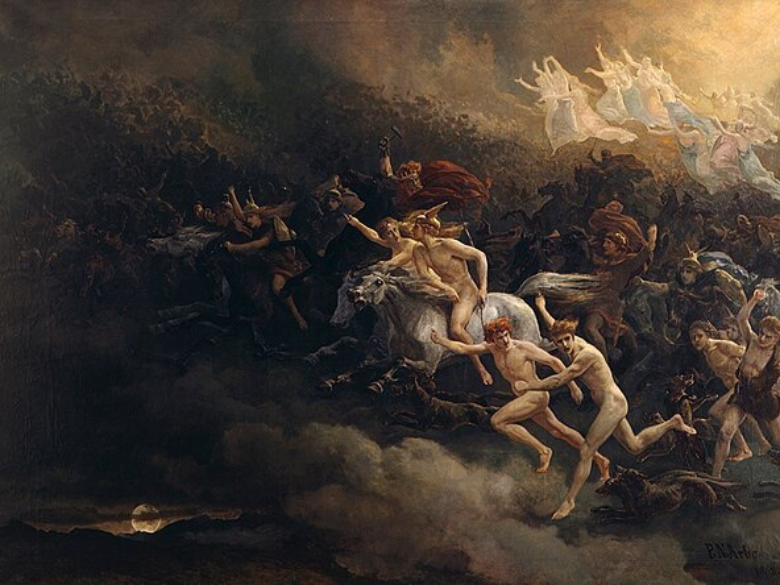
The Wild Hunt swept through the forests in winter, the coldest, darkest part of the year, when ferocious winds and storms howled over the land. Anyone who found themselves outdoors at night during this time might spot this ghostly procession – or be spotted by it. Being seen by The Wild Hunt might involve being carried away and dropped miles from where the unfortunate person had been taken up. Or worse. Others, practitioners of various forms of magic, joined in The Hunt voluntarily, as an intangible part of them flew with the cavalcade while their bodies lay in their beds as if sleeping normally. Sometimes, the members of the Hunt entered towns and houses, causing havoc and stealing food and drink. Seeing the Wild Hunt was thought to foreshadow some catastrophe such as war or plague, or at best the death of the one who witnessed it.
When accounts of the Wild Hunt mention a leader, the figure who filled this role varied greatly. In Germany, the leader could have been Perchta, Berchta, Frau Holle, or Frau Hulda.
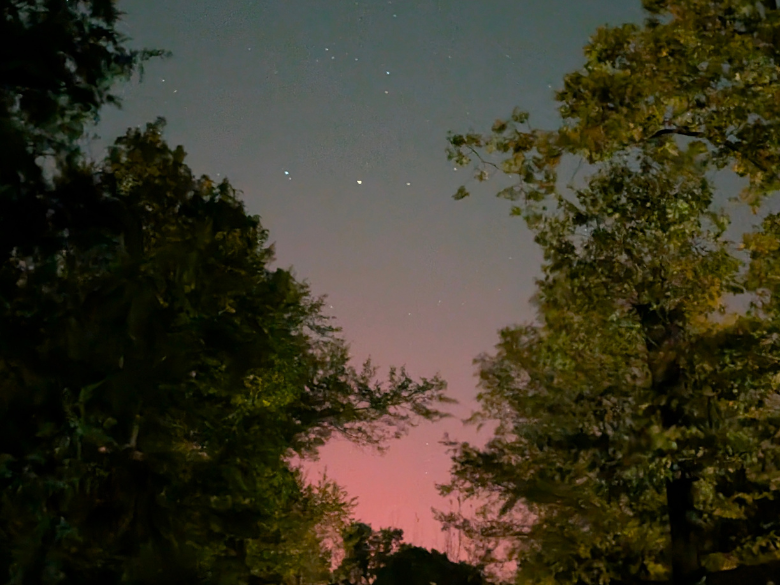
Odin in The Wild Hunt
However, as the Wild Hunt’s various names across the Germanic lands attest, one figure was especially closely associated with it: Odin, the god of the dead, of inspiration, ecstatic trance, battle frenzy, knowledge, the ruling class, and creative and intellectual pursuits in general. The myths describe Odin frequently riding throughout the Nine Worlds on his eight-legged steed, Sleipnir, on quests of a shamanic nature, another theme that connects him to the Wild Hunt.
What is the purpose of the Wild Hunt? If there ever was a specific purpose for the Wild Hunt, it seems to be lost to time. It may have once served as a lesson or parable to our Nordic ancestors about the dangers of winter. Nowadays modern Pagans consider the Wild Hunt to be representative of an initiatory experience. Anthropologist Susan Greenwood says of the Wild Hunt: “As far as practitioners of nature spiritualities are concerned, the Wild Hunt offers an initiation into the wild and an opening up of the senses; a sense of dissolution of self in confrontation with fear and death, an exposure to a ‘whirlwind pulse that runs through life’. In short, engagement with the Hunt is a bid to restore a reciprocity and harmony between humans and nature.”
Wode As a Gateway
Or perhaps it is a story of the need to let your hair down, to shed the veneer of civility and let your animal-self run free, if only for a night. Diana Paxson writes about the Wild Hunt in her book “”Odin””:
“One of the earliest understandings of Odin was Wode, the transforming passion, the wild rage. To be caught by the Wild Hunt meant one of two things: if you were prey you had to keep before the Wild Hunt all night or the pack would rend you asunder for it’s wild lord’s pleasure.
The hunt took others than prey. The horn of the huntsman calls to the blood, the song of the wolf calls to the hunter, the killer, in all of us. If the Wild Hunt took you and you ran with it, civilization was thrown aside, humanity cast off like a tattered cloak, and you ran naked with fangs bare and no more between your hunger and the night than a wolf has.
The fire in the blood, the transforming passion, the madness and ecstasy of throwing off your cares, your inner conflicts, and following the wild hunt with only the joy of the hunt, the sweet taste of fear in the night, and the song of the pack; these are dark and splendid gifts.
Our modern lives chain us with responsibility and care. Duty and struggle, anxiety and endless imperfect compromises fill us with internal stress and conflict we can never set down, never escape.”
Wode: Embracing The Wild Hunt
Wode. The Wild Huntsman. Primitive. Some say that Wode is the darkest face of Odin. Wode and his hunt are that throwing off of civilization for a howling embrace of life. What happens in Vegas, stays in Vegas. We jump out of perfectly good airplanes. We pay money to put a fragile kayak into the part of the river called Hell’s Gate, where the railroad was measured in dead men per mile. We hang from cliffs while hammering a ring backed nail into rock while tourists pass overhead in heated gondolas above the abyss you dangle over. How many times and how many ways do we find that taste of madness, that wild embrace of passion that is our last best preserver of sanity?
Somewhere inside, part of us listens for the sound of the horn above the TV, listens for the call of the pack above the AC. Some part of us chafes at our centuries of progress and burns for just one last chance to howl.
The Wild Hunt calls to the wild animal – the wolf, the raven, the dragon, the bear – in each of us. We must all find a way to answer the call without compromising ourselves. My wish is that as we enter into winter, you find a way to balance the call of nature with the need of society.














 Ad-Free & Subscriber Log-In