

Chaos Magic: A Complete Beginner’s Guide by Ivy Corvus
Published by Moon Books – February 2026
136 pages
Paperback: $10.95, Kindle: $9.99
Traditionally, magic and religion have gone hand-in-hand. Most of the spells in the Greek Magical Papyri were written by Greco-Egyptian priests trying to make some extra money on the side. Kabbalah is mainly Jewish mysticism. My own spells often ask a deity or deities to “add your magic to mine.”
But what if you want the magic without the religion?
Or maybe you prefer to keep your operative magic separate from your devotion?
Or what if you’re just looking for a new and effective set of magical tools?
Welcome to chaos magic.
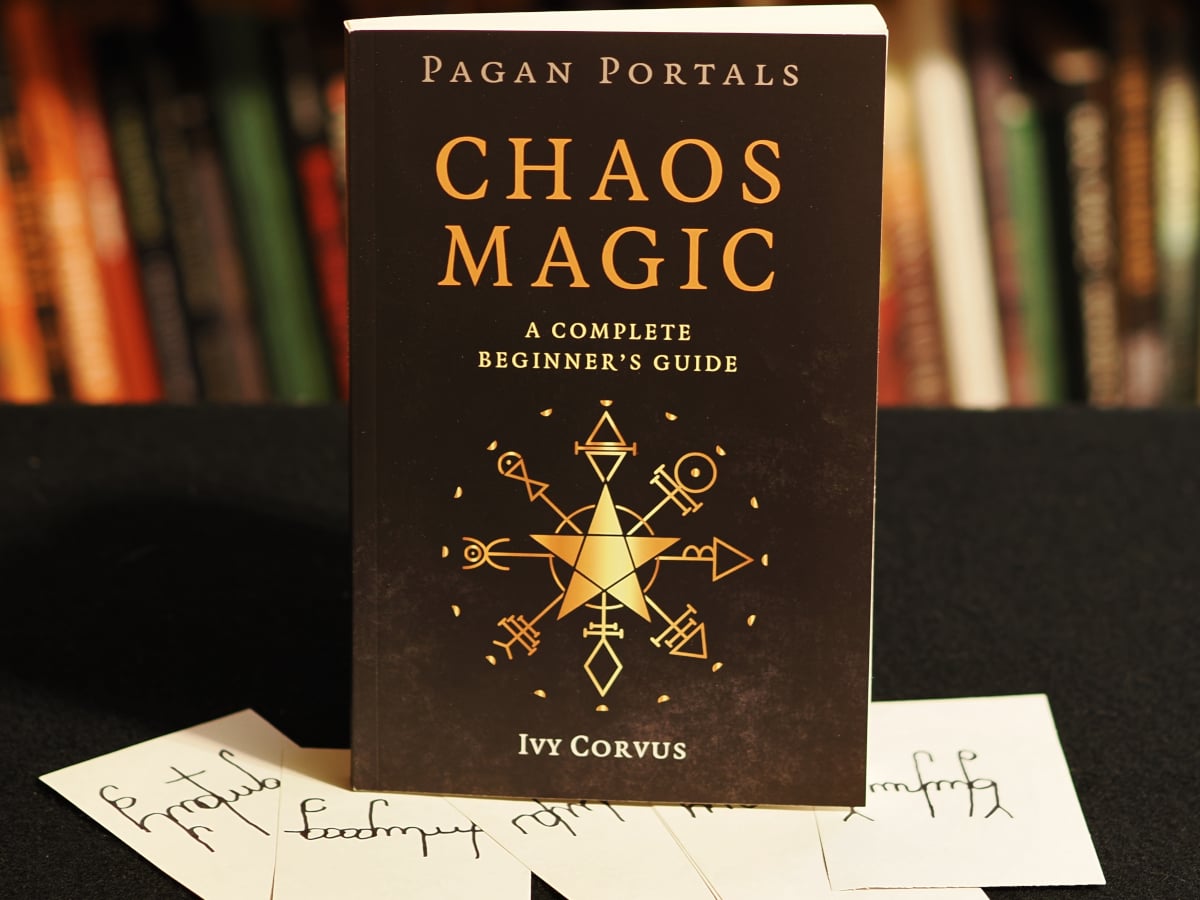
A much-needed introductory book
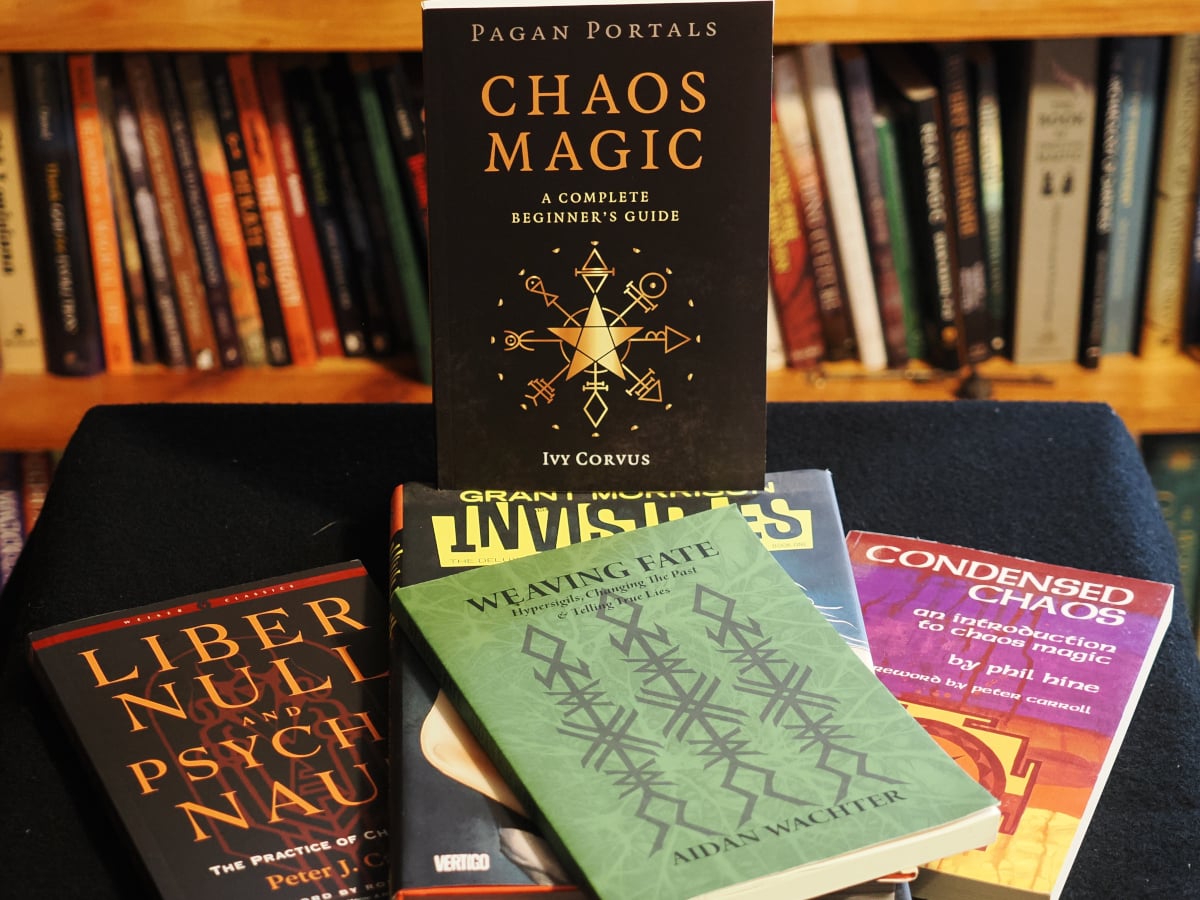
Chaos magic has been around since Austin Osman Spare in the early 1900s. It took off in the 1970s, and there have been numerous good books by and for chaos magicians, especially those by Peter J. Carroll, Ray Sherwin, and Phil Hine. I’ve read some of them, and the ones I’ve read have been good.
They have not been easy to read.
Part of that is the very nature of chaos magic. It’s highly subjective, it focuses on trial and error, and it emphasizes personal experience. Chaos magic was FAFO before FAFO was a thing, and reading is no substitute for f’ing around.
At the same time, it’s always good to learn a thing or two about what you’re going to do before you start trying to do it. While it’s good to learn from your mistakes, it’s better to learn from other people’s mistakes.
And now we have a good, short, easy to read introduction to chaos magic. Chaos Magic: A Complete Beginner’s Guide by Ivy Corvus came out earlier this year. I read it this week and it’s a great place to start with chaos magic. As the introduction says:
Written as a short guide, simplifying the complexities of chaos magic theory without diluting its essence, this book will help you dip your toe into the alchemy arcade of chaos magic.
This is the book I wish I had when I first heard about chaos magic and wanted to give it a try.
Theory – understanding why we do what we do
The book is divided into two sections: Theory and Praxis.
Theory begins with basic definitions of magic. Ivy says “magic … is a spiritual practice that harnesses the forces of the universe to bring about desired changes into the practitioner’s life.” I tend to lean on Aleister Crowley’s definition (“the science and art of creating change in conformity with will”) but this definition is also good.
I really like that Ivy says “real magic is deeply rooted in willpower, intention, and the manipulation of subtle energies” and then emphasizes “magic is subtle. It requires patience.” Too many people come into magic expecting miracles right away. Not only do they quit too soon, they often overlook the magical successes they do have.
How does magic work? Ivy offers four models. The spirit model, the energy model, and the psychological model are similar to my own three-fold theory of magic. Her fourth model is a meta-model that says “the power of magic is unknowable as we can only experience reality subjectively.”
One of the key principles of chaos magic is that we don’t have to know how something works to make use of it. Chaos magic encourages belief shifting, pragmatism, avoidance of dogmatism, and above all, an emphasis on results. If your beliefs lead to good results, keep them. If they don’t, get rid of them and try something else.
There is a chapter on gnosis – how we come to know things through non-ordinary methods, especially through altered states of consciousness. The book covers multiple ways to achieve altered states, including inhibitory states (meditation, sensory deprivation, exhaustion) and excitatory states (dance and movement, sexual excitement, entheogens).
Praxis – time to get your hands dirty
The section on praxis includes a basic guide to sigil magic, and I’m very happy about this. Sigil magic is a simple and effective technique – when I need results, it’s one of the methods I choose most frequently.
It also discusses hypersigils, as first articulated by Grant Morrison and described in detail by Aidan Wachter in Weaving Fate (2020). I’ve used hypersigils before with great success, and I’ve got two in-process now (assuming all goes well – and I think it will – I’ll finally talk about them sometime next year).
The chapter on magical entities is exactly what’s needed for an introductory book. It goes into detail on how to create and maintain servitors to help with magical workings. But while it does a good job of explaining what tulpas and egregores are, it makes it clear that these are far beyond beginners. It lists several books you can read if you want to learn enough to try.
Giving a beginner a guide to creating a tulpa would be gross magical negligence. Mentioning it and leaving the reader on their own would be frustrating. I’m happy to see Ivy took an approach that is both responsible and helpful.
I flat-out do not like pop culture magic, but it’s been a part of chaos magic since the 1970s and some people find it helpful, and so it has a place in this book.
The chapter on “More Chaos Techniques” covers visualization, invocation, and divination. Again, this is an introduction – if you want to get good at any of these, you’ll need lots of practice, and probably another book or two. But this book will get you started.
The book concludes with a bibliography and reading list that point the reader in helpful directions for learning more.
Who should read this book
Chaos Magic: A Complete Beginner’s Guide is ideal for anyone who’s interested in chaos magic – or just magic in general – and is looking for help getting started. If you’re an experienced chaos magician you probably don’t need to read it, although the bibliography and recommended reading list will be useful to anyone. It shouldn’t be the only book you read, but it’s a great place to start.
For those who care about such things, Moon Books sent me a review copy of this book. But my only obligation is to the reader – this is my honest opinion of the book. It’s a very good introduction to chaos magic and I’ll be recommending it to others for years to come.
















 Ad-Free & Subscriber Log-In