

This past week I talked with Serena Saint-Sinclair for her Beneath the Bloom podcast (the episode will be out in early April – I’ll share it as soon as it’s available). At one point we got to talking about rituals and ritualists, and then after it was over Serena e-mailed me and asked “what makes a good ritualist?”
I gave her a quick answer, but I also let her know that answering fully would probably take a blog post. As ritual is important to most of us as Pagans (and as humans), I think it’s worth diving deeper into the subject.
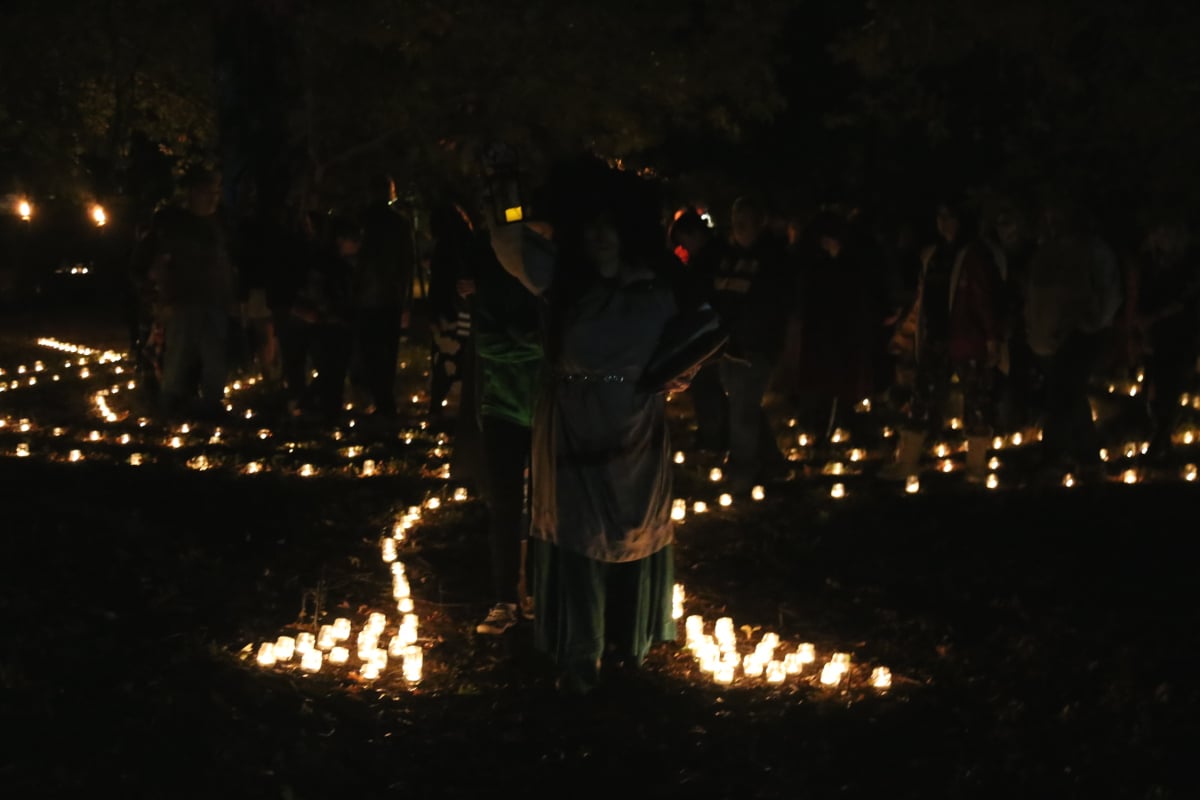
Ritual? Ceremony? Ritualist?
We need to start with some basic definitions. Some people prefer “ritual” and some prefer “ceremony” – we need to not get hung up with dictionary definitions.
Rituals and ceremonies are the formal and symbolic activities we do to create change and/or commemorate an event, and in doing so form and maintain relationships and identities. Our high day rituals bring us together as a community and remind us what it means to be Pagans.
In common usage “ritual” has a stronger and often darker connotation – sometimes literally. Ceremonies are day things – rituals are done at night. We say wedding ceremony but exorcism ritual. In practice, though, the two words are largely interchangeable.
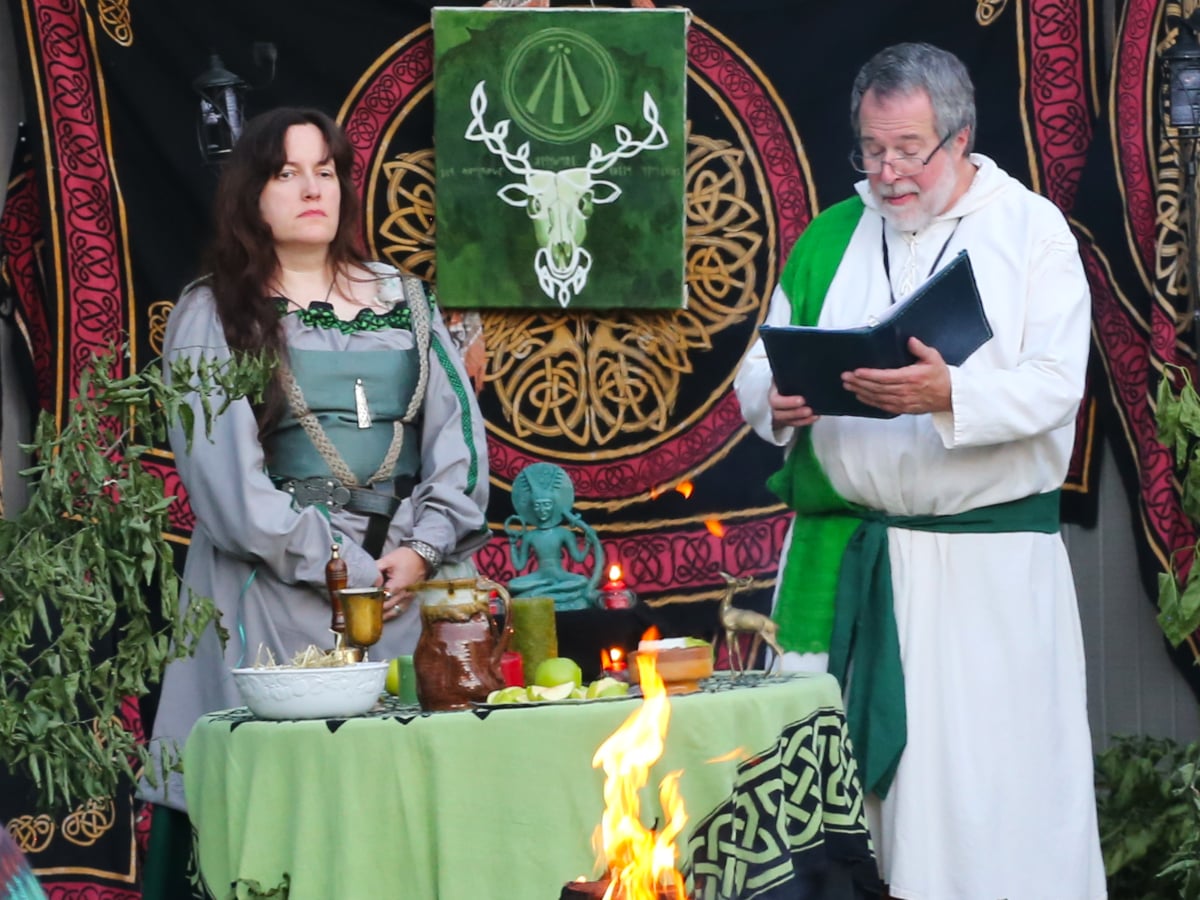
A ritualist is a person who composes, plans, and leads ritual. In some traditions, they’re the High Priestess or the Chief Druid. In others, they’re the person responsible for coordinating the upcoming event. They may be the person front and center leading the liturgy, or they may just be the planner and organizer who takes a small part and shares the bulk of the ritual work with others.
I’ve always been intrigued by ritual
One of the many things I missed growing up in a small fundamentalist church was the lack of ritual. The few rituals they had were watered down to avoid appearing “too Catholic.” I was fortunate to join a college fraternity with a very good initiation ritual. It’s inspired by Freemasonry – beyond that I can say no more.
As a Pagan, I’ve put a lot of work into creating and presenting rituals. I’ve been honored to lead rituals at conventions and gatherings around the country. I’ve participated in some excellent rituals led by others – I’ve tried to learn from them. And I’ve participated in some truly bad rituals – I’ve learned from those as well.
Based on all that, here’s what I think it takes to make a good ritualist.
A good ritualist loves ritual
When an actor gives an uninspired performance, we say they’re “phoning it in.” The part didn’t really matter to them, so they did the bare minimum.
We sometimes see the same thing with ritual. And not just with the presentation but also with the composition and planning. You don’t have to compose something completely new for every event. Nor should you – one of the meanings of “ritual” is “convention” or “habit.” Using common elements in every ritual leads to familiarity and a sense of cohesion. But using the same quarter calls every time because you like them is one thing – doing the same main working over and over again gets old.
And also, you can see who’s put in the preparation to get things right and who threw a script in a binder and is working through it for the first time.
You don’t have to have the near-obsession I have with ritual to be a good ritualist. You do have to care about what you’re doing. It has to be important to you.
A desire to facilitate religious experiences
Many of us grew up in churches where religion was a passive thing. You come in and sit down, listen to some music, maybe join in a reading or a common prayer (or maybe not even that), listen to a sermon, and then go home. The architecture of many contemporary non-denominational churches emphasizes being part of an audience, not part of a congregation.
Good religion – especially good Pagan religion – is an experiential thing. We don’t just hear someone talking about our Gods. We talk to them and listen for them and we feel their presence. We don’t just sit quietly (or worse, stand in place the whole time) we move our bodies. Paganism is a sensual religion – it’s something we experience with all our senses.
A good ritualist helps people have religious experiences. We can’t command the Gods and spirits and we can’t make people see and feel what they aren’t willing to see and feel. But we can create an atmosphere that makes it more likely people can have a spiritual experience. We can plan and lead participative elements that help people do and feel instead of just sitting and listening.
A good ritualist isn’t interested in making themselves look and sound important. A good ritualist is interested in facilitating religious and spiritual experiences in others.
A desire to form and maintain relationships
We can get so caught up the “what” and the “how” that we forget the “why.”
Ultimately, ritual is about relationships: between the participants and their Gods and ancestors, the spirits of the land where they are, and their virtues, values, and traditions. And it’s about the relationships between the participants. Each occurrence, each presentation of a ritual is at least subtly different. Everyone in attendance will share an experience that no one else will ever have, even if they participate in the same liturgy over and over again.
Good ritualists know how to form, maintain, and strengthen relationships on multiple levels.
An understanding of ritual themes and elements
So far we’ve talked about love and desire – two very important things. But a good ritualist doesn’t just want to do a good job, they know how to do a good job.
Does your tradition have a standard liturgy? Know it inside and out. What are the necessary elements? What do they do? How do they combine to become one complete ritual and not just a bunch of elements thrown together?
What are the themes of your holy days? A Beltane ritual is different from a Samhain ritual, and both are different from a Winter Solstice ritual. A ritual honoring Brighid may have many or even all of the same elements as a ritual honoring the Morrigan, but they will look and feel different.
Good ritualists are familiar with the myths their rituals commemorate and/or re-enact. The best ritualists know the stories in depth, because they’ve read them, studied them, discussed them, meditated on them, and contemplated them over and over again.
An understanding of what works and what doesn’t
It’s one thing to understand why we call the spirits of the elements and directions to begin a ritual. It’s another thing to know which quarter calls will be effective in ritually re-creating the universe and which ones are pleasant rhymes but nothing more. Which decorations create an otherworldly atmosphere and which ones remind you of a Halloween party?
A good ritualist knows the principles of magic. They know how to raise and direct energy… and they know that the techniques that work for 13 may not work for 30 and definitely won’t work for 100.
A commitment to presentation
Temples were our first theaters. Priestcraft and stagecraft share many similarities.
I’m glad to see this piece by UU minister Rev. Victoria Weinstein is still up after 17 years. It’s titled Serving Dionysus and it’s about the holiness of the theater. Rev. Weinstein says “a faithful Catholic will attend Mass to receive the Eucharist no matter how inept or unenergetic the parish priest. Patrons of the performing arts, however, tolerate no such sloppiness.”
You can put most Pagans safely in the “patrons of the performing arts” section.
I’m not a natural public speaker. I have some talent for writing, but when it comes to speaking everything you hear is the result of years of deliberate practice. I got started because my desire to lead ritual was greater than my fear of public speaking.
In 2020 – when most of us were doing our rituals online – I wrote Speaking Effectively In Ritual. I encourage you to read the whole thing, but the key points are:
- Better to read well than to memorize poorly
- Don’t just read – perform
- Speak slowly and loudly
- Practice the ritual
The best ritualists aren’t just good writers and directors. They’re also good presenters.
A willingness to do the necessary work
A good ritual is a lot of work. Research, composition, stage directions, logistics, rehearsal, setup, presentation, and the important conversations that come after it’s all over. And then taking down everything you set up. That’s on top of all the skill-building discussed above. You can’t just show up, read your lines, and go home.
The best ritualists do the necessary work, because they know it’s worth it.
The best ritualists I know
This isn’t a ranking. I’m sure I’m overlooking a few people I know and a bunch of people I wish I knew. But when someone asks “who are the best ritualists you know?” this my answer.
Ivo Dominguez, Jr. I haven’t been to a lot of Ivo’s rituals, but the ones I have attended have been amazing. They’re big and powerful. They have a clear purpose, an effective plan, and an attention to detail unlike anything I’ve seen elsewhere, including my own rituals.
Ivo would tell you that if his rituals are great, its because he has many skilled and effective co-leaders. That wouldn’t be false modesty – he does. But most of those co-leaders learned from him, and he set the standard they meet.
Kristoffer Hughes. I’ve seen Kris take a basic seasonal celebration and make it something deeply meaningful for everyone. I’ve seen him invoke Cerridwen in a hotel ballroom and looked around as everyone experienced her presence. I’ve seen him take a part in a standard Druid ritual – a part I’ve done myself on other occasions – and transport people between the worlds.
Kris is a professional actor and it shows. But more importantly, he’s intimately familiar with the myths and the persons he’s presenting. When he leads ritual he isn’t acting. He’s using his acting skills to serve a sacred purpose.
Jason Mankey. Most of Jason’s rituals I’ve seen have been at conventions and gatherings where he had no temple, no decorations, no props, and no co-leaders. It was just Jason and an outline, that may or may not have been written down. And people still walked away feeling like they had experienced something sacred and magical, because Jason knows how to do witchcraft.
I’m still trying to figure out how to adapt his methods to my style of rituals.
Cynthia Talbot. When Katrina Rasbold wrote “The New Vanguard: 10 Pagan Voices Shaping Our Future” for Green Egg Magazine, I saw a few people complain that the list was all authors and that it ignored people doing good and necessary work at the local level. That’s mainly because Katrina and others have no way of knowing who’s doing good and necessary work at a local level that isn’t their own.
Cynthia Talbot does good and necessary work in Denton, Texas, and occasionally beyond. She isn’t well-known because she doesn’t write books or post on Instagram or TikTok. But she’s one of the best ritualists I know, and I’ve been honored to work with her for the past 18 years. Her rituals are grounded in the love of the Gods and the understanding that effective witchcraft means getting your hands dirty.
She does a pretty good job with UU Sunday Services too.
For further reading
A Ritual of Resistance and Alliance (July 2025)
We’re Pagans – We Do Ritual (March 2024)
The Evolution of My Pagan Ritual Liturgy (May 2020)
8 Essential Elements of Good Pagan Ritual (October 2019)
“I Didn’t Expect It To Be So Real” – The Power of Good Public Rituals (May 2019)









 Ad-Free & Subscriber Log-In