

It’s a question as old as humanity and as personal as your own pain – why does God allow bad things to happen? When things go wrong, or when prayers seem to go answered, or even when life feels unfair, our hearts ache for understanding.
The Bible reminds us that God is not the author of evil or chaos. He is the Redeemer who meets us in the middle of it all, turning pain into purpose and sorrow into strength. Through the Scriptures we see that suffering doesn’t mean God has abandoned us, it means He’s still writing the story.

Sometimes Life Hurts
When life falls apart, our first question is often “Why, God?” Pain makes us search for purpose, but Scripture reveals that God’s presence is often clearest in the middle of our suffering.
When tragedies strike like illness, loss, injustice, or disaster, our hearts cry out, “Why would God let this happen?” Did you know that even in Scripture people asked the same question? In fact, Jesus Himself addressed the question in Luke 13, showing that pain isn’t always punishment, but rather a call to repentance and a reminder of our need for God.
Jesus’ Response to Tragedy (Luke 13:1–5)
“Or those eighteen on whom the tower in Siloam fell and killed them, do you think that they were worse sinners than all other men who dwelt in Jerusalem? I tell you, no; but unless you repent you will all likewise perish.” (Luke 13:4–5)
People in Jesus’ day assumed tragedy was divine punishment because the victims must have sinned more than others. But Jesus corrected them by explaining that suffering isn’t always the result of personal sin. Instead, every tragedy is a reminder that life is fragile, and every day is a chance to repent and turn back to God.
The word repent comes from the Greek metanoeō (μετανοέω), meaning “to change one’s mind or direction.” In other words, suffering can serve as a wake-up call providing an invitation to turn from self-reliance and return to God’s grace.
The Broken World We Live In
“For we know that the whole creation groans and labors with birth pangs together until now.” (Romans 8:22)
Our world wasn’t created for pain. But when Adam and Eve disobeyed God in the Garden of Eden, sin entered the world and with it came death, disease, and disaster. Their one act of rebellion opened the door for Satan to gain influence over the earth. What God had designed for life and harmony became a battlefield of temptation, corruption, and suffering.
(To Read About What Happened in the Garden of Eden, Click Here)
Scripture reminds us that Satan now operates as “the ruler of this world” (John 12:31) and “the god of this age” (2 Corinthians 4:4) and as such, he is blinding hearts and working to destroy what God loves most, His people. This is why evil persists and why bad things are inevitable in a fallen world. Though God is sovereign, He has allowed humanity to experience the consequences of sin and the reality of spiritual warfare until Christ’s ultimate victory is complete.
“Be sober, be vigilant; because your adversary the devil walks about like a roaring lion, seeking whom he may devour.” (1 Peter 5:8)
Even so, God’s power is greater than the enemy’s. Jesus has already conquered Satan’s claim at the cross and will one day fully restore creation to its original perfection. Until then, we live between two worlds, one groaning under sin’s curse and one being renewed by Christ’s redemption.
God Uses Pain to Refine, Not Destroy
“But He knows the way that I take; when He has tested me, I shall come forth as gold.” (Job 23:10)

The story of Job teaches us that even when we don’t understand our suffering, God does. The pain God allows us to endure is never random, it’s refining. Through trials, our faith is tested, purified, and strengthened.
The Greek word dokimion (δοκίμιον), used for “testing,” and means a proving ground. It leads to the evidence that our faith is genuine. God uses hardship to reveal the depth and authenticity of our faith and trust in Him.
Trials Build Strength and Character
“My brethren, count it all joy when you fall into various trials, knowing that the testing of your faith produces patience.” (James 1:2–3)
Just as muscles grow through resistance, our spiritual endurance grows through struggle.
And God never wastes our pain. Each hardship becomes a tool in His hands to shape our faith, whittle down our pride, and form us into the likeness of Christ.
“And not only that, but we also glory in tribulations, knowing that tribulation produces perseverance; and perseverance, character; and character, hope.” (Romans 5:3–4)
In these verses, Paul reminds us that trials are part of our spiritual progression: they build perseverance, then character, and finally hope. In other words, God uses what hurts us to grow what lasts within us.
The word patience in James 1 comes from the Greek hypomonē (ὑπομονή), meaning “steadfast endurance.” It does not refer to passively waiting, it’s an active, faith-filled perseverance that refuses to give up. When we trust God through our difficulties, He develops in us a spiritual maturity that comfort could never produce.
“But let patience have its perfect work, that you may be perfect and complete, lacking nothing.” (James 1:4)
When we embrace trials with faith, they cease to be obstacles and become opportunities to grow stronger, wiser, and more like Christ. What feels like breaking may actually be God’s process of building.
God Brings Good Out of the Bad
“And we know that all things work together for good to those who love God, to those who are the called according to His purpose.” (Romans 8:28)
In this verse Paul isn’t saying that all things are good. He’s saying that God can work ALL things (not SOME things) together FOR good and that’s a big difference. Even when we go through severe trials, God takes our sorrow and turns it into something redemptive. This includes the bad decisions we make.
Example: Joseph’s Story
Joseph’s life is proof that God can bring purpose from pain. Betrayed by his brothers, sold into slavery, and wrongfully imprisoned, Joseph could have given up. But in time, God used his suffering to save countless lives from famine. Joseph told his brothers:
“But as for you, you meant evil against me; but God meant it for good, in order to bring it about as it is this day, to save many people alive.” (Genesis 50:20)
What others meant for harm, God transformed into hope. The same God who redeemed Joseph’s suffering is still redeeming ours today.
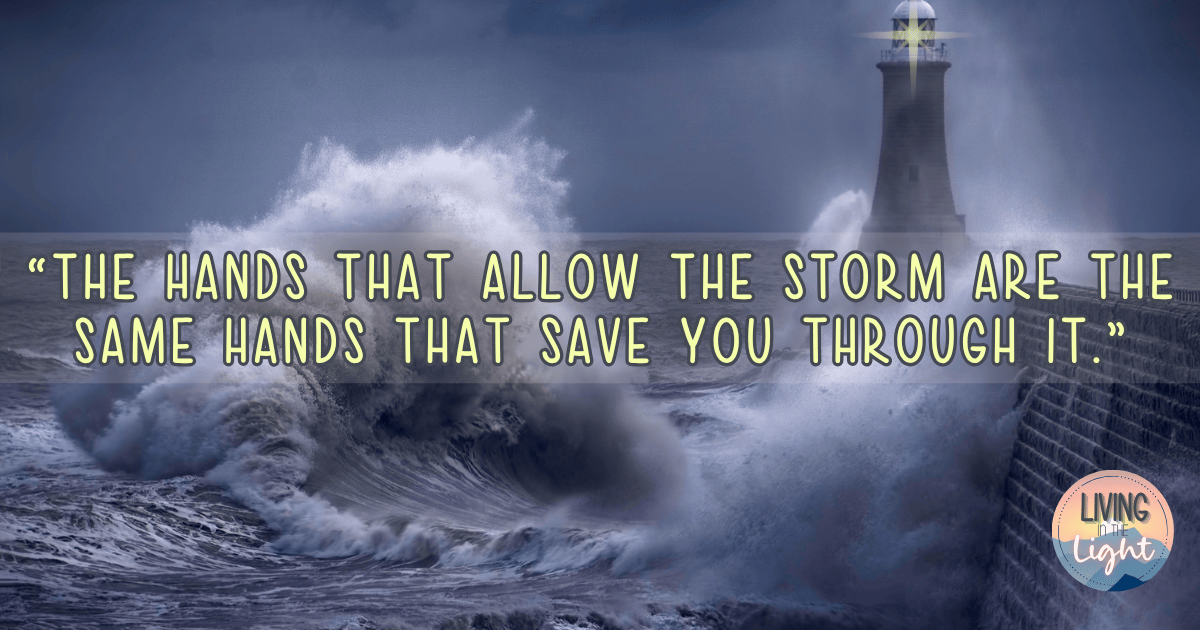
Our Pain Has an Eternal Purpose
“For our light affliction, which is but for a moment, is working for us a far more exceeding and eternal weight of glory.” (2 Corinthians 4:17)
Every ache and heartbreak has an eventual outcome. To us, pain can feel endless. To God, however, it is a momentary refining that prepares us for eternity. The hardships we endure on earth are not wasted. They are producing glory that will one day far outweigh the suffering that caused it.
Even Jesus, the Son of God, was “a Man of sorrows and acquainted with grief” (Isaiah 53:3). Yet through His suffering came salvation for the whole world. In the same way, our trials – though not equal in purpose – are threads that God weaves into the redemptive story of our lives. When we share in Christ’s sufferings, we also share in His victory.
“For I consider that the sufferings of this present time are not worthy to be compared with the glory which shall be revealed in us.” (Romans 8:18)
One day, every tear will make sense in the light of His presence. God will not only comfort us; He will restore what was lost and reward what was endured. Pain has an expiration date, but God’s glory does not.
(Click Here to Read: Where Do You Find Hope?)
Closing Reflection
Jesus never promised that life would be easy. In fact He told us that we would definitely face trials (John 16:33). Luke 13 reminds us that tragedy should not drive us to bitterness but to repentance, humility, and hope. We may not always understand why bad things happen, but we can always trust the One Who holds us through them.
When life hurts, remember: God is not absent in your pain, He is working in it, through it, and beyond it.
Blessings,
Amy
“I’d love to hear from you! Please feel free to share your insights, experiences or questions in the comments section at the bottom of the page.”














 Ad-Free & Subscriber Log-In