

Anchor Verse Luke 10:38-42
Introduction
This week, as part of my Christmas preparation series, I’m preaching at a church during their “hanging of the greens” event, which aligns with Christ the King Sunday. I’ll reflect on Luke 10:38-42 and discuss how we prepare for the holidays—through decorations, hosting guests, treating each guest as representing Christ, and recalling preparations for our children’s births, especially since two of mine arrived during this season.
The Significance of Christ the King
Christ the King Sunday is a modern liturgical observance with deep theological meaning. It’s designed to affirm Jesus Christ’s ultimate authority and kingship over all creation. It serves as the dramatic conclusion to the liturgical year, bridging the end of the current cycle with the beginning of Advent (a new cycle anticipating Christ’s coming).
The Feast of Christ the King was instituted by the Catholic Church in response to 20th-century secularism and totalitarianism. Pope Pius XI introduced it through his 1925 encyclical Quas Primas, asserting that “the Peace of Christ in the Reign of Christ” offered a solution to modern societal challenges. Celebrated on the last Sunday of Ordinary Time, just before Advent, this feast closes the liturgical year and anticipates Christ’s coming. It highlights Christ’s kingship as profoundly distinct from earthly power; His reign is defined by service, sacrifice, and truth rather than politics or territorial rule. The Gospel reading often includes Christ’s words to Pilate—“My kingdom is not of this world”—emphasizing the spiritual and universal nature of His dominion.
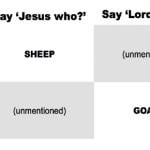
Unlike earthly rulers, Christ’s authority is revealed through humility and selfless love, epitomized by His suffering and death on the cross. Pilate’s inscription, “JESUS OF NAZARETH, THE KING OF THE JEWS”, underscores that Christ’s greatest act as King was one of sacrifice. The feast also points to Christ’s eschatological role as judge over all history, where he will evaluate nations by their treatment of the poor and marginalized, as depicted in the Parable of the Sheep and the Goats. This narrative demonstrates that true allegiance to Christ involves a commitment to social justice and compassion. Ultimately, Christ is celebrated as Alpha and Omega—the beginning and end of all things.
Preparing for Birth: Cultural and Personal Experiences
My two oldest daughters, AJ, were born on December 14, and Izzy was born on November 14. I remember before AJ was born, we had gone to the Christmas party at the school I was attending, my wife wore a green dress and was quite big. Before Izzy’s birth, my wife had taught childbirth education class, and we went grocery shopping. We lived in small apartments for both of the girls. Izzy’s birth was special for two reasons, it would be first home birth we would have, and she decided she was not waiting to be born, she was born in 45 minutes, with the mid wife arriving around 30 minutes after her birth. Our other two children would be born at home as well. I remember Faith (January) taking her good old time to be born and Tina being very pregnant with our youngest Sarah (September) when we went to the fair that year.
All cultures have their own customs for preparing for childbirth. For example, in many Mayan communities in Mexico and Guatemala, midwives guide families through preparations using traditional physical and ritual practices. In Chinese culture, expectant mothers follow dietary guidelines and focus on health recovery, observing principles of hot and cold (Yin and Yang) from pregnancy through the postpartum phase. Finland’s approach is built into its welfare system, highlighting equality, education, and material support for every family expecting a child. These different traditions can be connected to the Advent season, which centers around waiting and preparing for the birth of Christ. We put up trees, sing songs, make special foods, visit friends and family and join in worship, prayer and song. We make way for the coming Christ child.
Preparing for Guests: Everyday Hospitality
As a family of 6, our house can get really messy. Often at the last minute, you will either myself or my wife hollering at the kids to clean up messes around the house in an often frantic and disorganized manner. Reflecting on the Rule of Saint Benedict, Chapter 53, we are challenged to take on a different posture. Chapter 53 emphasizes that all guests should be welcomed as if they were Christ, highlighting the importance of hospitality in monastic life. This includes offering genuine kindness, prayer, and attentiveness to their needs, creating a space for spiritual renewal and connection.
Preparing for guests isn’t just about cleaning and cooking; it’s a profound spiritual exercise rooted in hospitality. You can prepare by focusing on the spiritual posture you adopt, ensuring you serve with genuine love and presence. In the next section, I will be reflecting on two spiritual practices, reverence, and transformation that can guide us in our preparation.
Here, I am reminded of Abraham in Genesis 18, who welcomes three strangers into his home, demonstrating great hospitality by offering them water, food, and rest. This encounter is significant as it highlights the importance of kindness to others and the potential for divine presence in unexpected forms.
Reverence and Transformation as Preparation
“Reverence “is the way of radical respect. It recognizes and honors the presence of the sacred in everything — our bodies, other people, animals, plants, rocks, the earth, and the waters. It is even an appropriate attitude to bring to our things since they are the co-creations of humans and the Creator.” Transformation on the other hand “usually involves the shedding of old ways, especially those that have become burdens. This practice proclaims that no matter who you are, no matter what has already happened to you, no matter what you have done, it is still possible to be and do something new.” During the holiday season, we are constantly challenged to engage in these practices through the people we meet and the experiences we have. Every year we celebrate the coming of Jesus is a reminder of how we can be transformed by the renewing of our minds. Making sacred space for the divine presence in all helps us deepen our awareness of our spiritual selves and the divine presence in others.
Looking back at the story of Abraham a bit deeper, we get a sense of the importance of reverence and transformation as practices to help us prepare. Abraham’s encounter with three visitors in Genesis 18 begins with a striking act of humility and respect. When he sees the men approaching his tent, Abraham runs to greet them and bows low, demonstrating the deep cultural value placed on hospitality and reverence for guests. Abraham’s hospitality is evident as he offers water for their feet, a place to rest, and instructs Sarah to prepare bread while he selects a choice calf for a meal. These actions reflect his eagerness to serve and provide the best for his visitors, going beyond basic hospitality to show genuine generosity and care.
The significance of the visit becomes clear when the guests—often interpreted as divine beings—bring the promise that Sarah will bear a son, despite her age. This story underscores the importance of welcoming strangers, as such encounters may carry profound spiritual meaning and reveal the presence of God in unexpected moments. As we hang the greens or prepare our homes for Thanksgiving and Christmas. Let us be mindful of how we are welcoming Christ in our home. The practices of the reverence and transformation challenge us to create an intentional posture that echoes Jesus’ challenges in Luke 10:38-42 and other traditions. As we reflect on reverence and transformation as acts of preparation, it’s important to recognize that these practices extend far beyond our homes and holiday traditions—they shape how we approach the birth of something new, whether that’s welcoming guests, embracing change, or awaiting the arrival of a child. Just as Abraham’s hospitality opened the way for divine promise, our intentional preparations during this season invite us to encounter Christ afresh, preparing our hearts not only for the celebration of his birth, but also for the daily moments where we might meet him in others. This mindset sets the stage for exploring how various cultures and personal experiences shape preparations for significant births, fostering a sense of anticipation and hope that resonates deeply with the spirit of Advent.
Conclusion
I want to close with a challenge, “How will you prepare your heart and life for the King?” In this post, I have explored how the practices of hospitality, reverence, and transformation are central to preparing for Christ the King and the Advent season. I have drawn from both biblical narratives—such as Abraham’s generous welcome of strangers in Genesis 18 and Jesus’ teachings in Luke 10:38-42—and personal family experiences, highlighting that true preparation is not just about external activities like decorating or hosting guests, but about adopting a spiritual posture of humility, service, and openness to transformation. I reference the Rule of Saint Benedict to underscore the idea of welcoming each guest as Christ, emphasizing that genuine hospitality involves attentiveness, kindness, and creating space for spiritual renewal. These practices are further illuminated by cultural examples of childbirth preparations from Mayan, Chinese, and Finnish traditions, showing how different communities express anticipation and care as they await new life, mirroring the expectant hope of Advent.
Finally, I encourage you to reflect on your own preparations for the coming of Christ the King, considering not only the outward traditions but also the inward readiness of our hearts and lives. You are challenged to engage in intentional practices of reverence and transformation, allowing these spiritual disciplines to shape their approach to the holidays and beyond. By doing so, each one of us is challenged to prepare not just our homes, but our inner lives, so we may encounter Christ in both anticipated celebrations and the everyday moments of welcoming others, thus embodying the hope and anticipation that define the Advent season. Preparation is a process of becoming, a process of excitement, a process of wonder. Let us open our hearts and minds to the spirit of preparation this holiday season.












 Ad-Free & Subscriber Log-In