

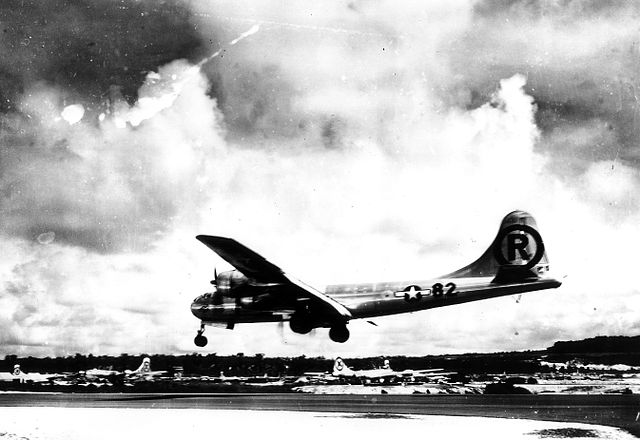
This past Saturday at our monthly Empty Moon half day sit, Roshi Edward Sanshin Oberholtzer offered a reflection out of the anniversary of the atomic bombings of Hiroshima and Nagasaki on the 6th and 9ths of August in 1945. I asked his permission to share it here at my blog and he graciously consented.
***
On a splendid August day like today, it’s easy to put out of our minds that eighty years ago, people in Hiroshima, Japan were gazing up at their own summer sky, thankful that they had been largely spared the incessant bombing their countrymen had been experiencing, not realizing what fate and a single B-29 had in store for them in four days time. And so, four fifths of a century later, on a summer day like this, close on to an anniversary like this, and closing in, appropriately, on the Japanese celebration of Obon, a time when we are called upon to remember and honor our ancestors, on this morning I think it appropriate that we invoke the Gatha of Atonement, that four line poem calling us to take responsibility for our actions. In the translation used by the San Francisco Zen Center and adopted by the Joseph Priestley Zen Sangha it goes:
All my ancient twisted karma,
From beginningless greed hate and delusion
Born through body speech and mind
I now fully avow.
I like that, ancient and twisted karma. And doesn’t this describe the world we find ourselves in? Confused threads, ancient threads, tangled, chaotic, sometimes hard to trace, often hard to face. So, let me retell a story, a story ancient and twisted, a story from the Upaya-kausalya sutta, an early sutra of the Mahayana. Early, ancient, twisted……
Once, in a far distant age, in one of his countless earlier lives, the Buddha, long before he became the Buddha, was the captain of a trading ship, sailing home from a successful voyage with five hundred happy and satisfied merchants and with all their profits stowed aboard. There was also a passenger plotting silently the murder of those merchants, who intended to kill them all in their sleep and seize all of that bounty for himself. The plan was revealed to the future Buddha in his sleep, one of those powers granted a Bodhisattva, and he was left to ponder what to do about this. He could simply let events unfold, but the end result would be, not simply that five hundred merchants would die, but that the murderer would spend thousands of eons in hell for his crime. But should the Buddha tell the merchants, they would set upon the potential killer, slay him and then themselves spend countless eons in hell. Not wanting either result, and seeing only one way to resolve this, the Buddha took a spear and killed the passenger himself, knowing that by that act he would himself be condemned to a seeming eternity in hell.
And this is our life. Tragedy consists of often facing nothing but bad choices, and yet having to choose. We all have to act, we all have to choose and in choosing, we all have to accept the consequences of those acts no matter who we are – you, me, the Buddha, Harry S. Truman signing the order to drop the bomb. Baizhang in case two of the Gateless Gate once famously saved a fox with the turning words “Even a fully enlightened being is subject to the law of cause and effect.” The Buddha saw this with clear eyes, picked up the spear, and did his time in hell.
Thousands, hundreds of thousands of men, women, and children died in those initial nuclear attacks on those two unsuspecting Japanese cities with effects and casualties lingering on for decades. Here in the United States, men, women, and children downwind of the Trinity testing site in New Mexico live with the effects of fallout from that first test bomb to this day. And so the war ended, and with the surrender, the Japanese homeland was spared the devastation of a conquest, a conquest, which, given the events of the prior invasion of Okinawa where over 100,000 civilians died either either as collateral damage of the fierce fighting or through suicide, that conquest would have been devastating both for the soldiers on both sides, but especially for the civilian population.
Karma ripples out like wavelets from a pebble tossed into a pond and touches us in ways we often don’t suspect and can only discern in hindsight. My father dropped out of high school in the middle of World War II and attempted to join the Army. When they rejected him as being too scrawny he simply went next door and joined the Marines, who seemed more accommodating. He spent the war in the South Pacific as the tail gunner in a dive bomber. My step-father left college in Pennsylvania and was commissioned an officer in the Marines. He was assigned to the division that was going to be sent in on the first wave of an invasion of the Japanese home islands. But for the atomic bombs in Hiroshima and Nagasaki, but for the immediate deaths of close to 200,000 civilians, the war might well have lasted for years, my father might have flown missions over Japan, my step-father might have landed on what would have been the fiercely defended beaches of the Japanese home islands. One or the other or both might have died and, in that case, I might well have never been born. Hundreds of thousands of other Japanese soldiers and civilians might not have lived. The course of history would have been altered in ways we cannot imagine, but surely, the course of history was altered in that blinding flash on August 6, 1945.
David Loy has asked the question of whether we shouldn’t talk of a kind of collective karma. And so it seems, the causes and conditions of those crewmen at the U.S. airbase on the island of Tinian in the western Pacific, of those physicists in the Manhattan Project, these have spread out, enveloping all of us. My mother’s favorite cousin finished his PhD in physics while at Los Alamos working on that first test atomic bomb. His children’s birth certificates all list a post office box in Los Alamos as their birthplace. A good and decent man, he worked with Robert Oppenheimer, who, watching the first nuclear blast at the Trinity site near Los Alamos reached out for the words of the Bhagavad-Gita “Now I am become death, destroyer of worlds.” And our world was destroyed, in a moment, in the twinkling of an eye, at the last judgement. A new world emerged, born of the deaths of all those innocent men, women and children.
That ancient, twisted karma reaches out and touches all of us. How many of us grew up in the fifties in the shadow of nuclear holocaust? How many of us crouched, as we now know, fruitlessly, under school desks as sirens wailed. How many awaited Armageddon listening to reports coming out over network television about the Cuban Missile Crises? These were the direct descendants of that first week in August, 1945, the consequences of those fateful bombs. The threads of that unfolding karma have touched not simply our lives but the course of our nation and of the world right down to the present day. Just ask anyone in Hawaii who awoke a few years back to the, thankfully false, news that a Korean missile was incoming.
And let us also remember the other deaths, the far greater numbers of civilian deaths in the fire bombing of Tokyo, the unimaginable suffering of the peoples of China, the rape of Nanjing, the oppression of the Koreans and Manchurians.
But on this week, it all comes down to those men, women and children of Hiroshima and Nagasaki, the dead, the injured, those lingering on with the aftereffects of radiation poisoning, some simply left as shadows burned onto walls. All my ancient twisted karma….I now fully avow. May we remember, may we be at one.







 Ad-Free & Subscriber Log-In