

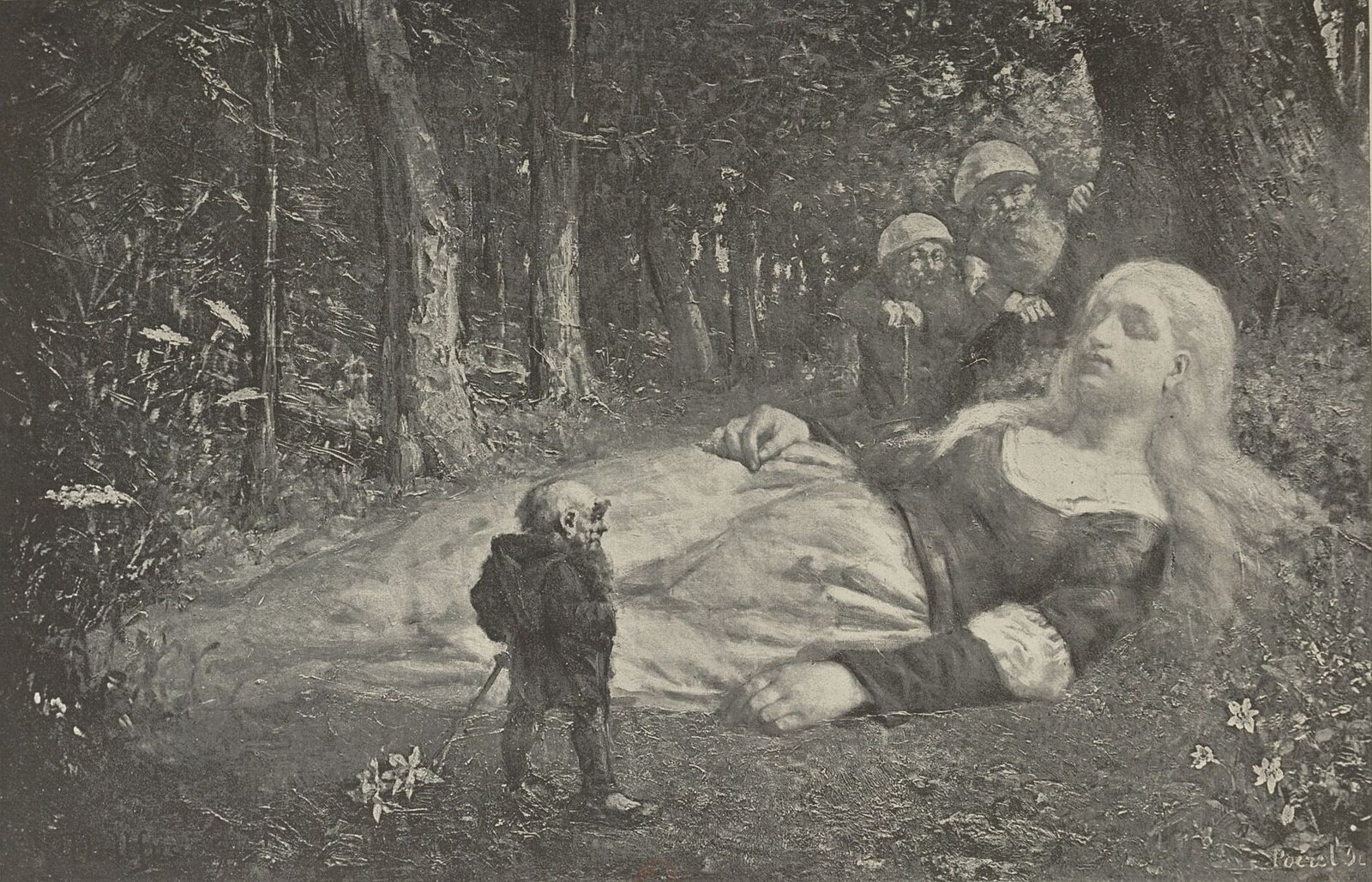
Edward Sanshin Oberholtzer Roshi offered this reflection at our Empty Moon Zen half day Zen sit on Saturday, the 4th of October, 2025. With his generous permission I offer this reprint hoping to find the larger audience this talk deserves…
There is a lot to be said for Iceland. It is, as an example, considered one of the happiest nations on earth. It enjoys an enviably high level of gender equality. The volcano that Arne Saknussemm went down to journey to the center of the earth is visible from Reykjavík, Jules Verne meeting reality. Christmas is celebrated by exchanging gifts of books on Christmas Eve which the recipient then spends Christmas day reading in front of a roaring fire. What more could a former librarian want? One thing though that I used to admire Iceland for turns out to have been an urban legend, if you can apply urban to a country with one small city and a scattering of ice and volcano bound towns, however urbane the inhabitants themselves might be. That one thing is that, no, Icelanders do not reroute road construction to avoid disturbing the underground dwellings of elves. It seems that, despite what I had been told, a belief in elves, trolls, goblins and other such supernatural beings is not a requirement for Icelandic citizenship, though, perhaps it should be.
Now, I myself have often thought that if I could bring myself to believe in gods of any sort, they would be small, tiny things, not unlike those mythic and, now it seems, nonexistent Icelandic elves. Gods who lurked under the piles of discarded mattresses found in underpasses crossing under route 580 in Oakland, California. (if ever I write a novel it will begin there with tiny gods in the heart of Fruitvale). Gods who would live under rocks in the garden, gods who would sit in tree branches or on lily pads doing battle with spotted lantern flies or frogs. Gods whose very presence would ward off heavy earth moving machinery, or at least, lawnmowers and leafblowers. Gods who would whisper in our ears. Gods who were mischevious. If not like elves, then more like crows. Gods who might be worshiped, in their own way, leaving them offerings and getting gifts in return. Shiny objects brought in exchange for bones and table scraps.The gods of small things would live in particularity. They would reward the small homages paid them, often with equally small, but no less marvellous wonders.
I once had to take down an old rotting tree trunk in our back yard up in Pennsylvania. The previous owners had put up an owl house on it, and though we had never seen evidence that owls had used it, once it was on the ground, curiousity impelled me to open it up. When I did, I found an abandoned nest fashioned from the remains of a string of Tibetan prayer flags, flags I had lost in a snow storm the previous winter.
The hands and beaks of those small gods working , weaving miracles just as small, just as colorful, just as lovely and every bit as meaningful. It’s these small things, small acts, tiny gestures that I find so fascinating, that seem to encompass the Dharma, the Dharma of the Nirmanakaya, the physical manifestation of a Buddha in space, time, and, yes, in an owl house; a treasure the Buddha left us, worthy of a new Jetaka story. Not so much the vastness of time and space, not so much the openness of the universe, though, of course, that vastness is more than there on a summer night, when we, lying out on the grass not far from that owl house, look deep into the stars, into the inkiness of the night sky.
No, that vastness, that openess, that boundlessness is right here in the act of an owl-like god on a cold winter’s night, snatching a string of prayer flags from a snow drift, and weaving a warm and comfortible home, a shrine, a nest from them. It’s there in the worms burrowing through the kitchen scraps in the compost heap only a few feet over from the remains of that owl house, worms shitting out rich, dark soil for next summer’s tomato crop. And the Dharma is there as you chop those tomatoes into next fall’s stews and soups, offerings, sacriments for some sacred lunch, as if lunch can be anything but sacred.
All that is good, all that is holy, perhaps, all that is not holy is found here in the simple facticity, the particularity of life. We live here in the muck and dust of the everyday and are the better off for it. William Blake, poet and engraver, told us, in his great prophetic book, Jerusalem: “He who would do good to another must do it in Minute Particulars. General Good is the plea of the scoundrel, hypocrite and flatterer.” He goes on: “The infinite alone resides in Definite and Determinate Identity.” Form, if I may segue towards the Dharma, form is no other than emptiness, emptiness no other than form.
So lie out in the backyard, gaze into the infinite depths of the universe there in the night sky, but while you’re there, count those stars, each and every particular one, ….one, two, three…… And if you want a different take on just what may or may not be holy, listen in on Bodhidharma’s exchange with the emperor Wu, laid out in the Blue Cliff Record’s opening koan:
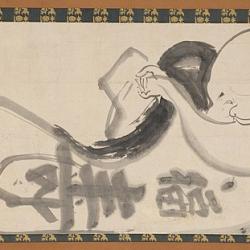
The often befuddled but deeply devout Emperor Wu of Liang asked Bodhidharma, a traveller from the West, “What is the first principle of the holy teaching?”
To which Bodhidharma replied, “Vast emptiness, nothing holy.”
“Who stands before me?” asked a surprized and puzzled Wu.
“I don’t know,” said the good monk
The Emperor did not understand. The Emperor had a long history of not understanding, though, god knows, he meant well. Bodhidharma crossed the river on a reed and went on to the kingdom of Wei and other, perhaps better things. Later, the Emperor asked Duke Zhi, his trusted advisor, about this. Zhi responded, “Your Majesty, do you know who that was?”
The Emperor said, “No, I don’t know,” repeating the words, if not the understanding of that Indian monk.
“That” said Zhi, “was the bodhisattva Avalokiteshvara, conveying the mind-seal of the Buddha.” The Emperor felt regret and wanted to send a messenger to urge Bodhidharma to return. Zhi said, “There is no use in sending a messenger. Even if everyone in the country went after him, he would not return.”
And so, vast emptiness, nothing holy. I might have a bone to pick with the good patriarch, and I might not be alone, as we hear fifteen hundred years later and from the other side of the world with a litany of the particular:
Holy! Holy! Holy! Holy! Holy! Holy! Holy! Holy! Holy! Holy! Holy! Holy! Holy! Holy! Holy!
The world is holy! The soul is holy! The skin is holy! The nose is holy! The tongue and cock and hand and asshole holy!
Everything is holy! everybody’s holy! everywhere is holy!
Who else but Allen Ginzberg in his Footnote to Howl. Ginzberg, patriarch if not of Chan, then of the Beats. Each particular thing, each smudge, each breath, each palace and each hovel, each monk, priest, nun, derelict, each cop and criminal and deadbeat , each ICE lackey, each shivering immigrant, each scrap of a tatterred prayer flag, all holy, each beyond holy. The list goes on
Holy time in eternity holy eternity in time holy the clocks in space holy the fourth dimension holy the fifth International holy the Angel in Moloch!
Holy the sea holy the desert holy the railroad holy the locomotive holy the visions holy the hallucinations holy the miracles holy the eyeball holy the abyss!
Holy forgiveness! mercy! charity! faith! Holy! Ours! bodies! suffering! magnanimity!
Holy the supernatural extra brilliant intelligent kindness of the soul!
Sanctus Sanctus Sanctus Deus
Skin, nose, tongue, cock, hand, and asshole, all holy. Each covered in sweat, snot, saliva and the rest, all holy. Like the scraps of colored cloth, imprinted with prayers for peace, health and happiness, scavanged by an owl deity from a snow bank, an owl who spoke neither English nor Tibetan, an owl who didn’t care, who knew only the warming of owlets in a winter’s night. All holy, and none of it holy. Walt Whitman found holiness in all the same places and tells us:
I believe in the flesh and the appetites,
Seeing, hearing, feeling, are miracles, and each part and tag of me is a miracle.
Divine am I inside and out, and I make holy whatever I touch or am touch’d from,
The scent of these arm-pits aroma finer than prayer,
This head more than churches, bibles, and all the creeds.
And yet Bodhidarma was right. Nothing is holy. He was as right as Homeless Kodo was telling us that Zen is good for nothing. Ginzberg might have said Holy nothingness! And, perhaps, Bodhidharma would have agreed. And that nothing, here in the Minute Particulars, contains within it the vast holiness of the entire universe, the myriad stars in the night sky, each particular, each unique, each holy. That universe found in Blake’s grain of sand, a grain sacred to those tiny gods, the gods of this very moment, of this very place. Count them, that one, that one, that one, and….that one, the stars of the sky, the holy sands of the holy Ganges.







 Ad-Free & Subscriber Log-In