

How to create change series
Our spirituality is a reflection of us. What do we hold dear and want for everyone around the world: Jesus’ promise of forgiveness? Jesus’ promise of salvation? Jesus’ promise of abundant life (in our relationships with others and all that brings)?
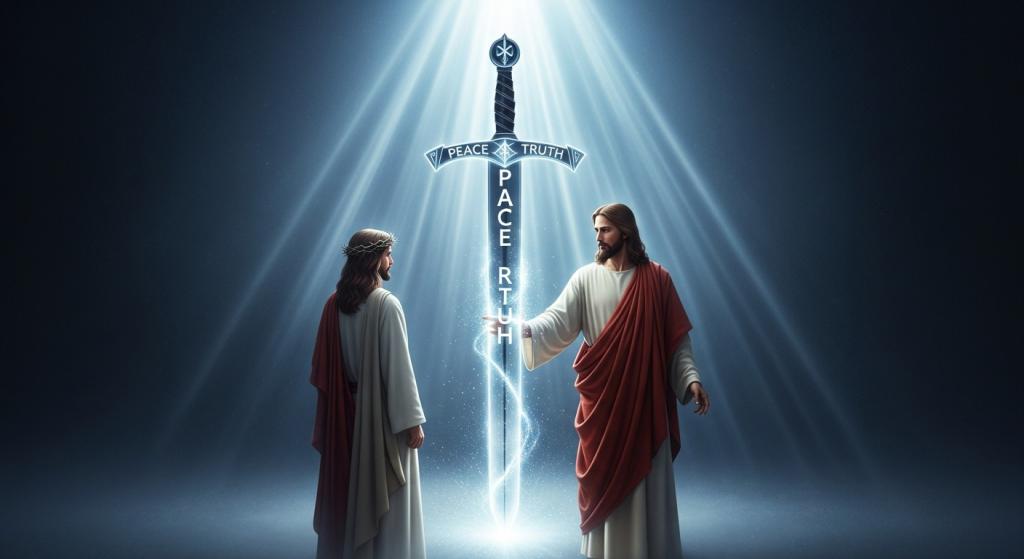
Reference verse:
“The Pharisees and Sadducees came up, and testing Jesus, they asked Him to show them a sign from heaven. But He replied to them, “When it is evening, you say, ‘It will be fair weather, for the sky is red.’ And in the morning, ‘There will be a storm today, for the sky is red and threatening.’ Do you know how to discern the appearance of the sky, but cannot discern the signs of the times? An evil and adulterous generation seeks after a sign; and a sign will not be given it, except the sign of Jonah.” And He left them and went away.” – Matthew 16: 1-4 (NASB)
Freedom is the essence of democracy
“Freedom” was at the heart of the movement of people to North America. Religious freedom was the most sought after because of religious wars and oppression in Europe. Political and economic freedom were also at the top of the list as people fled poverty, job shortages, rising taxes, and tyranny.
The US gave everyone the privilege of seeking their own dream. For many this perverted the dream of America. We’ve seen these roots decay. This independent nature is often expressed as ‘every person for himself.’ Look out for no one but yourself. The quest to get rich quick—greed—has tentacles that reach into all of society.
Many want to force their religious views on others and rid the land of certain religions, which is the opposite of the primary reason people came to America. For some it’s a quest for power by a few to force their Biblical interpretation on others.
The President’s task force to “eliminate Christian bias,” is a thinly veiled attempt at suppression by bringing criminal charges against people who protested outside of an abortion clinic, tasking the FBI to investigate Catholic extremist groups, driving “Christians who do not conform to certain beliefs on sexual orientation and gender identity out of the foster-care system,” and the military.
This would strike at the heart of religious freedoms and beliefs and eventually become “thought police,” with political and legal power, which would be more severe than in Taliban areas and Iran.
There are over 1200 different Christian denominations in the US, and many more around the world. There are many atheists who speak bolding against Christianity. People age 15 to 35 won’t tolerate discrimination based on religious beliefs. Religious freedom is alive and well in the US, and opinion and demonstrations affirm the US Constitution.
As a nation of 325 million people, with all of the complexity and problems this and technology has brought, is this totally independent nation what we want to have? Or do we want some version of it?
Jesus said we must interpret the signs
Jesus said in Matthew 16 that some won’t even believe without seeing signs, and that an evil and adulterous generation looks for signs. These might include signs for belief and signs for the end of the age such as signs people are about to be destroyed in a Day of the Lord because their hearts aren’t in the right place. They want to be joyful at the destruction of those they were supposed to find and help understand the Good News.
Jesus said some signs are obvious to us. We see signs of the weather and know a storm is coming. “Do you know how to discern the appearance of the sky, but cannot discern the signs of the times?”
Let’s look at this another way, casting conspiracy theories and speculation against actual evidence. From AI:
A conspiracy theory is a conclusion in search of evidence. An investigation, on the other hand, starts with credible evidence to see what conclusions it leads to. The difference is not just about what is believed, but about how that belief is formed and maintained.
- The Starting Point: A conspiracy theory begins with a conclusion and seeks to fit any available information into that pre-existing narrative. An investigation begins with a verifiable anomaly or a question and follows the facts to a conclusion.
- The Role of Secrecy: Conspiracy theories thrive on the idea of hidden truths and secret plots. Investigations, while sometimes confidential for legal reasons, are ultimately designed to bring the truth into the open through a transparent process.
- The Goal: The goal of a conspiracy theory is to solidify a belief. The goal of a legitimate investigation is to establish a set of facts, regardless of whether they support a specific belief or not.
So, people with the mindset that the world is lost and unredeemable—who lack God’s love for the world, believe going into the world will contaminate them. They often lack a background in ancient history from which to interpret texts. They look for and interpret information that supports their idea the world is hopelessly lost and others’ fiery end is near. It’s a conclusion in search of evidence.
The signs democracy is weakening
The reckless disregard for everyone and everything in the search for independence, power, and riches will likely bring us to extinction. There are signs it is already trending downward. We can evaluate this from within, or from how other countries see us. I am using authoritative sources that are well respected.
Confidence in our institutions is critical to our success as a nation.
“Three-quarters of Americans say democracy is under serious threat, according to a new [July 1, 2025] NPR/PBS News/Marist poll.” (+/- 2.9 percentage point margin of error.)
“76% of Americans say the issues that divide the nation pose a serious threat to democracy. …. Majorities of Democrats (89%), Republicans (57%), and Independents (80%) say there is a threat to the future of democracy.”
The largest of these groups of Americans (43%) are independents, driven largely by voter dissatisfaction with the major parties. Their vote is about evenly split in elections and often determines the outcome.
Confidence in political leadership in congress and the presidency has languished at around 25% for years, often dipping into the low teens. From 1972 to today, confidence has decreased 45%.
References:
Congressional Approval Rating Breakdown. Quorum US.
Congress and the Public. Gallup
Fifty Years of Declining Confidence & Increasing Polarization in Trust in American Institutions. MIT Daedalus
Confidence in US institutions remains in the dismal, but more telling is that according to a 2025 Harvard Youth Poll, only 19% of respondents aged 18 to 29 trusted the federal government most or all of the time. That age group is particularly distrusting, including distrust of religious institutions for their discrimination against various groups.
In addition, a depressing 22 to 39% of people approve of the US Supreme Court’s job. Not that law is a popularity contest, but more importantly a majority of Americans do not trust the U.S. Supreme Court, with trust and favorable views at historic lows. Overturning “settled law” and ethical lapses with lack of accountability, are major reasons. The highest court in the land should inspire great trust.
Quoting David Levi in Judicature, Declining Confidence in the Judiciary: “We know that the Court is by design a counter-majoritarian institution intended to protect minority rights. For this reason, it may properly find itself out of step with majority opinion. On the other hand, as Alexander Hamilton put it many years ago, the courts have neither the power of the purse nor the sword: They depend on public confidence for obedience to their rulings. In a democracy, the rule of law depends in large part on the willingness of citizens to accept judicial rulings with which they may disagree.”
This distrust of institutions is a major sign of the times. This reflects the polarization in our society, the inability of people to resolve differences of opinion, and the belief in majority rule and minority rights. This is driven by increasingly rapid cultural change, and change driven by technology. People don’t have coping skills and can’t handle change. Eventually some of this will pass.
Democracy decline
Brookings Institution refers to democracy decline as “… democracies in decline usually experience a slow but steady erosion. The process is often incremental and episodic.”
It says, “The United States is experiencing two major forms of democratic erosion in its governing institutions: election manipulation and executive overreach.”
Erosion is occurring on multiple fronts, according to Brookings:
A sitting president tried to remain in office after losing the election
- “… state legislatures have instituted laws intended to reduce voters’ access to the ballot, politicize election administration, and foreclose electoral competition via extreme gerrymandering.” “Examples include election procedures that make it harder to vote (like inadequate polling facilities) or that reduce the opposing party’s representation (like gerrymandering).”
- “The United States has also seen substantial expansions of executive power and serious efforts to erode the independence of the civil service.”
- “… the gridlocked and hyperpartisan Congress is poorly equipped to provide unbiased oversight and accountability of the executive, and there are serious questions about the impartiality of the judiciary.”
Experts who rate the strength of democracies, in their analysis , say: “Freedom and democracy in the United States is in decline. According to the Economist, the United States now ranks not among the world’s “full democracies” (such as Canada, Japan, and most of Western Europe) but among the “flawed democracies” (such as Greece, Israel, Poland, and Brazil).”
This should be a major sign to us to be ranked among democracies like Brazil. Leader Jair Bolsonaro is alleged to have been involved in the country’s largest corruption scandal, and has three court convictions. He is a major concern regarding threaten to cause irreparable harm to civil society, the press, Afro-Brazilians, indigenous people, and critics of the government. It should be concerning that the president increased Brazil’s tariffs over the trial of their corrupt president. In the two years since the Brookings evaluation, signs in the US have gotten much worse with noticeable indications the US is steering toward autocracy in which decisions are made by only a few in power.
An autocracy of the wealthy
Strong indications are that the US has ceased to be a representative government, and favors the wealthy in decisions. “A widely cited 2014 study by political scientists Martin Gilens and Benjamin Page found that the policy outcomes in the U.S. heavily favored the interests of the wealthy and corporations, with the preferences of ordinary citizens having “near-zero” influence.”
Congress is composed of almost all millionaires, and those who enter congress soon become millionaires. This is due to donor influence in which special interests fund campaigns.
The shift towards an oligarchy makes existing wealth inequality worse, creating a system where those at the top gain even more power.
During the 2023/2024 cycle, special interest groups (lobbyists) invested a record $4.2 billion in 2023 to lobby federal lawmakers, with the health, lawyers & lobbyists, and energy sectors spending the most.
How much influence do you think $4.2 billion buys?
There is another joint bill going before congress to stop insider trading in the stock market by congressional members. The last bill failed. They have the privilege of hearing about impact on individual stock before the public hears, and can move their losses to others before calamity strikes. Members of both parties routinely do this.
Would members of Congress vote in favor of corporations in which they are invested? The public will have to elect people who pledge to end this ‘get rich quick’ scheme. If they don’t, the wealthy oligarchy will control this country just as they do in Russia, with all the related corruption and crime.
The “hollowing out” of the US middle financial class
Where does our money go? In the last two decades, the middle financial class has steadily drifted toward the upper or lower financial class. In the 1990s, everyone was investing in the stock market. Then recessions, caused by stock market shenanigans, have had a huge impact, losing a considerable amount of investment and retirement investment for people. Those with inside knowledge and who have major advantages in expertise lose much less. In fact they often gain more simply by betting against stock through high return hedge funds. To an outsider, the game appears rigged.
The insidious aspect of the stock market is the transfer of funds from the less financially established to the wealthy. This isn’t a malicious plot by the wealthy. It’s the way the system works. For example, there are lower capital gains tax rates compared to income tax. Yet it’s not only income, it’s unearned income. It’s considered “rent on money.”
Another example: The stock market has changed from long-term investing to quick, huge increases. Investors demand high returns on their stock and punish those that don’t deliver. So companies are pressured to give good quarterly advice and always deliver above expectations, or they lose investors and stock value.
The transfer of wealth works like this: Investors pressure companies to deliver high returns every three months. Companies can do two things to deliver. They either cut expenses or make more money. Cutting expenses means cutting things like training, or buying other company’s technology and market. This eliminates good paying jobs, which helps hollow out the middle financial class.
Companies make more money by raising prices or expanding their markets through mergers. The company climate since 1970 has steadily grown into “merger mania” because it is so lucrative.
As prices go up and jobs go down to please companies and investors, money is sucked out of the middle financial class, shrinking it.
What do investors do with the money they suck out of the middle class? Do they spend it to help the economy? No! They reinvest it in stock and don’t pay taxes on their gains as long as it remains in the stock market. Corporate profits are removed from the broader economy.
Since 1990, the number of millionaires with $1 to $5 million more than quadrupled worldwide to 52 million by 2024, with the U.S. experiencing rapid growth. The number of U.S. billionaires also grew substantially, from 66 in 1990 to around 748 in 2023, though the trend for millionaires is more dramatic in the 21st century. Elon Musk is likely to quickly become the first trillionaire with his most recent Tesla increase.
You can see what is happening. The accumulation of wealth is easy for those who already have money. The system works for them. The middle financial class is stuck with ever increasing debt, with up to 35% interest, as prices continue to remove their income and wealth. The poor find it extremely difficult to keep up.
An interesting fact is that if stock market trades had a two cent fee attached, which is nothing to investors, the US could pay off its entire national debt in ten years.
The stock market does almost nothing for the economy. It drives wealth for people who don’t earn their money through wages, and it regularly crashes the economy causing serious harm to people by removing their jobs, causing them to lose their homes and often puts their family with their children on the street.
The quest for wealth keeps prices on the rise so that in places like California and New York, people can’t afford housing and live on the street. Politicians benefit from the system.
The stock market is known by economists to be a drain on the economy. The only place it helps the economy is by investing in promising new businesses.
Another interesting fact is that corporations are known as net job losers. They don’t create many jobs. Middle size companies generally prefer maintaining their niche markets to growth. Growth is expensive, so they don’t create jobs. Entrepreneurs who start new companies are where most new jobs are created.
The stock market has to be controlled and turned into an engine for wealth production for all.
The American Dream is Dead?
The American Dream was traditionally associated with owning a home and having a family, with a wage that supported them.
Over time, rooted in the Declaration of Independence’s promise of “life, liberty, and the pursuit of happiness,” the meaning evolved to include the pursuit of one’s full potential, personal happiness, and upward social mobility.
Ask a waitress in rural America if she will ever reach her potential or own a home, or if she will have to work two jobs just to survive.
Ask a teacher if they will ever own a home and be able to support children?
Partly because investors keep buying houses and renting them at exorbitant prices, people can’t afford homes.
More and more the answer to these and other questions is no. People don’t trust Social Security, don’t trust the government, and don’t trust the economy. Sixty-three percent of people think the American Dream is dead. Another 14% see it as anemic. That’s three fourths of the American people who have no confidence in the American Dream.
Image source: Haystack News poll: American Dream Dead Poll Reveals People
The signs are slapping us in the face. We have to turn this country around or lose it. But it takes the will of people ages 18 to 35 to do it, and too many of them hide behind the idea that the system doesn’t work for them, so why should they vote. It’s a self-fulfilling prophecy. If you don’t take charge and put people in power who will make change, you will lose our nation.
Conclusion
“Looking at the state of the world today, it can feel as if humanity is spiraling down an inevitable path of self-destruction. But appearances can be deceiving. There is nothing in the appearance of a caterpillar that tells you it is going to become a butterfly.”
I believe this is a time of transition and we will make the world what we want.
Concluding Challenge
Do what you can every day to change the world. Little things count the most.
Our answer is God; God’s answer is us;
Together we make the world better.
– Dorian Scott Cole
With hate we have more to lose than gain. Break the cycle.
– Dorian Scott Cole
Author’s website: DorianScottCole.com














 Ad-Free & Subscriber Log-In