

In the new Lionsgate film “Power Ballad,” director John Carney asks the question of what constitutes theft in the creative world takes center stage, forcing characters and audiences alike to grapple with morality, forgiveness and the human need for redemption in an industry built on inspiration and imitation.
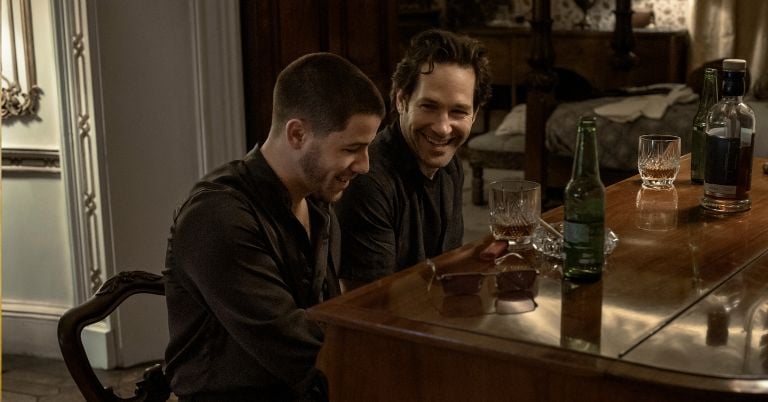
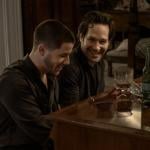
The film, which opens wide in the United States on Friday, centers on Rick Power (Paul Rudd), a suburban dad and former musician in Ireland who writes a heartfelt song with visiting American rocker Danny Wilson (Nick Jonas). When Danny takes the track and turns it into a massive hit without credit, the story becomes less about courtroom justice than about the messy realities of ambition, family responsibility and artistic ownership.
Carney, the director behind Oscar-winning “Once” and “Sing Street,” deliberately avoids labeling clear villains. In a recent global press conference, he addressed the moral complexity head-on.
“I don’t think anybody sits down and knowingly steals in music,” Carney said. “I think it’s just so much more complex than that.”
Carney noted the difficulty of originality in today’s referenced-heavy musical landscape compared to the innovative 1980s. He expressed hope for grace over litigation, citing a story of George Michael and Barry Manilow resolving a similar dispute about “Last Christmas” by donating song proceeds to charity.
“That was such a great way of two musicians saying, ‘I don’t really own [the song],’” Carney said.
The director’s interest in these themes connects to a deeper spiritual undercurrent. During the press conference, I observed that the story contains a profound truth about being wronged and choosing one’s path forward — a lesson the world needs now. Carney agreed the film taps into broader questions of authenticity and grace amid recycled ideas.
For both Rudd and Jonas, the film’s power lies in how music serves as more than entertainment — it becomes a vehicle for emotional truth and human connection.
Rudd, who delivers surprisingly strong vocal performances, described music’s almost sacred role in processing pain.
“Music more than anything really has that thing that makes us feel sane. That makes us feel seen,” Rudd said. “When you’re so sad, listening to music can save you.”
Jonas drew from his own experiences around the Jonas Brothers’ split and his solo transition, finding dignity in Danny’s flawed ambition.
“Both [Rick and Danny] kind of ask the question, how far would you go to get everything you ever wanted and at what cost?” Jonas said.
The actors emphasize that neither character is purely heroic or villainous. Jonas suggested that in the film’s ambiguous ending (SPOILER ALERT), Danny likely makes amends privately with Rick — financially and emotionally — rather than through public confession.
This focus on internal moral reckoning over dramatic justice sets “Power Ballad” apart from typical music-industry stories. Carney’s script, co-written with Peter, explores how family responsibilities complicate artistic dreams. Rick writes not for fame but to provide for his wife and daughter, while Danny battles fading relevance.
Carney described his filmmaking style as intuitive and collaborative, likening his movies to “three-legged stools” — homemade, slightly rickety, but sturdy enough to hold emotional weight. He continues blending original songs with covers, including wedding band classics like Kool & the Gang’s “Celebration.”
Rudd, known for comedies like “Anchorman,” embraced the musical demands despite self-described limited guitar skills. He credited the welcoming environment with Carney and Jonas for helping him commit fully.
“I just kind of hoped for the best,” Rudd said. “Being around real musicians, you kinda have to rise to the occasion.”
Jonas was equally impressed by Rudd’s abilities, noting their natural chemistry during improvisational jam sessions. The pair bonded quickly, with Rudd’s enthusiasm matching Jonas’ professional musicianship.
“Power Ballad” continues Carney’s exploration of music’s role across life stages. Where earlier films focused on young love and discovery, this one examines aging rockers balancing mortgages, children and creative identity.
“How do we continue to do it if the person that we started with isn’t there?” Carney reflected on the film’s working title, “How to Write a Song Without You.”
Both Rudd and Jonas found personal resonance in the fatherhood themes. Rudd recalled his own father singing “Anchors Aweigh” as a lullaby. Jonas spoke movingly of The Beatles’ “Let It Be” connecting to his New Jersey childhood.
The film ultimately suggests that music’s greatest value may lie not in ownership or commercial success, but in its capacity to foster empathy and healing — even amid betrayal.
As Carney put it, a song “is really only complete… once you play it to somebody.”
“Power Ballad,” directed by John Carney and starring Paul Rudd and Nick Jonas, is currently playing in limited theaters and going wider this weekend from Lionsgate Pictures. Hear the original song “How to Write a Song Without You” below.









 Ad-Free & Subscriber Log-In