

When Leigh Moore first encountered Jeffrey Manchester, the real life “Roofman,” at her local church, she embodied the biblical principle of welcoming strangers. Little did she know that moment would become the centerpiece of a harrowing true crime narrative now dramatized in a major motion picture.
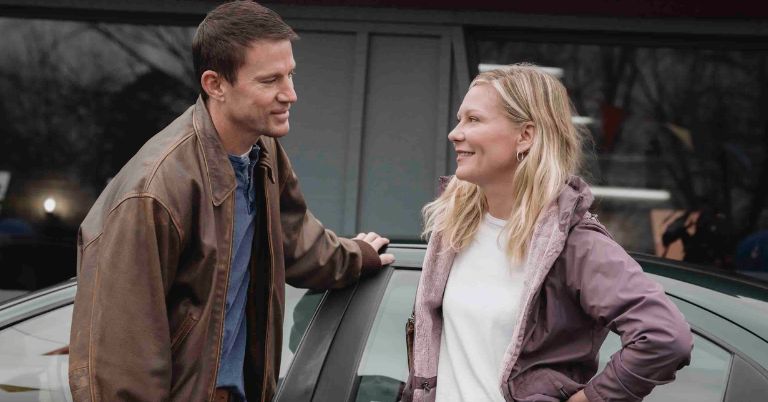
Moore, now 62, recounts her experience with remarkable resilience, emphasizing forgiveness over victimhood. “I don’t want to be a victim,” she said. “I want to rise above it. I’m going to spread my wings and fly.”
The film, starring Channing Tatum and Kirsten Dunst, chronicles Moore’s unexpected intersection with Manchester, a criminal who infiltrated her church community during a vulnerable period in her life. Recently divorced and rebuilding her career, Moore was part of a small, tight-knit church community that prided itself on embracing newcomers.
“We don’t ask where you work or if you have a criminal background,” Moore explained. “We don’t interrogate people. We embrace strangers.”
That openness would lead to a shocking chapter in Moore’s life, which she has since transformed into a testament of personal strength and spiritual resilience. After her initial traumatic experience, Moore refused to become cynical or distrustful.
“I continued to trust,” she said. “I dated again and again, and dated some real creeps who were 10 times worse. But I also forgave them.”
Her philosophy mirrors a profound insight shared during the interview: that healed people have the capacity to heal others. “I’m not going to let Jeffrey Manchester bring me down,” Moore stated firmly.
The film’s premiere provided Moore an opportunity to meet the actors portraying her life story. Her interaction with Kirsten Dunst was particularly meaningful. “It was brief but beautiful,” she recalled of their Los Angeles premiere encounter. “She was very kind.”
Moore’s journey extends far beyond her experience with Manchester. After her divorce at 39, she rebuilt her entire life, launching a career, purchasing a home, and raising three children independently. Twenty-three years later, she remains with the same company and has remarried.
“I just pulled my bootstraps up and did what I had to do,” she said.
Her story resonates as more than a movie lifted from the headlines—it’s an exploration of faith, resilience, and the human capacity for forgiveness. Moore’s unwavering spirit transforms a potentially devastating experience into a narrative of personal triumph.
When asked about potential bitterness, Moore remains resolute. “I’m still a very forgiving and trusting person,” she said. “I don’t carry it around.”
The film offers audiences a glimpse into a remarkable story of survival, community, and the unexpected paths life can take. For Moore, it’s an opportunity to share a message of hope and healing.
As she reflects on her journey, Moore embodies a philosophy of moving forward, refusing to be defined by past traumas. “I’m going to do well anyway,” she said. “I’m just going to keep going.”
Her story serves as a reminder that resilience often emerges from the most challenging circumstances, and that faith can be a transformative force in overcoming life’s most difficult trials.
“Roofman,” starring Channing Tatum, Kirsten Dunst, Ben Mendelsohn, LaKeith Stanfield, Juno Temple, Melonie Diaz, Uzo Aduba, Lily Collias, Jimmy O. Yang and Peter Dinklage, is now playing in theaters from Paramount Pictures.















 Ad-Free & Subscriber Log-In