

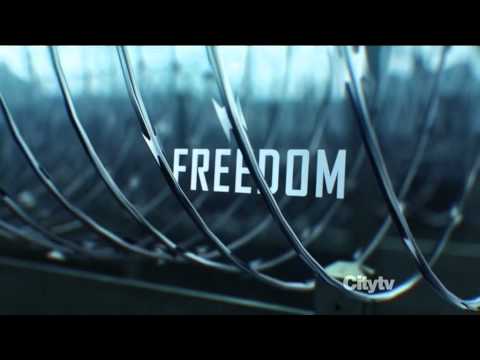
 I’ve been wanting to blog about Fringe this season, but the relative paucity of explicit God-talk meant that I often didn’t have a clear topic to focus on in posts. But even the new intro is worth focusing attention on. In place of the paranormal fringe science or pseudoscience of the previous seasons, it substitutes things like independent thought, education, freedom, and due process. Such ideas were once fringe notions too. And so the very opening credits sequence is asking us to ponder the question: what is relegated to the fringe by people today, and why?
SPOILERS about the latest episode follow.
In the latest episode, “Five-Twenty-Ten,” the story focuses on two men whose brains are changing. In the case of Walter Bishop, pieces previously removed had been reinserted, and he feels himself changing back into the man he used to be, full of hubris.
Peter Bishop, on the other hand, is changing as a result of Observer tech that he inserted into his brain – having confidently expressed before doing so that if he had such tech, he’d be ten times the man the observer was that he took it from.
One of the running catchphrases of the series has been Να είσαι καλύτερος άνθρωπος από τον πατέρα σου – “May he be a better man than his father” (often rendered as “Be a better man than your father” which presumably should be Γίνε καλύτερος άνθρωπος από τον πατέρα σας).
In this episode, both are turning into “gods” – one the hubris-filled stereotype of the scientist playing God, the other a future human god enabled through technology to transcend time and space.
Both paths are supposed to be worrying, not just to the characters but to the viewer.
In the episode, Nina Sharp twice mentions what Walter had previously accomplished in terms such as “walking among the gods.” Although religious developments in theism eventually posited an unbridgeable gulf between God and humanity, throughout much of history the spectrum was rather fluid, and the divinization of mortals was considered a genuine possibility. In a scientific age, technology has been the focus of much human questing after divinity.
But the crucial question is not what technology can enable us to do, but what sort of person – or god – we will be. Whether by discipline and learning or by technology, our brains are changed – perhaps permanently – by our experiences and our choices. But most of us hold out the hope that we can choose not to follow a particular path, whether we be wielding a flint axe or a nuclear bomb. The technology changes, but do we have control of ourselves sufficiently, and sufficient wisdom, to not allow the additional power provided by more advanced technology to corrupt us, as we use it to give expression to our deep-seated hostilities.
The character of September indicates that having Observer technology in your brain doesn’t make you a bad person. And so Fringe’s vision seems to remain a warning, not about technology’s power to transform us, as real as that is, but about the crucial role of moral discipline in discernment if we are to use technology in anything other than harmful ways.













 Ad-Free & Subscriber Log-In