

Tragedy Is Not a Test
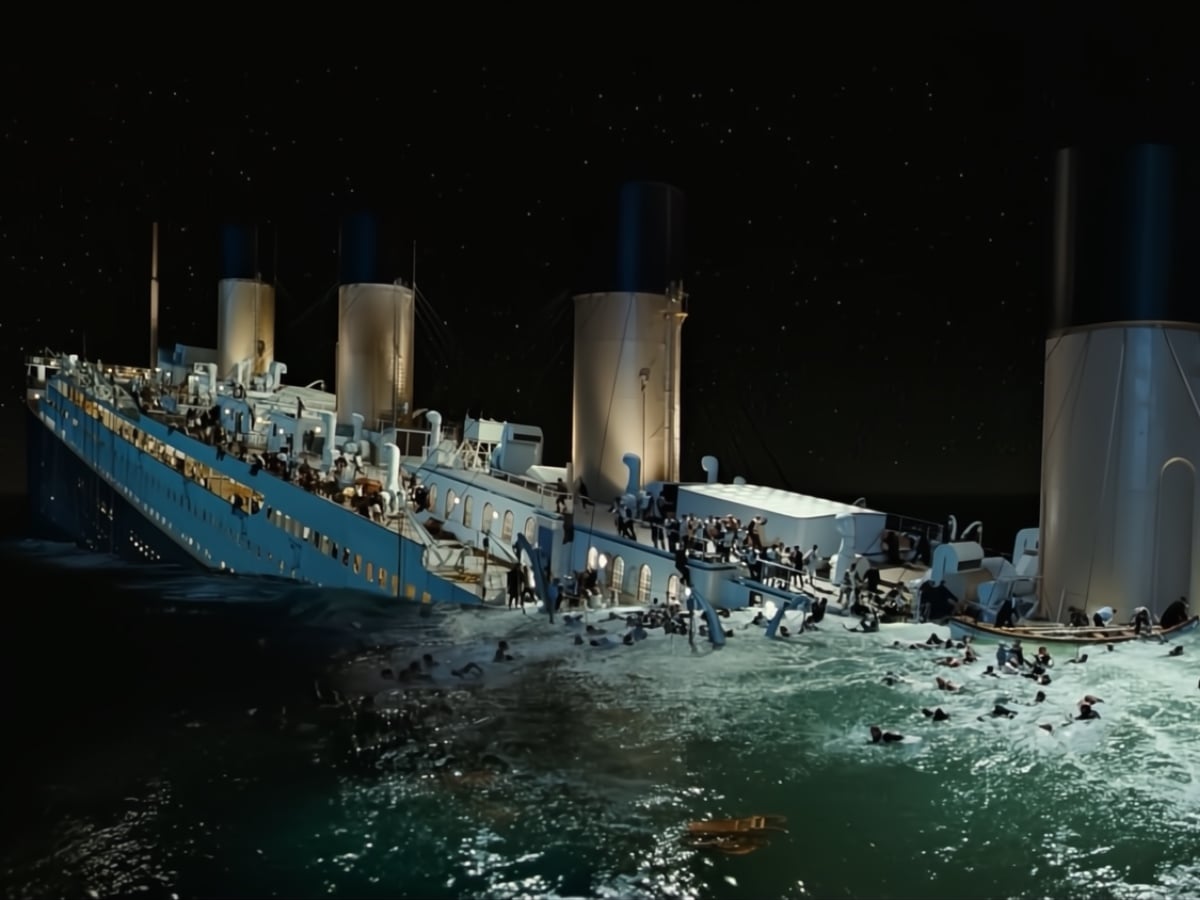
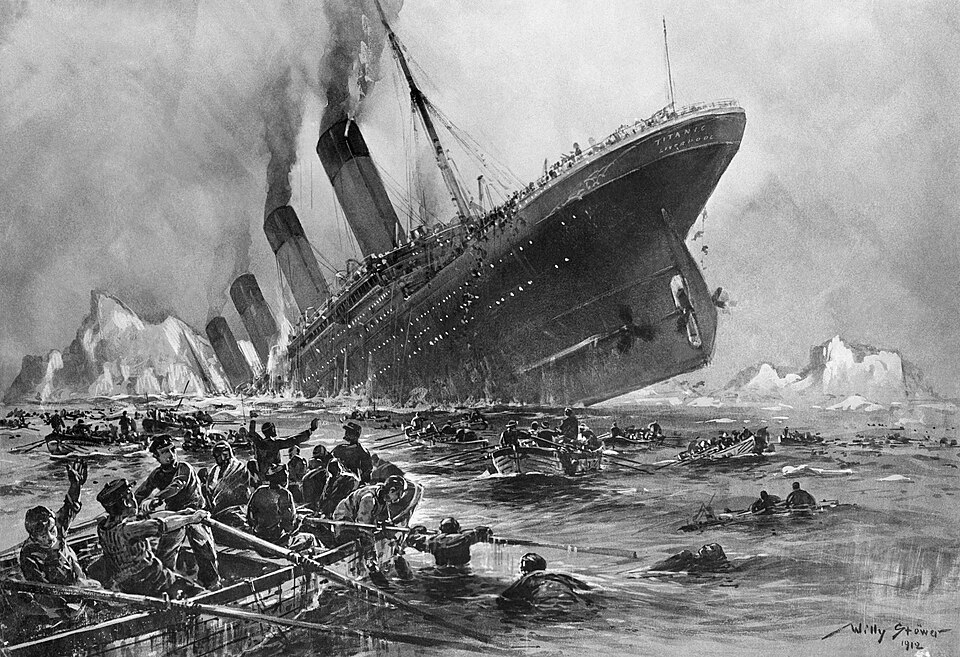
The sinking of the RMS Titanic was not a failure of preparation. Preparation simply reached its natural limit and proved powerless to stop the ship from sinking.
The Titanic carried the full weight of modern assurance: protocols, expertise, systems designed to anticipate what had never happened before. And none of that mattered.
Over two thousand people went into the cold North Atlantic Ocean without warning and without a choice, not because something went wrong, but because there are moments when nothing else can go right.
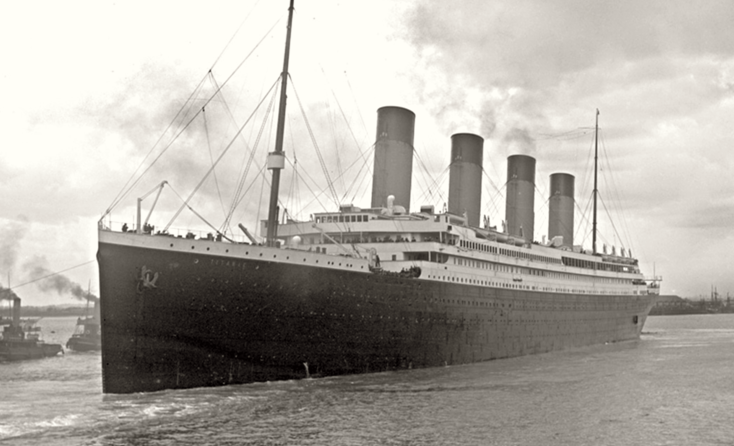
We tell ourselves that catastrophe reveals character, that disaster forensically ranks people by courage, foresight, and faith. We speak of bravery and readiness because these platitudes allow us to believe that tragedy is fair, as if pain can distribute meaning proportionally, that suffering somehow knows who deserves what.
But the night the Titanic sank, nothing was revealed except the limitations of human control.
Tragedy did not arrive as a test. It arrived as reality: sudden, cold, and indifferent to what anyone believed should have been enough.
Jesus refuses this logic outright, the belief that suffering must explain itself. After a tower collapsed without warning and killed those beneath it, a group of people asked him whether the dead were worse sinners than others from Galilee. They could not accept disaster without explanation. They wanted suffering to justify itself.
Jesus raises the question himself, “Do you think they were worse than others from Galilee?” and answers it without hesitation or ambiguity: “No.”
He offered no explanation. He refused any attempt to derive meaning from dead bodies. In doing so, he rejected the logic of moral causality, the belief that God measures or ranks human lives.
Tragedy proves nothing. It simply happens. And God is not distant from the wreckage. God is found within it.
The sinking of the Titanic refutes every lie we tell ourselves to make our tragedies somehow tolerable.
The Discomfort of the Story
I didn’t set out intentionally attempting to connect the devastating loss of the Titanic with a theology redefining the importance of redemption. This all began when I was sitting on the couch with my wife, watching James Cameron’s Titanic, a film we had both seen before.
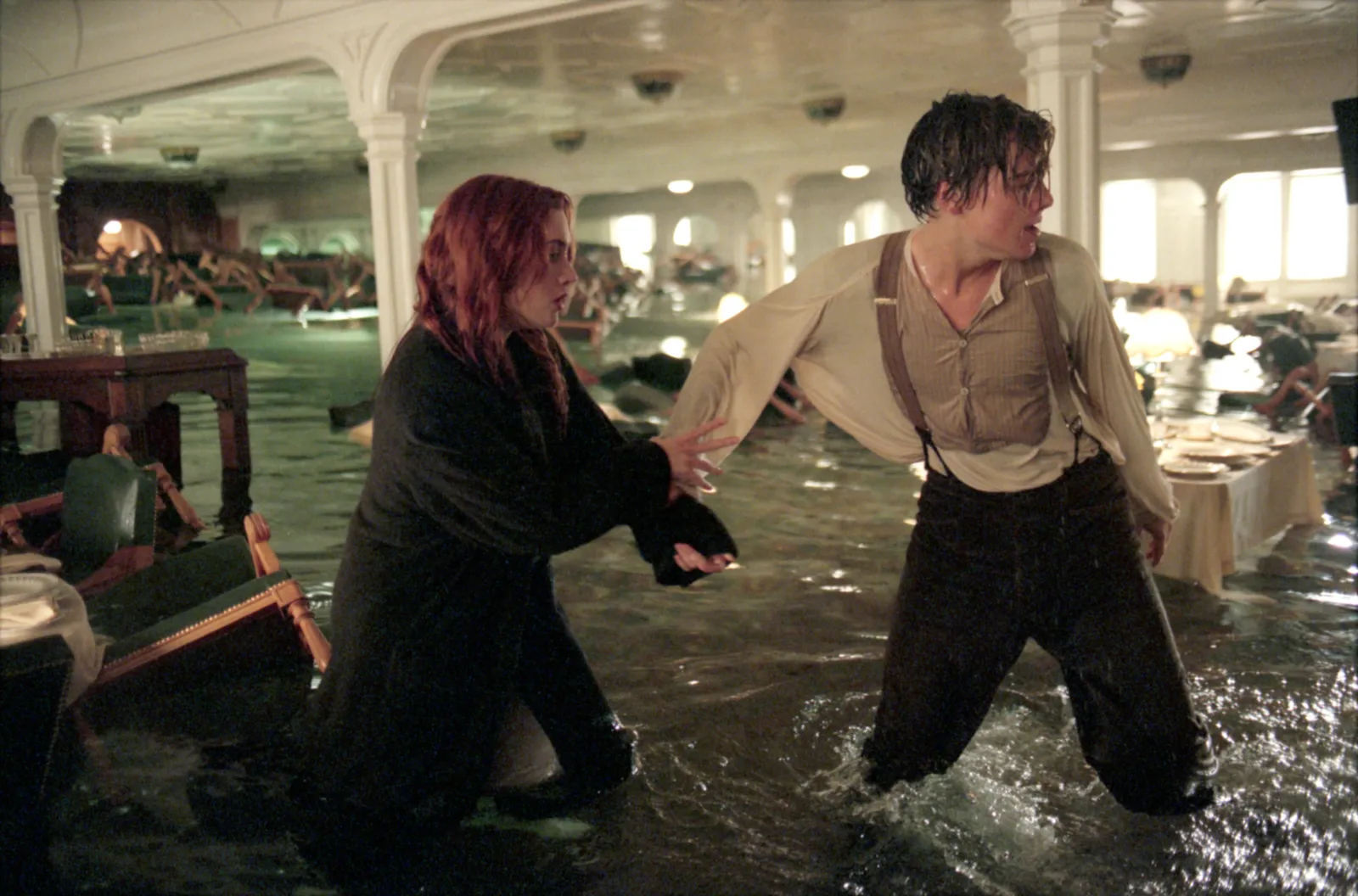
As the movie played out, I grew uneasy in a way that felt familiar. This wasn’t because the story as presented is particularly manipulative or dishonest, but because it remained faithful to a logic I had been indoctrinated to trust.
In this case, the narrative works relentlessly to make escape matter more than anything else, to convince us that the cumulative value of that night 370 miles southeast of Newfoundland should be measured by who survived it.
I noticed how instinctively these ideas came to me, forming a kind of artificial logic. How easily I leaned forward when rescue seemed possible. How quietly I withdrew when it did not.
But the film did not create these conditioned, almost involuntary responses. It merely revealed them.
My familiar unease exposed a hidden theology within me that I wasn’t even aware I believed, a certainty that faith could only be real if it wins.
When the Future Disappears
As the freezing water flooded my television screen, my mind drifted to the Gospels, where tragedy is met not with an explanation, but with a person.
The lifeboats were lowered, but within hours, even they were gone. Not because of moral failure or lack of faith, but because there were not enough of them. No logic could change these facts. No prayer could alter their physics.
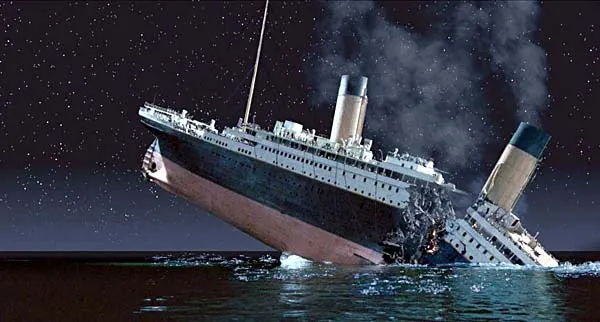
The ship tilted more and more, dipping into the sea until it snapped before my very eyes, courtesy of Panavision magic.
This was not the result of any judgment by God or man. It was unforeseen circumstance.
Most of us live our lives totally invested in what comes next: arrival, recovery, resolution. We endure what is painful now by borrowing meaning from whatever victories we assume will come later. At that instant, the teleology of rescue ceased to function as an explanation for suffering. No one could step backward and redeem what was being lost in real time. The story had run out of endings to appeal to.
The sea did not ask who deserved to live or die. And for the real people who experienced that moment in time, that is the exact instant the future collided with the present. The future ceased to function as an explanation for suffering.
What Remained
The passengers and crew of the Titanic stayed with one another even when staying could not save them.
This choice did not point beyond itself. Spending their last moments together did not accomplish anything measurable. It didn’t change the outcome of their lives or anyone else’s, at least not intentionally. Yet there must be some gain in what remains when we live and die sharing our lives, our presence, with one another.

There is a scene in the film my mind returns to again and again: an elderly couple lies together in bed as water rushes around them, rising. They do not run. They do not strategize. They do not perform the frantic liturgy of survival that tells us a life is only faithful if it fights to the last possible second.
This echoes the final hours of Isidor and Ida Straus, who refused separate rescue. Witnesses recalled that when offered a place in a lifeboat, Ida refused to leave her husband, saying she had lived with him all her life and would not abandon him at the end.
They stayed, spending their last moments alive on this planet embracing one another.
This is the courage to be. It is the radical act of loving one another even when your futures have been destroyed. Their love is participation in the very life of God. It is not a means to an end. It is the end.
This true story of love bears witness to how God is most present exactly in the moment we assume that we have been abandoned. Presence is the gift of a God who refuses to be alone in the dark, or to leave us there either.
This is not heroism as we usually understand it. It resolves nothing. It cannot be turned into a lesson. It does not redeem the night or the great cold ocean.
And yet, this presence refuses to disappear.
Naming the Problem
I had been taught to value love because of what it produces. You and I love because it works. We love because it saves. We love because it leads somewhere. And when love fails to rescue, we quietly decide that all along it must have just been sentiment rather than substance.
On the Titanic, love produced nothing. It did not stop the water. It did not alter the ending. It offered no escape.
And still, love remains. Truly, love never fails.
Speaking for myself, in the past I have assumed that meaning must exist somewhere, even if that somewhere is elsewhere. We always trust that what is most real isn’t what is happening now, but what this moment must be preparing us for.
So for these reasons, we endure the present by trusting in a nonexistent future that someday will explain whatever this moment cannot.
And that kind of blind trust failed in 1912 in the North Atlantic. It still fails now.
This dynamic emerges when love becomes a strategy for survival, or some deposit toward a future reward. According to that way of thinking, love, even divine love, becomes transactional. And that means we stay with one another not because staying matters, but because we believe it will eventually pay off.
But when there is no payoff, what remains?
The Sufficiency We Resist
What remains is not any kind of rescue, but what theologians call immanence: the here, the now, the weight of a body beside you, the sound of breath in the dark.

And this is what makes immanence intolerable. Every second of our lives is fait accompli.
If meaning cannot be found somewhere else, then what is happening now cannot be justified later. This is the ontological sufficiency we resist. There will be no explanation to make what is happening right now acceptable. There is no future to rescue us from ourselves.
Our Christian religion, along with every other faith, strives to avoid this. We want leverage. A handle to pull. Some promise that if we endure long enough, something will intervene.
But that night, no one came for the Titanic. There was no rescue.
All they had, and all we have, is one another.
Jesus Without the Escape
This is where Jesus reenters, stripped of the cinematic lies we prefer.
We want a Jesus who arrives in the third act to save the ship. We desire a God who turns tragedy into triumph and pain into purpose. But the Jesus of the Gospels refuses our false rescue narratives.

Jesus never mythologized suffering into meaning. He did not treat the cross as a temporary obstacle on the way to something better. And even today, Jesus remains.
The gift we have, and have always had, is God’s presence.
When a woman broke open expensive perfume and poured it over him, the disciples called it a waste. They said it accomplished nothing. And in one sense, they were right, because it did not prevent the cross.
But Jesus defended the woman. “She has done what she could.” Not what worked. Not what saved him. She did not alter the outcome. She honored his presence while he was still there. She recognized that the only thing more real than the darkness was the person standing in it.
Love does not need to be redeemed by a happy ending to be real.
When we recognize presence for what it is, without demanding that it rescue or resolve, our relationships become sacramental.
At the cross, there was no intervention, no correction, no escape. In John’s account, the women did not stay on a hill called Golgotha because staying would have helped. They remained at the foot of the cross because presence was all that was left.
This is not redemption as an outcome. It is presence without payoff.
What Sank
Watching Titanic did not teach me something new. It removed something old.

The Titanic sank, and with it was lost a version of redemption I had carried without naming it, the belief that meaning will always heroically justify later what happens now.
Sitting beside my wife, nothing was resolved. No insight altered our futures. But presence remained. Quiet. Unremarkable. Complete.
That was the moment my understanding of redemption sank. Not because I lost faith, but because I stopped waiting for it to rescue me.
If redemption requires escape, the Titanic is only a massacre. But if redemption is freed from outcome, something better comes into view. What really matters happens only in the present, where nothing is excused later.
Love that stays in the water is not waiting for some future meaning to make it valid. It is valid because it is love, and love is all we have left.
And in the dark, when nothing can explain what has happened, presence does not solve the tragedy.
But it remains.
















 Ad-Free & Subscriber Log-In