


If you grew up in the evangelical terrordome, you were probably told that apocalyptic texts are God’s cosmic evacuation plan — a divine Uber for the righteous, scheduled to arrive right before things get inconvenient. Matthew 24 becomes a weather alert. Revelation becomes a horror franchise. Daniel reads like Nostradamus cosplaying as a youth pastor.
The truth is far less dramatic and far more damning: apocalyptic literature was never about predicting the future. It was about calling out corrupt religion — the kind welded to political power, terrified of losing relevance, and allergic to self-reflection. In other words: then, and very much now.
Jesus’ Mini-Apocalypse
Matthew 24 gets treated like a prophecy chart, but Jesus isn’t talking about the end of the world — he’s talking about the end of their world. The temple. The institution. The entire religious structure that had traded justice for spectacle and holiness for influence.
When Jesus says, “Not one stone will be left on another,” He’s not giving an eschatology seminar. He’s looking at a religious machine so drunk on its own survival that it can’t tell the difference between God’s presence and its own press releases.
If that sounds familiar… it should. We’ve built a modern church with the same obsessions: money, access, political proximity, and optics. Only now it comes with fog machines, merch tables, and a social media team.
The Genre of Spiritual Whistleblowing
Ancient apocalyptic texts weren’t trying to predict dates — they were trying to expose rot.
Daniel is handing coded resistance literature to people living under imperial boot. Revelation is flipping Rome’s propaganda on its head, calling Caesar’s divine branding what it was: violent cosplay. Post-exilic prophets were dragging priestly corruption with the energy of someone who’s finally had enough.
These texts were meant to wake people up — not help them chart blood moons.
Apocalypse isn’t escapism. It’s confrontation. It’s protest literature wrapped in imagery so wild even the NSA wouldn’t flag it.
Fear Pays Better Than Faithfulness
Today’s evangelical ecosystem has turned eschatology into a franchise — the rapture-industrial complex. There are books, films, prophecy conferences, survival kits, end-times essential oils (which… sure), and more doom-based monetization streams than a cryptocurrency startup.
Fear is profitable. Certainty is addictive. And nothing protects corrupt religion quite like convincing people the world is ending any minute now. Why fix injustice when Jesus is allegedly dropping by Tuesday?
We’ve traded the ancient critique of corrupt systems for a theological MLM where the product is panic.
Why I Wrote a Satirical Survival Guide
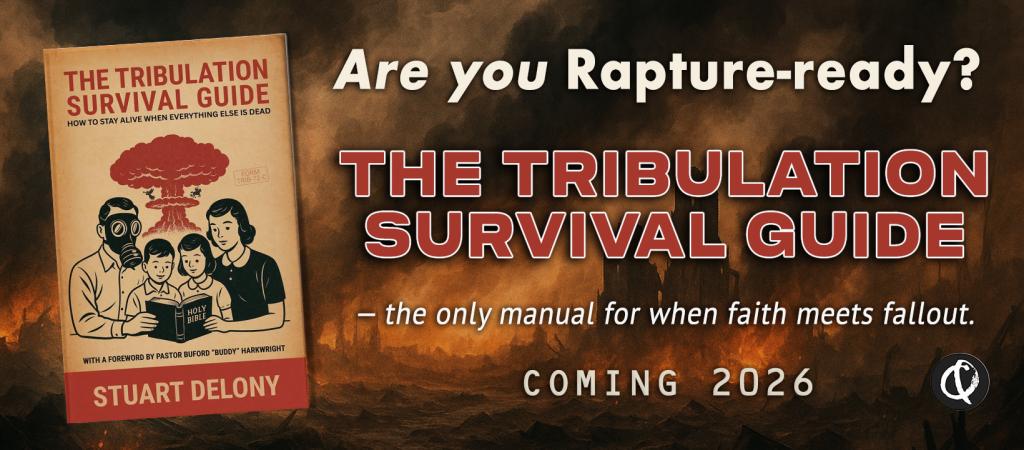
All of this — the misreadings, the fear-economy, the weaponized certainty — is why I wrote The Tribulation Survival Guide. It’s satire, yes, but it’s satire doing the same thing ancient apocalyptic writers were doing: holding up a mirror to the absurdity of a religious machine obsessed with power and panic instead of compassion and justice.
If apocalyptic literature once critiqued empire and corrupt religion, then this book is my small, deadpan contribution to that tradition — minus the beasts with ten horns and plus a few jokes about Christian nationalism.
What Apocalyptic Texts Actually Leave Us With
For all their chaos and cosmic flair, the heartbeat of apocalyptic literature is hope — not the “hold on till Jesus evacuates us” kind, but the stubborn belief that corrupt systems don’t get the final word. That institutions fail but love doesn’t. That justice outlives fear. That humanity, not religious spectacle, is where the sacred actually lives.
Maybe the apocalypse we’re overdue for isn’t the end of the world, but the end of the religious grifts that keep us from living in it with courage and compassion.
Because the real apocalypse isn’t destruction — it’s revelation. And God help us, we need a few.
For more Snarky Faith, check out the podcast and more:
- Snarky Faith website
- Snarky Faith on Instagram: @stuartdelony
- Snarky Faith on YouTube: @snarkyfaith
- Snarky Faith on Bluesky: @snarkyfaith.bsky.social
- Snarky Faith Group on Facebook: www.facebook.com/snarkyfaith
- Snarky Faith t-shirts and mugs available here.

















 Ad-Free & Subscriber Log-In