

In the previous article, it was argued that there is a Scriptural foundation for both the Catholic dogmas of Papal Infallibility and the Assumption of Mary. Even more than there is for identifying the Canon of Scripture within the Bible itself. There, it was stated that this argument from the interlocutor presupposes that one is working from the paradigm of the Protestant doctrine of Sola Scriptura. Again, Catholic (and Orthodox) Christians do not do theology like that. Nevertheless, we shall endeavor to lay out a Biblical foundation. We have Sacred Tradition and the teaching authority of the Church to fill in the gaps.
The Bodily Assumption of Mary
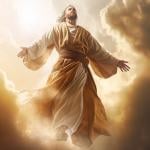
To begin, it is necessary to put forward the teaching found in Pope Pius XII’s document Munificentissimus Deus, released in the year 1950. After going through the catholicity, the historical rationale, and the impetus for declaring the dogma then, he defined it: “that the Immaculate Mother of God, the ever Virgin Mary, having completed the course of her earthly life, was assumed body and soul into heavenly glory” (Ch. 44).
As Pope Pius indicates, the feast of the Assumption of Mary finds support in the liturgies of the ancient Christian East and West. It has historically been linked with the feast of the Dormition of Mary, which deals with her death (dormitio).[1] In the third chapter of Munificentissimus Deus, we can infer from the Pope’s words that he is referencing the dogma as being part of the deposit of faith, but that it is the culmination of a development of doctrine (cf. Ch. 41). This concept can be found, to cite one example, in the 23rd chapter of St. Vincent of Lerins’ Commonitory, which dates to the 5th century. The basic idea is that Christ’s Church can grow deeper in her understanding of the deposit of faith over the centuries.[2]
Lex orandi, lex credendi
The Latin phrase heading this section expresses the idea that as the Church prays (i.e. in its liturgies), so the Church believes. As mentioned above, Pius referenced ancient Catholic liturgies in defense of the Assumption of Mary. Still, he was careful to stress that:
the liturgy of the Church does not engender the Catholic faith, but rather springs from it, in such a way that the practices of the sacred worship proceed from the faith as the fruit comes from the tree, it follows that the holy Fathers and the great Doctors, in the homilies and sermons they gave the people on this feast day, did not draw their teaching from the feast itself as from a primary source, but rather they spoke of this doctrine as something already known and accepted by Christ’s faithful (Ch. 20).
Thus, he marshalled St. John Damascene, St. Germanus of Constantinople as well as a host of notable Scholastic theologians as witnesses to a belief in this dogma (Ch.’s 21-22, 24-32). He also noted the “free[ness]” of the Fathers of the Church and those who followed them in utilizing Sacred Scripture to “explain”, and “to confirm the doctrine of the Assumption….” (Ch.’s 26, 29). However, Pope Pius affirmed that “All these proofs and considerations of the holy Fathers and the theologians are based upon the Sacred Writings as their ultimate foundation” (Ch. 38, cf. 41).
Sacred Scripture and the Assumption of Mary
Although these statements come directly from Munificentissimus Deus, noteworthy Catholic theologian Ludwig Ott argued that with respect to the dogma, “Direct and express scriptural proofs are not to be had”.[3] Nevertheless, he too took readers through a brief historical and Scriptural analysis of the dogma, most of the references appearing in Pius XII’s encyclical. These include Mt. 27:52-52, Lk. 1:28, Ps. 131:8, Rev. 11:19, and Cant. Of Cant. 8:5, which were utilized by the Fathers and/or Scholastics.[4] “Modern theology”, he noted, “usually cites Gn. 3,15 in support of the doctrine. Since by the seed of the woman it understands Christ, and by the woman, Mary, it is argued that as Mary had an intimate share in Christ’s battle against Satan and in His victory over Satan and sin, she must also have participated intimately in His victory over death”. There too, he cited the teaching of the Fathers which posited Mary as the “new Eve”.[5]
Sola Scriptura, the Canon, and the Assumption of Mary
At the outset it was stated that there is a Scriptural foundation for the Catholic dogma of the Assumption of Mary, and that this is firmer than for finding the Canon of Scripture within the pages of Holy Writ. Neither can be proved by the Protestant doctrine of Sola Scriptura, nor do Catholic and Orthodox Christians accept this teaching. On the contrary, by utilizing Sacred Scripture, Sacred Tradition, and the Magisterium of the Catholic Church, both the Canon of Scripture and the Assumption of Mary rest on a firmer foundation.
[1] Ludwig Ott, Fundamentals of Catholic Dogma, p.210.
[2] Commonitory, Ch. 23, https://www.newadvent.org/fathers/3506.htm (8/4/2025).
[3] Ott, Fundamentals, p. 208.
[4] Ott, Fundamentals, pp. 208-210.
[5] Fundamentals, p. 209. Ott, Fundamentals, pp. 208-210.




 Ad-Free & Subscriber Log-In