

Truth be told, I’m no fan of holiday music. The seasonal time doesn’t matter. I just don’t enjoy music that requires a calendar appointment. There are, however, works by artists, bands, and composers that could qualify or expand the understanding of seasonal music, which I do value. One such composer is Arvo Part.
The Seven Last Statements of Jesus
“My God, my God, why have you forsaken me?” (Matthew 27:46 NKJV).
“Father, forgive them, for they do not know what they are doing” (Luke 23:34 NKJV).
“I tell you the truth, today you will be with me in paradise” (Luke 23:43 NKJV).
“Dear Woman, here is your son!” and “Here is your mother!” (John 19:26–27 NKJV).
“I am thirsty” (John 19:28 NKJV).
“It is finished!” (John 19:30 NKJV).
“Father, into your hands I commit my spirit!” (Luke 23:46 NKJV).
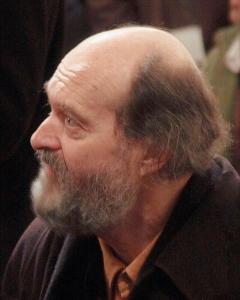
The devotion and dedication of Arvo Part to his faith and creative output would cripple many, inspire others, and bring reverence and respect from a few. His large-scale orchestral and vocal works, as well as intimate chamber compositions, bring together biblical knowledge, devotion, and musical technique. Part takes a firm hold of his faith, which led him to almost becoming a monk, but he remained a highly disciplined Estonian Orthodox Christian. This devotion is exemplified in his commitment to articulate this in his compositions. Part elected to use biblical themes to define his compositions. An analysis of any of his selected works would qualify for a Master’s degree in combined musicology and theology.
Like other composers I hold in high regard, Arvo Part has had a dramatic imprint on my work, understanding, and approach to music, whether it is sacred or secular. At this season, it’s worth a review of a work by Part which has lingered with me for decades, “The Passio.”
Arvo Part, “Passio,” Passio Domini nostri Jesu Christi secundum Joannem (The Hilliard Ensemble, Paul Hillier conducting)
“Passion can be a powerful force when guided by biblical principles. In the Bible, we are reminded of the importance of having a passionate heart that is focused on serving God and others. Our passion should be a reflection of our faith and dedication to living a purposeful and meaningful life guided by God’s word” (John the Baptist Church, n.d.).
This statement underscores the lineage that Part exemplified in his works. With each note, patience of space, tempo adjustment, and compositional layers, one can literally hear Part’s inner passion being expressed. Such a reverence is unqualified by many, which sets his works aside from others.
“In the Old Testament, passion is portrayed as a deep and burning love for God and His commandments. The psalmist expresses his passion for God’s word in Psalm 119:97, saying, ‘Oh, how I love your law! I meditate on it all day long.’ In the New Testament, the concept of passion takes on a deeper meaning through the life and teachings of Jesus Christ. Jesus’s passion for fulfilling the will of the Father, even unto death on the cross, exemplifies the ultimate sacrifice driven by love and devotion” (John the Baptist Church, n.d.).
Attempting To Understand “Passion”
Biblically speaking, passion is often associated with intense emotions, fervent zeal, and unwavering commitment to a cause or belief.
The International Standard Bible Encyclopedia’s entry on “Passion, Passions,” sheds more light on the importance of this description.
“‘Passion’ is derived from Latin passio, which in turn is derived from the verb patior,…Close to what seems to be the primary force of the root is the meaning ‘suffer,’ and in this sense ‘passion’ is used in Acts 1:3, ‘to whom he also showed himself alive after his passion.’ This translation is a paraphrase (Greek: “after he had suffered” [post passionem suam]),… ‘Suffering,’ when applied to the mind, came to denote the state that is controlled by some emotion, and so ‘passion’ was applied to the emotion itself. This is the meaning of the word in Acts 14:15, ‘men of like passions,’ and James 5:17, ‘a man of like passions,’ Greek homoiopathes; the Revised Version margin ‘of like nature’ gives the meaning exactly: ‘men with the same emotions as we’…From ‘emotion’ a transition took place to ‘strong emotion,’ and this is the normal force of ‘passion’ in modern English the King James Version does not use this meaning, but in the Revised Version (British and American) ‘passion’ in this sense is the translation of pathos, in its three occurrences: Romans 1:26 (the King James Version “affection”); Colossians 3:5 (the King James Version “inordinate affection”); Thessalonians 4:5 (the King James Version “lust”). It is also used for two occurrences of pathema (closely allied to pathos) in Romans 7:5 (the King James Version “motions,” the King James Version margin “passions”) and in Galatians 5:24 (the King James Version “affection”) (International Standard Bible Encyclopedia, 1915, Bible Study Tools, 2025, emphasis added).
Emotional depth, positive and negative directions, each culminating in the physical sacrifice Christ undertook, willingly and obediently gave. This is the discursive trajectory woven in Arvo Pärt’s “Passio.” Unlike other composers who have sought to musically illuminate this reality, Part gives identity to each of these points: emotional depth, both positive and negative representations, the surfacing of suffering, and the recognition of affection seated outside of man’s rational understanding. It is through this attention that Part provides the ability to compose Christ’s passion under the guidance of humility rather than outlining a surface representation of this act. Part is literally praying through composition.
Composition As Passion
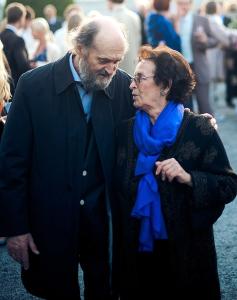
“The style that [Arvo Part] developed is known as “tintinnabuli” because of its bell-like sounds. In the period in the composer’s life right before he developed that distinctive style, as he was working his way there, the Bible played a significant role” (Press Books, PALNI, n.d.). Often referred to as a “holy minimalist” or “sacred minimalist,” due to the sparse nature of his compositions, this label does very little toward the understanding of Part’s compositions.
“Theologian Rob Saler of Christian Theological Seminary has this to say about the role of the Bible in Pärt’s music: ‘As scholars such as Peter Bouteneff and others have shown, in most of Arvo Pärt’s mature compositions, he is either directly setting a sacred text to music or is using the cadence of that text as chanted in liturgical settings to guide his compositional choices. In a conversation that I once had with the composer, he shared with me that he seeks to inhabit the texts that he sets to music before, during, and even after the act of composition itself — in a way, he invites listeners to inhabit the texts sonically even as, in so doing, the texts start to permeate the lives of listeners’” (Dr. Rob Saler, personal correspondence, qtd. in Press Books, PALNI, n.d.).
Taking this understanding and confirmation from the composer, through Dr. Saler’s interview, it is quite clear to see the depth, breadth, and devotion of Part to his compositions, which, as we can see, are his musical devotions.
The newspaper Edasi published a review on November 5, 1976, penned by Johannes Bleive saying that Pärt had turned ‘…to a completely new creative direction which appears to be a protest against the exceedingly dissonant and ubiquitous harsh music of our time, where there is no peace to enjoy simply the music of the instruments’” (qtd. in The Arvo Part Center, October 27, 2016).
Coupling together these two statements, one theological, one musicological, Arvo Part’s faith-based devotion and compositional technique (tintinnabuli), which was introduced to a simple Estonian audience on October 27, 1976, is evidence of passion, from a man, a composer, who made the personal, professional, and religious decision, following a failing career and personal tragedy, to listen for the sounds of passion.
Listening For The Passion
Arvo Part challenged himself as a composer and as a theologian. He sought to connect divinity through musicality. Both delicacy and patience play an integral part in his works.
Stripping away existential questions, Arvo Part was searching for truth, a divine truth, one not limited to the pages of a bible.
“How can music reconcile human subjectivity and divine truths? How can a composer get out of the way, so to speak, to let the sounds of sacred texts resonate? How can artists and audiences approach music so that, to use Pärt’s famous expression, ‘every blade of grass has the status of a flower’?” (The Religious Hub in Religious News, September 11, 2025).
Sound and silence are human experiences. Part worked to reduce toward remove human prescriptions of these to allow the Word/word (read: Body of Christ/scripture) of God to manifest. Surface listening to selected compositions of Part may sound slow, stagnant, and musically simplistic. In counterpoint, it is this core purpose of Part’s compositions which, as noted earlier by Johannes Bleive, is the calm dissonance in simplified global cacophony. Part’s intention to derive a methodological approach to composing, including the placement and involvement of silence, is aligned with deep scripture study. There is no separation between sound and silence, life and religious devotion, opposed to what the globalized mass market industrial complex defines.
“There is a sensuousness to Arvo Pärt’s tintinnabuli music that connects with listeners’ bodily experience. Pärt’s formulas, born out of long, prayerful periods with sacred texts, offer beauty in the warmth and friction of relationships: melody and tintinnabuli, word and the limits of language, sounds and silence.
“For me, ‘silent’ means the ‘nothing’ from which God created the world,” Pärt told the Estonian musicologist Leo Normet in 1988. ‘Ideally, a silent pause is something sacred’” (Arvo Part, qtd. in The Religious Hub in Religious News, September 11, 2025).
The discipline of quiet is a passion. Arvo Part invites the listener to submerge themselves not only in sound, but in the spaces between the sound; the understanding of the written word (read: scripture), and the meaning of the living Word (read: the voice and body of Christ). As much as language constructs the scaffolding of Part’s compositions, the witness of silence does the same.
Holding Passion
“Father, if you are willing, take this cup from me; yet not my will, but yours be done” (Luke 22:42, NKJV).
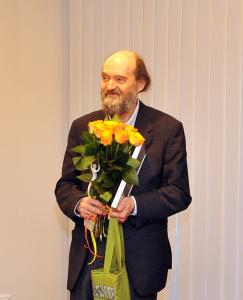
The display of Christ’s passion shines a human perspective on this moment in time. The true depth and meaning of this act is the entry point for one’s relationship with Christ. Arvo Part knew this point perhaps all too well. Taking up the task of composing a musical portrait of this environment, context, and words is daunting simply in thought. The compositional work by Part, The Passio, requires such reverence in listening, with full-bodied attention.
“Love the Lord your God with all your heart and with all your soul and with all your mind. This is the first and greatest commandment” (Matthew 22:37–38 NKJV).
Matthew’s gospel gives a fine point on the direction, intent, scope, work, and life of Arvo Part, one he painstakingly poured into “The Passio,” the final act of love and kindness by Christ for all humanity.










 Ad-Free & Subscriber Log-In