

As one invested in musicology/theomusicology as a discursive practice to understand and escalate a credible value of expressive culture, the “Big Game” halftime show on February 8, 2026, offers a yearly opportunity to indulge in critical analysis. This year, 2026, was of particular interest.
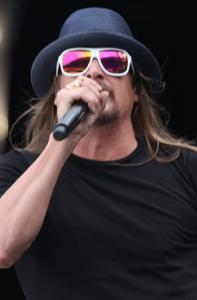
The mainstay “Big Game” halftime show is predictable. However, this year, Turning Point USA offered an “alternative” halftime show, named “The All-American Halftime Show.” The title contextualizes an assumption that the alternative entertainment show provided by Turning Point USA is one that the entire country is desiring. The same could be said about the show hosted this year by Apple Music, which featured the pop culture controversial icon, Bad Bunny. Where Turning Point USA promoted their featured artist, Kid Rock, Apple Music leveraged the currency of Bad Bunny’s Grammy Award success, along with the political narrative that continued to follow his concerts and tour, as one that the country desired to view.
Both parties missed the point of the halftime entertainment during the “Big Game,” to bring the country together as a community.
Avoiding the temptation to dissect each halftime show’s musical profile, it appears more timely to analyze each halftime show as a counterpoint to the others to unveil where these entertainment models succeed and fall short. Using the core elements of theomusicology as the surgical agent, a critical review of each halftime show argues how each does not comply with biblical scripture, knowledge of how a community is to work to support and build itself.
1 Praise the Lord.
Praise God in his sanctuary;
Praise him in his mighty heavens.
2 Praise him for his acts of power;
Praise him for his surpassing greatness.
3 Praise him with the sounding of the trumpet,
praise him with the harp and lyre,
4 praise him with timbrel and dancing,
praise him with the strings and pipe,
5 praise him with the clash of cymbals,
Praise him with resounding cymbals.
6 Let everything that has breath praise the Lord.
Praise the Lord (Psalm 150 NIV).
The Big Game Halftime Shows
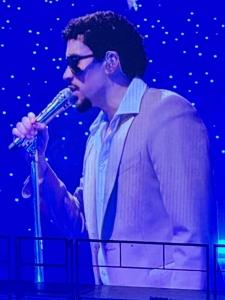
Apple Music, Bad Bunny’s Apple Music Super Bowl Halftime Show, Feb. 8, https://youtu.be/G6FuWd4wNd8?si=Btf5pRg28XxZVo3U
Turning Point USA Presents: The ALL-AMERICAN HALFTIME SHOW, Feb. 8,
Avoid The Temptation
Multiple commentaries discussing both halftime shows focus on the music and representation. In doing so, the positions presented work to substantiate a specific halftime show as a more prominent entertainment model for the country. These promotional reviews fall short on one overarching point: each halftime show speaks to a body of constituents, not to a totality of populists. This is the area of controversy between these two highly viewed shows.
In the preface, each supporting body worked tirelessly to deflate the value of the other. Broadcasts, reports, commentaries, and equal attention given to the alternative as well as the offering show. This amount of lost oxygen to create a disqualified viewpoint of their counterpart event detracts from the core intent of this moment for the country: a chance to come together as a holistic community.
Applied Theomusicology
The core elements of theomusicology (personal testimony, evangelism, discipleship, biblical-centered narrative/lyrics, community, activism) work to focus on how each of these halftime shows relates to the other, and their addressed community.
Bad Bunny’s Halftime Show

Personal testimony: This event was built on the sentiments of Bad Bunny to express, in his words, a sense of how “love” conquers hate. Moving from what was originally perceived as an alternative lifestyle demonstration, Bad Bunny’s halftime show promoted his testimony to seek harmony, equity, and social justice for his invested community, not limited to one prescribed country.
Evangelism: If Bad Bunny’s points recognized in his personal testimony stand, then he underscores a position of evangelism, not to a religious community, but to a secular, non-faith-based community. This movement still ascertains the discipline of evangelism, where Bad Bunny is, as he stated (Access Hollywood, Feb. 5), contextualizing his work at the 2026 “Big Game” halftime show, and subsequent appearances in America as those to promote harmony, equity, and social justice for his invested community.
Discipleship: A bit more challenging to relate to the presentation by Bad Bunny at the “Big Game.” However, the growth in the number of those who came to know Bad Bunny and support his viewpoints, in advance and because of his performance at the “Big Game,” does lead to the evolution of disciples, not in a religious understanding, but in a non-faith-based community. This level of discipleship, collected through Bad Bunny’s halftime show performance, helped to build an ethic, even for a moment in time, of equity and social justice for a viewing audience.
Biblical-centered narrative/lyrics: Following the aforementioned points, Bad Bunny is, in effect, expressing biblical doctrine. The most relevant example is John 15:12 “My command is this: Love each other as I have loved you” (NKJV).
Likewise, 1 Thessalonians 5:11 relates to Bad Bunny’s overall performance narrative: “Therefore encourage one another and build each other up, just as in fact you are doing” (NKJV).
It stands to reason that what Bad Bunny was overarchingly expressing in his gestures, statements, and performance narrative is biblically centered.
Community: This is a transparent reality in Bad Bunny’s performance. The community, however, is not localized in the testimony narrated by Bad Bunny’s performance. The community was, in his words, an expansion of the limitations contained by borders for a broader human connection.
Activism: Another transparent point demonstrated through the overall presentation of Bad Bunny’s halftime show. The activism communicated was not politically centered, as some projected. Rather, the activism Bad Bunny qualified was that of support and real connection with others in and beyond the boundaries of one’s community. Bad Bunny’s activism was a border-crossing agent for socio-political equity, justice, and peace. A strong contrast to what others assumed would be a more political statement.
The closing billboard at the “Big Game” halftime show codifies these points together: “The only thing more powerful than hate is love.”
Glenn Beck’s analysis does not falter on which halftime show he approved and disapproved.
PBS NewsHour, The cultural impact of Bad Bunny’s Super Bowl halftime show, Feb. 9,
This analysis from Vanessa Diaz situates the performance by Bad Bunny in a positive light for an American audience.
The Project, Bad Bunny vs. Turning Point USA: A Tale Of Two Super Bowl Halftimes, Feb. 8,
A short, to the point comparision of both halftime shows, which leans toward supporting the alternative presentation by Turning Point USA.
News 5 WCYB, Turning Point USA launches ‘All American Halftime Show’, Feb. 6,
This more expanded discussion about the All-American Halftime Show, coming from a representative of Turning Point USA, firmly situates this alternative entertainment option as the more credible, honest, and assumed version that the country as a whole seeks.
Winners Or Losers?
Both performances strive for the same point: support the culture, speak to the country as a whole, present a realistic entertainment option desired by the country, be a voice for the people, and offer a high-quality musical performance by critically acclaimed artists. Yet, the turbulence between these oppositional entertainment presentations created a wider divide across the country. Depending on one’s social, religious, and personal preferences, either performance will rank higher than the other.
Bickering viewer ratings, post-performance negative commentaries, controversial public opinion, and unnecessarily outspoken performers leave a distasteful residue on this year’s “Big Game” halftime show.
If each presentation, religious-focused or secular, strived to sustain an unspoken, biblically-founded understanding of supporting the community through an artistic expression presumed to be offered for humanitarian purposes, the pushback from both actually dismantles this opportunity.
“Carry each other’s burdens, and in this way you will fulfill the law of Christ” (Galatians 6:2 NKJV).
“A generous person will prosper; whoever refreshes others will be refreshed” (Proverbs 11:25 NKJV).
“Be kind and compassionate to one another, forgiving each other, just as in Christ God forgave you” (Ephesians 4:32 NKJV).
Scripture offers the direction these counter performances should have followed. Socio-religiously, both performances had the integrity to operate along these scriptural disciplines. In reality, when the time came to offer a credible, biblically-centered, scriptural-ethic performance to build a positive image, supporting the community/country through an active musical expression, both camps elected to focus on the differences rather than looking beyond limitations. In doing so, the time set aside by millions of viewers to experience a nuanced evangelic narrative, faith-based, and secular narrative, to build discipleship in community and beyond, was lost.










 Ad-Free & Subscriber Log-In