

“The end of all things is near. Therefore, be clear-minded and sober, so that you can pray. Above all, love one another deeply, because love covers over a multitude of sins. Show hospitality to one another without complaining” (1 Peter 4: 7–9 NLT).
The revered Jesse Jackson was a prolific example to multiple communities. His reach surpassed the political arena where he was most noted. The voice and message of Jesse Jackson contributed to the cultural evolution and message of Hip Hop.
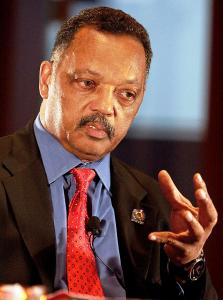
“The Reverend Jesse Jackson left us today, February 17, 2026, in Chicago. His passing at the age of 84, following a long battle with neurological issues (Progressive Supranuclear Palsy), leaves a void felt from church pews to the concrete of the Bronx. Jackson wasn’t just a “Civil Rights OG”; he was the man who gave hip-hop its political consciousness and a rhythmic template that still resonates in the culture’s best verses” (Blackout Hip Hop, Feb. 17).
Looking at the legacy of Jesse Jackson, 1 Peter 4 stands out as a marker to articulate his overarching work. His tireless devotion to community activism qualifies each of the core elements of theomusicology (personal testimony, evangelism, biblically-centered lyrics, discipleship, evangelism, community, and activism). Jesse Jackson was more than a politician. He was a prominent, positive image for his community, which served equally to others who were conscious of his reach and range.
“Jesse Jackson’s influence on hip-hop is profound and multifaceted. His voice and message of self-respect became the blueprint for conscious rap in the 1980s, and his performance at the Wattstax festival in 1972 showcased the precursor to modern rap. Jackson’s political activism and his speeches have been sampled in nearly 250 tracks, making him a significant figure in hip-hop’s history” (Blackout Hip Hop, Feb. 17).
A defining evangelist in the church and political arena, Jesse Jackson’s voice helped keep the roots of Hip Hop alive in both spheres.
“If you listen to Jackson’s performance at the Wattstax festival in 1972, you’ll hear the precursor to modern rap. His famous recitation of “I Am Somebody” wasn’t just a speech; it was a performance with incredible rhythm and “call and response” technique. While the crowd repeated his words, he dictated the tempo just like the best MCs do on stage. His voice was an instrument, and his message of self-respect became the blueprint for conscious rap in the 1980s” (Blackout Hip Hop, Feb. 17).
Grandmaster Flash & Melle Mel, Jesse, TopPop, 1984,
Giving attention to how Jesse Jackson was a physical presence, it was his voice that served communities. Jesse Jackson framed a message, sacred and secular, in his orations. Not overlooking this application, Jesse Jackson positioned his voice as a physical presence that stood over the message he continued to express, a core biblically-centered message taking hold of the cultural moments and time.
“Jackson’s influence can literally be measured through music. His voice has been sampled in nearly 250 tracks. Public Enemy, led by Chuck D, used their speeches to give their albums weight and authority. In classics like “Fight the Power” and “Rebel Without a Pause,” Jackson’s voice serves as the sonic backdrop of the revolution. Even 2Pac utilized his voice to add a spiritual note to his narratives of survival” (Blackout Hip Hop, Feb. 17).
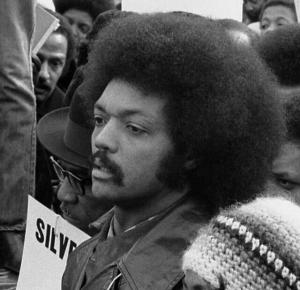
“If you are insulted for the name of Christ, you are blessed, because the Spirit of glory and of God rests on you. Indeed, none of you should suffer as a murderer or thief or wrongdoer, or even as a meddler. But if you suffer as a Christian, do not be ashamed, but glorify God that you bear that name” (1 Peter 4: 14–17 NLT).
This scriptural excerpt articulates the trajectory of Jesse Jackson’s work as a suffering servant to his community. It is interesting to note how the Hip Hop community recognized this activism by Jesse Jackson, yet they missed the collected reference to scripture that Jesse Jackson exemplified. Not a negative critique, but a tribute to how Jesse Jackson was subtle in sharing the gospel through his lived experiences, work ethic, and discipline to his religious belief and faith.
“Released in 1987 by the Brooklyn group Stetsasonic, “A.F.R.I.C.A.” is a landmark conscious hip-hop track that directly challenged the South African apartheid regime. The song was inspired by Reverend Jesse Jackson’s 1986 visit to the “Frontline States“ — the black-ruled nations bordering South Africa that were under constant threat from the apartheid government. Jackson appeared alongside Stetsasonic and Nigerian percussionist Babatunde Olatunji in the music video to further legitimize the movement. The song functioned as a geography lesson, naming countries like Angola, Zimbabwe, and Botswana, and was even distributed with a “Teaching Guide” for schools and churches” (Blackout Hip Hop, Feb. 17).
Stetsasonic, Jungle Brothers & Neneh Cherry at Nelson Mandela ‘Free South Africa’ Concert (Apr 16, 1990),
“Beloved, do not be surprised at the fiery trial that has come upon you, as though something strange were happening to you. But rejoice that you share in the sufferings of Christ, so that you may be overjoyed at the revelation of His glory” (1 Peter 4: 12–13 NLT).
Jesse Jackson did not stray from opposition. His consistent political work, including his two-time run for the presidency in the 1980s, demonstrated his dedication to community activism and personal testimony. Grounded in faith, Jesse Jackson framed his life’s work around his discipleship campaign “Keep Hope Alive.”
“Jackson’s mantra, ‘Keep Hope Alive’ remains etched in hip-hop’s DNA” (Blackout Hip Hop, Feb. 17).
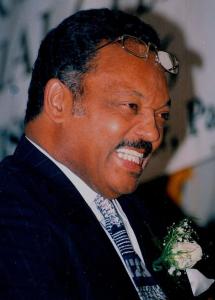
“As good stewards of the manifold grace of God, each of you should use whatever gift he has received to serve one another. If anyone speaks, he should speak as one conveying the words of God. If anyone serves, he should serve with the strength God provides, so that in all things God may be glorified through Jesus Christ, to whom be the glory and the power forever and ever. Amen” (1 Peter 4: 10–11 NLT).
We owe a debt of gratitude and respect to Reverend Jesse Jackson for his socio-political profile and his lived expression as a Hip Hop theologian, a faith-based disciple, and a visible testimony of how faith, hope, belief, and love for others underscore and articulate scriptural value.













 Ad-Free & Subscriber Log-In