

August 9 is National Book Lovers Day.
When we think of books we love, we have to start with the Bible. But there are many, many other books that can help us understand the Bible, its authors, their audience, their purpose and the time when they were writing.
In this article, I will introduce a few books that helped me to understand things better and might help you do so as well. I will start with the Hebrew Bible and then to the New Testament.
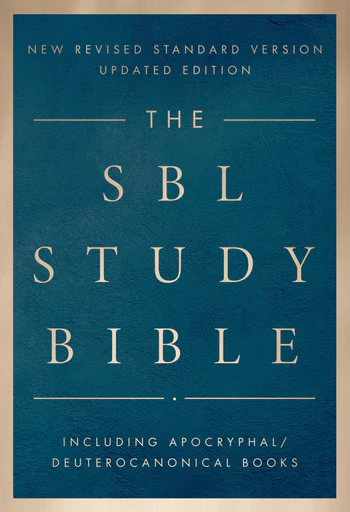
The “SBL Study Bible”
There are many English translations of the Bible. The SBL Study Bible is a recent (2023) update of the Revised Standard Version. Originally based on the King James Bible, it contains much of the beautiful language of the King James.
In addition, it includes introductory material for each book and a treasure of notes on the text and its evolution. Of the many translations and versions, this is the one I recommend.
The Hebrew Bible
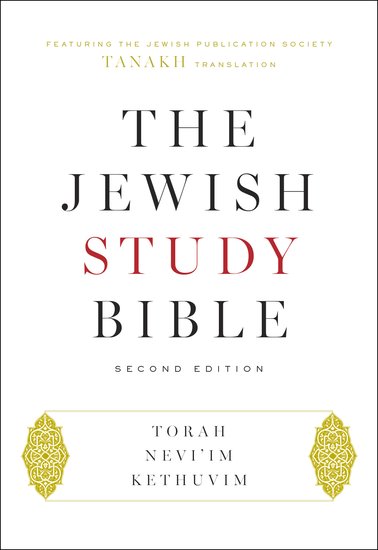
“The Jewish Study Bible,” Tanakh translation
This study Bible contains The Torah, TheNevi’im, the Kethuvim, essays, interpretations, practical information, and articles about the Bible itself. I recommend this translation because it is so complete and comprehensive. It is worthwhile for Jewish, Christian and other readers as well.
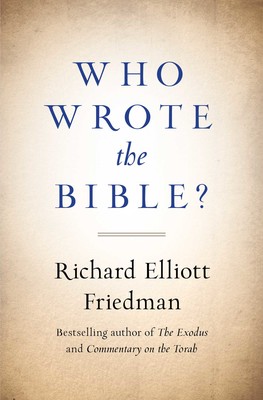
“Who Wrote the Bible” – Richard Elliott Friedman
This book traces the history of the YHWH worshipers in ancient times and of the Jewish people after the Babylonian captivity. Friedman introduces and discusses the Documentary Hypothesis which proposes which parts of the Hebrew Bible came from one of four primary sources from Israel and Judah, their similarities their connections and their differences.
Professor Friedman taught the Hebrew Bible at the University of Georgia and he is a bedrock scholar min this field. He does not agree with all other scholars on some fine points but this book clearly outlines a likely trajectory for the production of the Hebrew Bible.
I recommend it to everyone I know who has an interest in the Hebrew Bible.
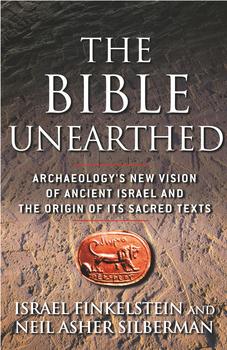
“The Bible Unearthed” – Israel Finkelstein and Neil Asher Silberman
While Friedman focuses on the text of the Hebrew Bible, Finkelstein and Silberman are concerned with the archaeology that gives us more clues about the people whom the Hebrew Bible was written about and for.
They take a topical approach (the Patriarchs, the Exodus, the “conquest” of Canaan, the origin of the Israelites, the two kingdoms and so forth).
They show that what is “in the ground” supports what is “in the text,” or not…
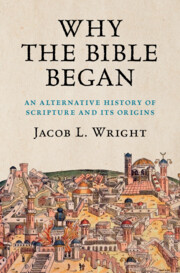
“Why the Bible Began” – Jacob Wright
Professor Wright takes a different approach to the Hebrew Bible. He argues that its existence was a product of conquest of Israel and Judah, written after the fact during and after the Babylonian captivity.
He asserts that scribal communities wrote parts of the Bible and that they were reacting to the defeat first of the Kingdom of Israel and then of the Kingdom of Judah. He argues that their purpose was to give a sense of “peoplehood” to the Jewish people after they had lost their land and YHWH’s inheritance, Israel (also called Jacob).
The New Testament
For the New Testament, I must defer to Professor Bart D. Ehrman of the University of North Carolina at Chapel Hill. Professor Ehrman is likely the most well informed and most often quoted scholar of the New Testament. Of his many books, I will recommend three that seem to make his case for how the New Testament was formed, who its authors were and for and about whom they were writing.
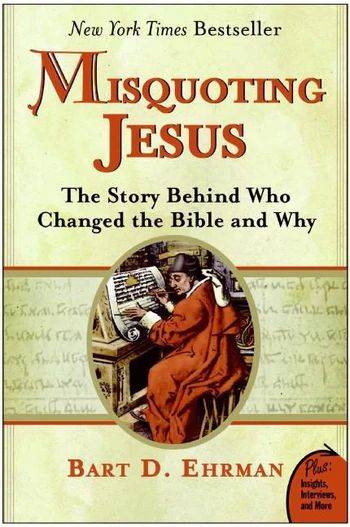
“Misquoting Jesus” – Bart D. Ehrman
This book functions as a a spiritual autobiography and an introduction to the complexities of textual criticism regarding the New Testament. In it, Professor Ehrman discusses the text of the New Testament, how it was written and how it was revised over and over and how it was redacted to produce the new testament we have today. Much of what is in the Bible was interpreted and revised over the first three centuries after Jesus’s earthly life.
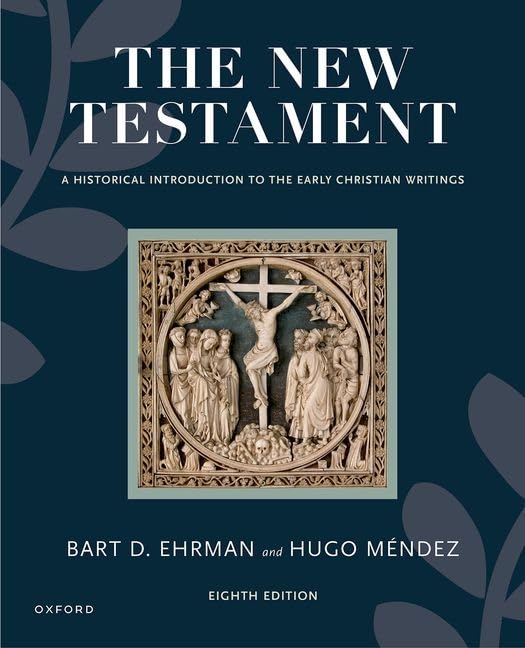
“The New Testament: A Historical Introduction to the Early Christian Writings” – Bart D. Ehrman and Hugo Mendez
This textbook was written for undergraduate students so even though it is a textbook, it is not full of technical terms. It is written as an introduction to the New Testament for non-specialists.
The book approaches the New Testament from a consistently historical and comparative perspective.
In it, Dr. Ehrman discusses many issues of history, textual criticism and interpretation of the Gospels, the letters and the prophets.
It is a comprehensive guide to the New Testament and is an invaluable tool for anyone who wants to further their understanding of the text.
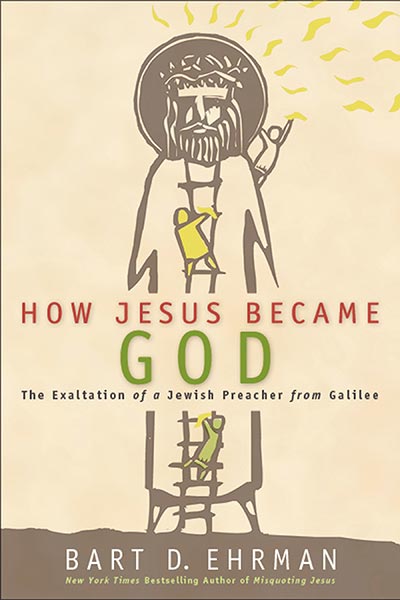
“How Jesus Became God: The Exaltation of a Jewish Preacher from Galilee”- Bart D. Ehrman
For this description, I defer to Amazon’s reviewer who captures the essence of this controversial topic:
A master explainer of Christian history, texts, and traditions, Ehrman reveals how an apocalyptic prophet from the backwaters of rural Galilee crucified for crimes against the state came to be thought of as equal with the one God Almighty, Creator of all things. But how did he move from being a Jewish prophet to being God? In a book that took eight years to research and write, Ehrman sketches Jesus’s transformation from a human prophet to the Son of God exalted to divine status at his resurrection. Only when some of Jesus’s followers had visions of him after his death—alive again—did anyone come to think that he, the prophet from Galilee, had become God. And what they meant by that was not at all what people mean today.
This topic is one that still generates new scholarship. Dr. Ehrman has distilled what has gone before to come to his conclusion in answer to the question: how, in fact, did Jesus gain divine status.
Where does this leave us?
I have recommended eight books that helped me to understand the Bible better. I hope that if you are seeking new information about the origins, purposes, authors, and times of the Bible, I believe these books, among the hundreds that exist, can paint a picture of the Bible that is based on decades of Bible scholarship. All of them are excellent.
I hope you have enjoyed reading this article. I welcome any and all comments positive or otherwise.














 Ad-Free & Subscriber Log-In