

The time of our northern hemisphere Winter Solstice marks the time of the southern hemisphere Summer Solstice. While those of us north of the equator watch for the longest night, those in the southern hemisphere see the year’s longest day.
The winter solstice this year takes place on Sunday, December 21, 2025, at exactly 10:03 AM Eastern Standard Time (EST).
Immediately after, the days begin to lengthen and will do so for six months, until the summer solstice on Sunday, June 21, 2026, at 4:24 AM (EDT), and then they will again begin to shorten.
This is the long-known yearly cycle.
The first recorded celebration of Christmas (the Christ Mass) appears to have taken place around 336 C.E., over three hundred years after the actual birth. No one knows for sure why the church chose Dec. 25th for the celebration. However, most historians suggest a connection between the many festivals at that time of year celebrating the winter solstice and the return of lighter, longer days.
The Northern Hemisphere/Winter Solstice problem
By pinning the birth of Christ to this time, the early leaders of the Christian world may have sought to replace those celebrations with one that was intentionally Christ-centered.
Since then, the church has inextricably linked the Christmas celebration with the idea of light pushing back the darkness, i.e., the increasing length of the day. Most liturgical churches, those whose worship themes follow the church calendar, prepare for Christmas with four weeks of Advent. Advent means “coming before” and is generally described as a time to wait in that darkness until the Light Of The World shows up.
The problem? This only works in the Northern Hemisphere.
Consider the Carols: All Winter Solstice Oriented
Consider many of the hymns and carols we traditionally sing this time of the year. A good example is In the Bleak Midwinter.
In the bleak midwinter, frost wind made moan
Earth stood hard as iron, water like a stone;
Snow had fallen, snow on snow, snow on snow
In the bleak midwinter, long ago
Our God, heaven cannot hold him, nor earth sustain;
Heaven and earth shall flee away when he comes to reign
In the bleak midwinter, a stable place sufficed
The Lord God Almighty, Jesus Christ
Angels and archangels may have gathered there
Cherubim and seraphim thronged the air;
But his mother only, in her maiden bliss
Worshiped the beloved with a kiss.
Or how about The First Noel:
The First Noel, the Angels did say
Was to certain poor shepherds in fields as they lay
In fields where they lay keeping their sheep
On a cold winter’s night that was so deep
Noel, Noel, Noel, Noel
Born is the King of Israel!
Noel, Noel, Noel, Noel
Many other carols carry the theme of night, of darkness: Silent Night, Holy Night; O Little Town of Bethlehem, It Came Upon A Midnight Clear, O Holy Night, The Holly and the Ivy, and Deck the Halls with Boughs of Holly.
And then, of course, we have the non-religious, seasonal songs emphasizing the gift-giving/receiving Christmas as their theme: Frosty, The Snowman, Rudolph, The Red-nosed Reindeer, Santa Claus Is Coming to Town, I’m Dreaming of a White Christmas, Chestnuts Roasting Over an Open Fire, Jingle Bells, Let It Snow, etc. All evoke winter.
It’s Different At The Equator and Further South.
Several times in my life, I have crossed the equator and entered the southern hemisphere. On or near the equator, day and night are always equal or close enough to equal that it does not matter. The sun is up and 6 AM and down at 6 PM.
The further south, the more pronounced the reversal of day and light became. The time of our northern hemisphere Winter Solstice marks the time of the southern hemisphere Summer Solstice. While those of us north of the equator watch for the longest night, those in the southern hemisphere see the year’s longest day.
In the tropics, there are only two seasons: dry and rainy. There’s no snow; there’s no increasingly oppressive darkness; there’s no coldness or bleakness or seasonal ivy growing.
When we traveled in the Amazon one year in December, we saw the massive rainforests with the achingly high canopy of trees and surprisingly sterile soil; we sailed on the giant river flowing with such power that islands arise and disappear with alarming regularity; we learned about the uncounted varieties of fish and plants and insects and creepy-crawlies, but knew there was not a sheep in sight.
In the southern parts of Africa we entered this year, we saw arid deserts and giraffes and zebras and elephants and water buffaloes and ostriches, but could find no evidence of reindeer.
Yet holiday decorations, including those with Santas in a sleigh surrounded by fake snow, were everywhere. I often thought, “How ridiculous. These people have never seen a flake of snow in their entire lives. What use is a sleigh pulled by reindeer, which they have also never seen?”
It Is About Human Evil
All these things lead to my increasing awareness of the many culturally conditioned overlays we have placed on the story that mask the essential message of Christmas: our world desperately needs redeeming.
This world has been made dark and evil by human maltreatment of other human beings and all other forms of life.
While the rest of this amazingly alive world may struggle to survive and may kill to eat in that struggle for survival, only human beings, theoretically those in the image of God, have devised ways to murder, torture, destroy and oppress others for pleasure and destroy the environment at will.
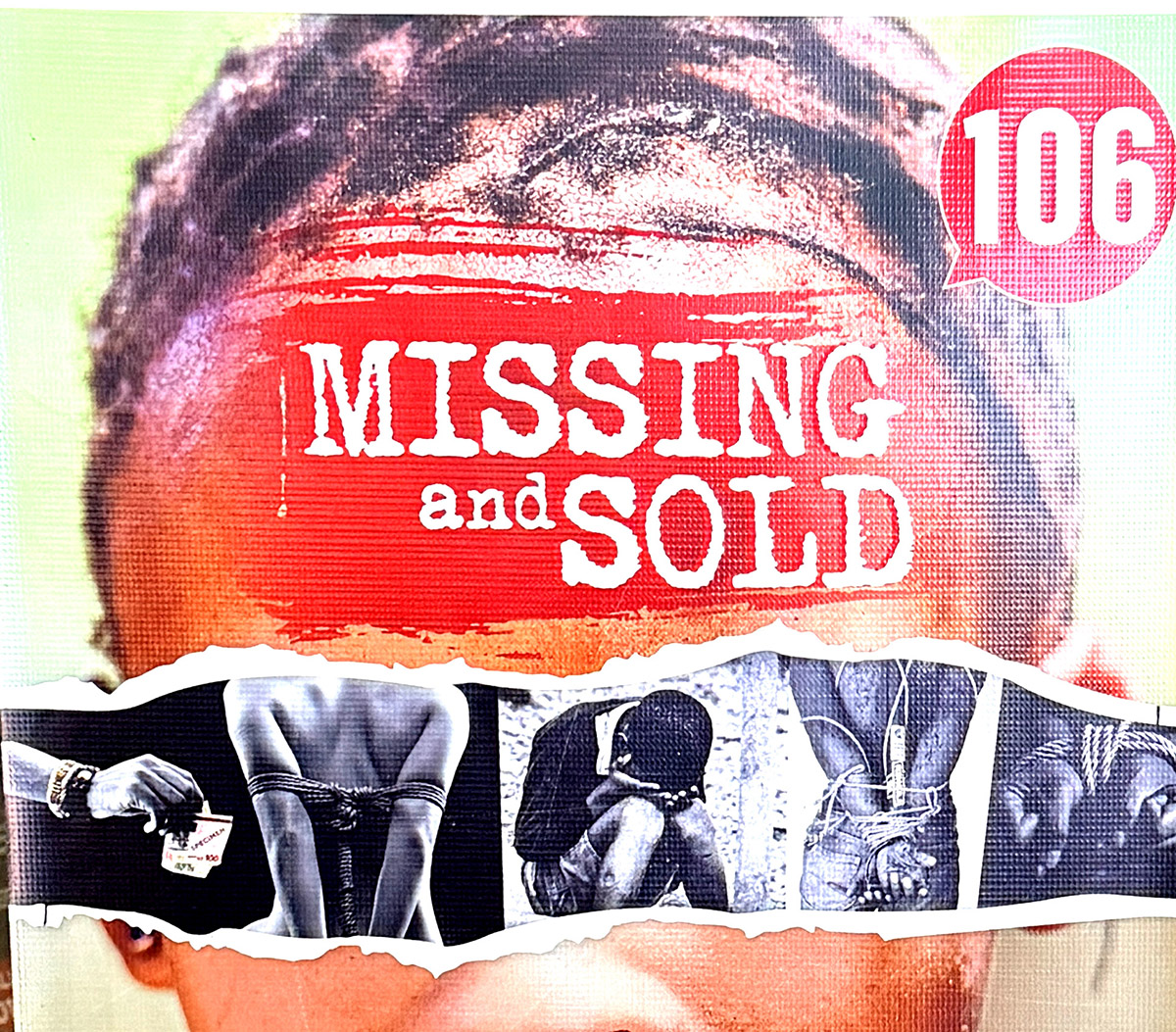
Nothing in the animal kingdom begins to rival the wickedness that human beings have done and are yet preparing to do. We are the ones who create markets for human slaves that make it necessary to put signs like this in airports:

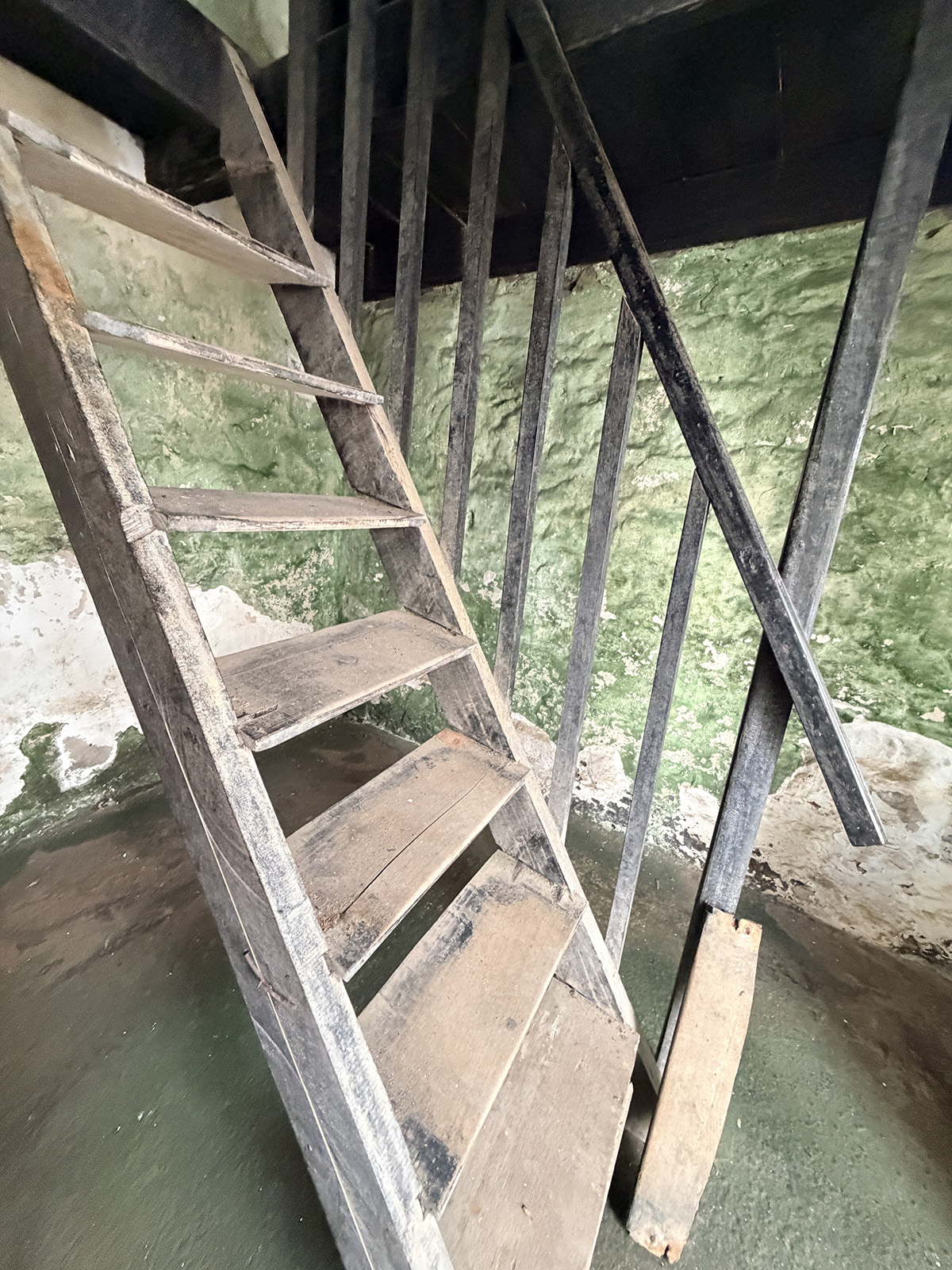
We are the ones who create “rape ladders” for white colonists to force their black female slaves to climb at their command. Yep, it’s true. Read all about it here.
We need a Savior. We need to take a hard look at ourselves, to discover the nature of true repentance, to recognize that many of our decisions bring devastation upon others, to acknowledge that when one of us suffers, we are all suffering.
That’s what Christmas is all about: the willingness of the Holy One to suffer alongside us so we might learn to choose different paths. But we’ve lost the message in the name of power and money and demeaning the “other” and doing everything possible to make the desperate unwelcome.
Let us never forget that Jesus and his family were among the desperate who fled to another country in the face of murderous opposition. God is no stranger to suffering and has endowed us humans with both the responsibility and the privilege to work to end it, not increase it.
May we who feast during this season also remember those who starve—and they are everywhere. Again, when one of us suffers . . . well, we can do better.












 Ad-Free & Subscriber Log-In