

Today, the big news is the entire old is celebrating Christmas. However, people celebrated for different reasons. The Christian community celebrates the birth of Jesus, who entered the darkness of this fallen world.

The symbolism isn’t lost on us of the light of heaven coming during the dark season of winter. Traditionally, the Christian community has emphasized the spiritual aspect of Christmas over its commercialism and worldly aspects.
This year, the darkness around the world is much more than just a physical darkness; the spiritual darkness and the hardship of life are evident:
- Floods
- Volcanoes
- Persecution
- Financial hardships
- Health concerns
We live in dark times, much like the world Jesus, the Messiah, was born into (Isaiah 9:2, John 12:46). We don’t have to turn on the TV to see the pain and brokenness that is present in this fallen kingdom. Hospitals are full of sick people due to seasonal and personal health issues.
Homelessness and poverty are on the rise, even here in America, the supposed richest and greatest nation on earth. Everyone is looking for a ray of light and a glimmer of hope during these dark times. As God’s people, we should know where our true hope and only salvation come from, and it isn’t anything this fallen kingdom can offer us; we have a hope that doesn’t disappoint (Joel 3:16, Romans 5:5).
What Is Hope
Hope is something we all long for in life, whether we’re lost or saved by God’s grace. Deep down inside, we all know the importance of hope. Hope is defined as “The feeling that what is wanted can be had or that events will turn out for the best. To look forward to with desire and confidence; not giving up.”

Hope isn’t a spiritually exclusive concept; even lost people hope for things; the only difference is where God’s people place and find their hope. I remember being taught as a child that a Christian’s hope is in God alone, not anything this fallen world offers us.
How things have changed in 50 years. Now, political power and a golden era for a temporary nation that God Himself will destroy is the hope of many believers. Unfortunately, many believers have turned from the light of God to the darkness of this world for hope and peace (2 Timothy 3:1-9).
That is why the Bible and the early church leaders have a lot to say about hope, where it comes from, and what it really is (Jeremiah 29:11, Romans 15:13, 1 Corinthians 13:12-13, Ephesians 1:19).
According to the Bible, our hope is not like the hope of the world (Psalm 71:5, Hebrews 6:19). God’s people are called to a higher hope than earthly riches and greatness (1 Timothy 6:17-19, Hebrews 13:5, James 2:5).
We serve a mighty God of hope who called us out of the darkness of this fallen kingdom to bring hope to this dying world (Acts 26:18, Romans 8:24-25; 15:13, Colossians 1:13, 2 Peter 1:19). The apostles remembered their Jewish education about the hope we have in God and how it sets us apart from this fallen world.
Tiqvâ
The prophet Moses tells us that in the beginning God created mankind and gave them everything they needed, and it was good (Genesis 1:1-31). At least until mankind wanted more than what God freely gave them and pursued greatness (Genesis 3 4-6). The evil of mankind’s heart corrupted the creation and what once was good became cursed and all hope was lost (Genesis 3:17-19).
However, Moses prophesied that there was hope that the curse would one day be broken and the devil would be defeated (Genesis 3:15). Hope for mankind and creation would come a few millennia later.
The Hebrew word in the Old Testament for hope is tiqvâ, and it can also mean “Expectation, outcome, cord, or ground of hope.” God called His people out of this dark kingdom to be different and to restore hope to what was lost in the garden (Exodus 19:5-6, Leviticus 20:26).
That is why Judaism emphasizes pursuing the hope of God and not the hope that this world offers (Psalm 71:5, Isaiah 40:31, Jeremiah 29:11):
- Tikvah
- Messianic Redemption
- Tikkum Olam
- Teshuvah
- God’s Covenant and faithfulness
When the New Testament begins, it starts with the arrival of the Jewish Messiah, Jesus, into a dark, broken world (Matthew 2:1-3, Luke 2:1-7). Israel was once again in exile to another nation, under the control of the Roman Empire.
Jesus reminded His followers in His Sermon on the Mount that there was hope for the brokenhearted and suffering (Psalm 34:18, Matthew 5:4). He promised to give His followers peace and hope that this world couldn’t take away (Isaiah 26:3, John 16:33).
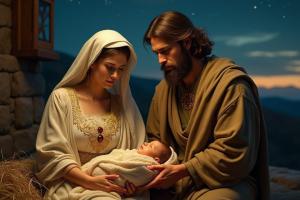
Our Rabbi reminded His followers about the hope of heaven, not this temporary kingdom (Matthew 5:12, Luke 23:43, John 14:2-3). That is why our Lord taught His followers to store up treasures in heaven, not here in this temporary kingdom (Matthew 6:19-21).
He warned them that it does no good to gain the whole world, yet forfeit their soul (Matthew 16:26). This world and its riches are temporary.
Powerball
In that other big news this Christmas Day, someone finally hit the Powerball jackpot for $1.8 billion. With that much money, someone is sure to have a good Christmas, right?

Not according to God’s Word. The Bible tells us about the wisdom of the other “Son of David, ”King Solomon didn’t have anything good to say about wealth and earthly power (Proverbs 2:11; 23:4-5, Ecclesiastes 2:11; 5:10-15). Below are some of the wisest and richest men ever’s warnings about wealth and earthly greatness:
- Meaningless
- Doesn’t satisfy
- Never enough
- Temporary
In today’s economy, King Solomon would be worth $1.2 trillion, making him richer than MAGA‘s golden boys Elon Musk and Donald Trump put together! Neither of whom will take one dime of their wealth to heaven with them when they die, not if they die, when they die (Ecclesiastes 3:2; 5:15, Hebrews 9:27).
Again, that is why Jesus taught His followers to store up treasures in heaven, not here in this temporary kingdom (Matthew 6:19-21, 33). To my MAGA friends, if you place your hope in earthly greatness of this temporary kingdom, you need to repent.
Because Jesus made it clear God’s people cannot have it both ways, no matter how much you try to rationalize it (Matthew 6:24). God’s people cannot find salvation in this fallen world’s temporary tiqvâ!











 Ad-Free & Subscriber Log-In