
 Why I Am Catholic
Posted by Webster
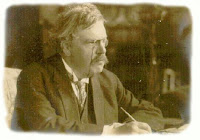
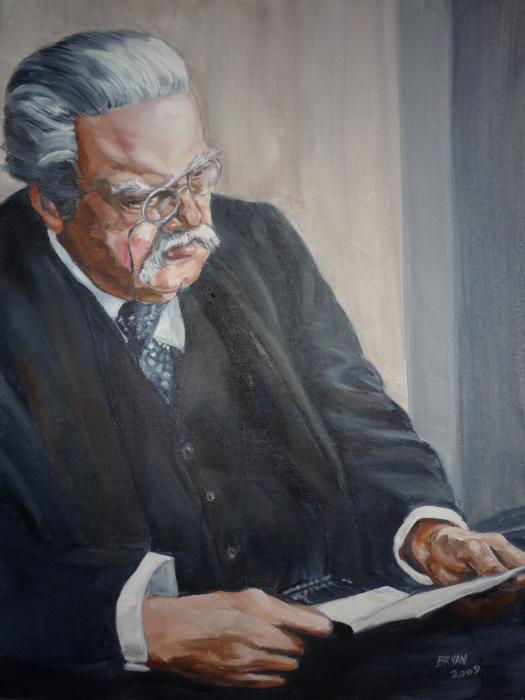
G. K. Chesterton can be a chore, the way he piles one analogy, one alliterative turn of phrase on another. But there are golden needles in his haystack. Today, I was plowing through Orthodoxy, chapter 4, “The Ethics of Elfland,” when I came upon a statement that stopped me cold: “The test of all happiness is gratitude.” It felt as though I was being handed a golden key, one that can help me make sense of my experience.
Now think of other moments that do contain gratitude at their core: realizing how much you have been loved and supported by a parent or spouse; watching a sunset or listening to a concerto and realizing that life is a gift and that Whoever created it is worthy of all praise; or feeling the burden lifted from your shoulders following a good confession and thanking God for the sacrament.
The criterion of happiness Chesterton offers is so simple: Do you feel gratitude?
Later this evening, I thought that maybe this seven-word thought might also hold the key to the most difficult door of all: forgiveness. The Lord’s Prayer makes us a hard offer: We will be forgiven to the extent that we forgive others. Right now, in my life, although on balance I probably have far more to be forgiven myself, I am struggling with the difficulty of forgiving someone else. The offense against me, which was very real, occurred a long time ago, but I have become aware of just how hard it is to let go of.
If I can see reasons for gratitude even in this terrible offense, however; if I can thank God for what this offense taught me and is teaching me and even now is leading me toward—it seems that I might even be able to come to a new attitude toward the offender. I might be able to thank that person for helping bring me to a new place, a new understanding in my life.
One sentence from Chesterton alone, double-underlined and circled as it is in my book, is not going to work this magic by itself. The work is still mine to do. But at least I see a new avenue worth trying, a new path that might just lead to real forgiveness.












 Ad-Free & Subscriber Log-In