

Many former Christians continue to embrace Jesus, but they do NOT embrace the political division and theological speculation that characterize contemporary Christianity.
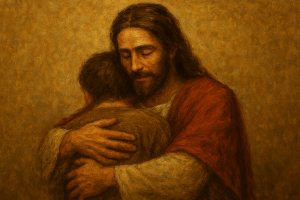
Many Former Christians Continue to Embrace Jesus
I wrote about the things that I like about Christianity here. Granted, my list was short, and my defense of Christianity was tepid, but it struck a nerve among atheists and other former Christians. Like me, many continue to embrace the words and works of Jesus, even as they reject the political and theological trappings of contemporary Christianity.
One astute reader described how Thich Nhat Hanh, the Buddhist teacher, reminded him that “I needed to not just tear down or throw away my toxic religion. I needed to rebuild my spirituality. I needed to recapture the ‘jewels’ of my Christianity.” Maybe when we discuss deconstructing and reconstructing our traditions, we need to include recapturing or reclaiming them, too.
As a former Mennonite said, “I left the Church decades ago, but I carry with me in my bones a deep appreciation for the core values of nonviolence, communalism, mutual aid and concern to guard the dignity of fellow human beings…. Whatever labels I put on my current belief system (post-Christian, interfaith, universalist, unitarian), I will always be a Mennonite-flavored this or that.”
One deconstructing ex-Christian said, “One thing I do personally like about Christianity is the symbolism of the incarnation. As you say, not in the literal sense… but where the figure of Christ symbolically represents the place where the spiritual and natural meet.
Perhaps it is more correct to say that “We create God in our image” than to say that “God creates us in his (sic) image.” Once, I witnessed a conversation between a Hindu teacher and a student:
Student: How can we summon the gods?
Teacher: The gods are always with us.
Student: What are the gods like?
Teacher: The gods are not “like” anything. The gods are symbols.
“What Would Jesus Do?”
According to one atheist, “‘What would Jesus do?’ is not a bad question. He still inspires me with how to have one foot in the wilderness and one foot in the world, flipping tables of the institution, yet preserving the heart of spirituality.” Many atheists, such as Richard Dawkins, practice a naturalistic spirituality, grounded in our interconnectedness, without any supernaturalism.
Another atheist pointed out that, “You can be an atheist and hold all those noble feelings toward others.” Yes, that’s the point. Many of us love our neighbors as ourselves, as most traditions say. But do you think that we have to embrace some of the speculative doctrine, supernatural events, and unkind practices that conservative Christianity embraces? Me neither.
Many churches insist that we believe that Jesus was the second person in the Trinity (a fourth-century invention, never mentioned in the Bible) who was born of a virgin and rose from the dead. So, if we follow Jesus, but we do NOT believe everything that the church believes about him, have we left Jesus, or have we left the church? And have we left the church, or has the church left us?
“What Would Donald Trump Do?”
The last time that I set foot in a Protestant church was the Sunday after Trump was elected the first time. An elder prayed a prayer of thanksgiving that the “right’ person had been elected. But, here’s the thing: I did NOT want to go to “Trump church.” I did NOT want to go to “Biden church” or “Clinton church” or “Harris church.” I just wanted to go to church. Is that such a big ask?
Actually, not too many of us want to go to “Trump church.” One Christian said, “The political right has co-opted the public perception of Christianity in this country, and that is truly unfortunate.” In 2023, the National Council of Churches (NCC) predicted that about 100,000 churches would close by 2050 throughout the U.S. That is approximately one in four churches operating today.
At a recent meeting of the Post-Evangelical Collective, which connects, cultivates, and resources post-evangelical churches, the leader remarked on the decline in church attendance since 2016. “We don’t know if politics had anything to do with it,” he added. “I think that politics had everything to do with it,” I responded. “Me too,” he admitted.
Many former Christians continue to embrace Jesus, but they do NOT embrace the political division and theological speculation that characterize contemporary Christianity.












 Ad-Free & Subscriber Log-In