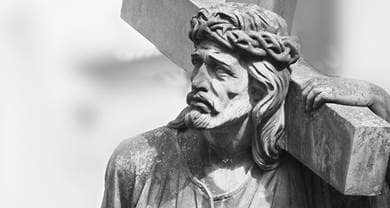
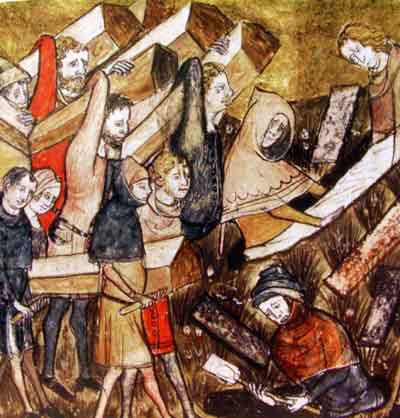
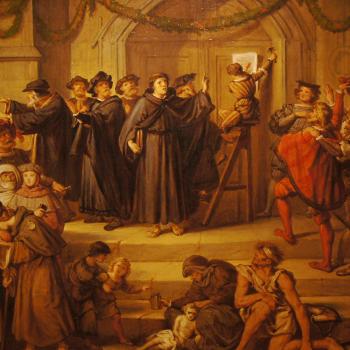
Christianity developed out of Judaism in the 1st century C.E. It is founded on the life, teachings, death, and resurrection of Jesus Christ, and those who follow him are called "Christians." Christianity has many different branches and forms with accompanying variety in beliefs and practices. The three major branches of Christianity are Roman Catholicism, Eastern Orthodoxy, and Protestantism, with numerous subcategories within each of these branches. Until the latter part of the 20th century, most adherents of Christianity were in the West, though it has spread to every continent and is now the largest religion in the world. Traditional Christian beliefs include the belief in the one and only true God, who is one being and exists as Father, Son, and Holy Spirit, and the belief that Jesus is the divine and human Messiah sent to the save the world. Christianity is also noted for its emphasis on faith in Christ as the primary component of religion. The sacred text of Christianity is the Bible, including both the Hebrew scriptures (also known as the Old Testament) and the New Testament. Central to Christian practice is the gathering at churches for worship, fellowship, and study, and engagement with the world through evangelism and social action.
Christianity
Christianity Quick Facts
| Formed | 33 CE |
| Origin | Palestine |
| Followers | 2,100,000,000 |
| Deity | God (Trinity) |
| Sacred Texts | Bible |
| Headquarters | None |
Christianity
Christianity Overview
Christianity Origins
Christianity Origins -- Christianity Beginnings
Christianity originated in the life and teachings of Jesus of Nazareth, who was born circa 4 B.C.E. in Roman-occupied Palestine, a Jewish province of the Roman Empire.
Christianity Origins -- Christianity Influences
The Jewish, Greek, and Roman cultures of the formative first two centuries of the Common Era had a deep and lasting influence on the new faith of Christianity.
Christianity Origins -- Christianity Founders
Christianity is founded in the life and teachings of Jesus, and was established in Jerusalem and propagated throughout the Roman Empire in the 1st century C.E. by enthusiastic evangelists.
Christianity Origins -- Christianity Scriptures
Christian scriptures are gathered in the Christian Bible, which contains the Jewish scriptures in addition to the twenty-seven books of the New Testament.
Christianity Origins -- Christianity Historical Perspectives
What scholars do and do not believe with regard to Christianity influences the ways in which they interpret its history, both past and present. There has been an increasing consciousness of the global diversity of Christianity.
Christianity History
Christianity History -- Christianity Early Developments
In the 2nd - 4th centuries of the Common Era, Christianity endured periods of intense persecution while working to define its identity and beliefs.
Christianity History -- Christianity Schisms, Sects
Christianity permanently split twice. The first split occurred between the Byzantine Church (eastern) and the Roman Church (western). The Protestant Reformation further split the Roman or western Church.
Christianity History -- Christianity Exploration, Conquest, Empire
From the 15th - 19th centuries, Christian missionary activity, often allied with European political expansion, carried Christianity to all parts of the globe.
Christianity History -- Christianity Missions, Spread, Changes, Regional Adaptations
From the 5th-13th centuries, Christianity spread dynamically, while the disintegration of the Roman Empire in the West caused churches in the east and west to develop along separate paths.
Christianity History -- Christianity Modern Age
The 20th century presented Christianity with dizzying political and cultural challenges. A lively and articulate Christianity in former mission fields and dissatisfaction among American evangelicals produced new movements.
Christianity Beliefs
Christianity Beliefs -- Christianity Sacred Narratives
The Christian story of Jesus is sacred to Christians. The biblical stories of Jesus' life, death, and resurrection reveal God's plan for humanity, which includes salvation and eternal life.
Christianity Beliefs -- Christianity Ultimate Reality and Divine Beings
Christians are monotheists who believe that the one God has an internal relationship of three persons, Father, Son, and Holy Spirit. Christians also believe in the existence of angels and demons.
Christianity Beliefs -- Christianity Human Nature and the Purpose of Existence
Christianity teaches that human beings were created good by a loving God. While being prone to sin and in need of grace, they are partners in accomplishing God's plan for existence.
Christianity Beliefs -- Christianity Suffering and the Problem of Evil
Their belief in a good and powerful creator God has prompted Christians to search for an explanation for the existence of evil. There is no single authoritative Christian response.
Christianity Beliefs -- Christianity Afterlife and Salvation
At the center of the Christian religion is the story of how God achieved reconciliation with humanity through Christ.
Christianity Ritual, Worship, Devotion, Symbolism
Christianity Ritual, Worship, Devotion, Symbolism -- Christianity Sacred Time
Christians worship weekly and throughout the year. Although the worship styles of the churches differ, the weekly service, Christmas, and Easter have special meaning for all Christians.
Christianity Ritual, Worship, Devotion, Symbolism -- Christianity Sacred Space
Christians worship and pray together in churches built in a variety of shapes and styles. The use of art and decoration varies greatly according to denomination, but almost all churches feature a cross and a pulpit.
Christianity Ritual, Worship, Devotion, Symbolism -- Christianity Rites and Ceremonies
The sacred rituals of Christianity, called sacraments or ordinances, vary greatly between Christian denominations. All Christians practice baptism and the Eucharist, which are ancient traditions connected to Jesus and the apostles.
Christianity Ritual, Worship, Devotion, Symbolism -- Christianity Worship and Devotion in Daily Life
Christians seek to sanctify their daily lives with prayer and scripture reading. These activities, performed in solitude or in groups, help Christians cultivate a close personal relationship with God.
Christianity Ritual, Worship, Devotion, Symbolism -- Christianity Symbolism
Much of Christian life and practice is accompanied by symbols that reinforce the Christian's relationship with God. Of these, the most common and distinctive is the cross.
Christianity Ethics, Morality, Community
Christianity Ethics, Morality, Community -- Christianity Community Organization and Structure
Christians share worship and fellowship in communities called churches. Although divided into denominations differing in belief and practice, contemporary Christians share a common belief in the God of the Bible.
Christianity Ethics, Morality, Community -- Christianity Leadership / Clergy
The early Church, influenced by the Roman Empire, developed a hierarchical form of leadership. Contemporary Christian churches have a number of different leadership styles.
Christianity Ethics, Morality, Community -- Christianity Principles of Moral Thought and Action
Christians follow the principles of morality expressed by Jesus' command to love God and neighbor, and rely on the Ten Commandments and the Sermon on the Mount for basic guidance.
Christianity Ethics, Morality, Community -- Christianity Vision for Society
Christians expect a final day of judgment when the Kingdom of God, a reign of perfect peace and justice, will begin.
Christianity Ethics, Morality, Community -- Christianity Gender and Sexuality
Christians teach that sexual relations should be expressed within marriage. The roles of women and gay Christians are being debated within the Christian community.