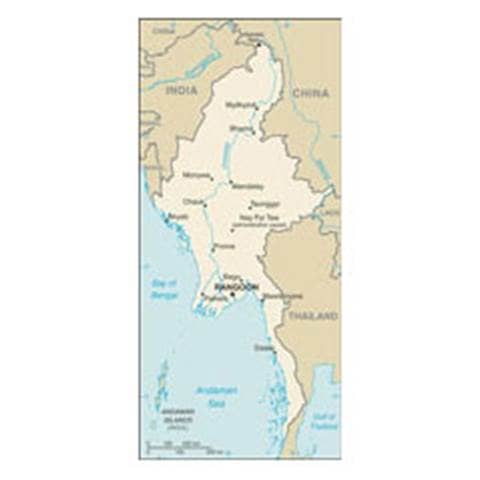
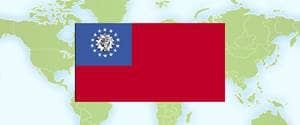
| Burma | |
| Population (2009 est.) | 48,137,741 |
| Religious Demographics | Buddhist 89%, Christian 4% (Baptist 3%, Roman Catholic 1%), Muslim 4%, Animist 1%, other 2% |
| Ethnic Groups | Burman 68%, Shan 9%, Karen 7%, Rakhine 4%, Chinese 3%, Indian 2%, Mon 2%, other 5% |
| Languages | Burmese, minority ethnic groups have their own languages |


The country is ethnically diverse, with some correlation between ethnicity and religion. Theravada Buddhism is the dominant religion among the majority Burman ethnic group and among the Shan, Arakanese, and Mon ethnic minorities in the east, west, and south. Christianity is the dominant religion among the Kachin ethnic group of the north and the Chin and Naga ethnic groups of the west, some of whom also continue to practice traditional indigenous religions. Protestant groups report recent rapid growth among animist communities in Chin State. Christianity is also practiced widely among the Karen and Karenni ethnic groups of the south and east, although many Karen and Karenni are Buddhist and some Karen are Muslim. Burmese citizens of Indian origin, who are concentrated in major cities and in the south central region, predominantly practice Hinduism, though some ethnic Indians are Christian. Islam is practiced widely in Rakhine State, where it is the dominant religion of the Rohingya minority, and in Rangoon, Irrawaddy, Magwe, and Mandalay Divisions, where some Burmans, Indians, and ethnic Bengalis practice Islam. Chinese ethnic minorities generally practice traditional Chinese religions. Traditional indigenous beliefs are practiced widely among smaller ethnic groups in the highland regions. Practices drawn from those indigenous beliefs persist in popular Buddhist rituals, especially in rural areas.


Follow us on: