
- Trending:
- Forgiveness
- |
- Marriage
- |
- Afterlife
- |
- Trump
- |
- Pentecost
- |
- Deconstruction
RELIGION LIBRARY
Hinduism
Historical Perspectives
One of the most hotly debated topics in contemporary Hinduism, both in the context of scholarship (western and Indian) and contemporary Indian social and political life, is the so-called Aryan Invasion Theory.
The Aryan Invasion Theory posits that what has come to be known as Hinduism has its ancient roots not in India, but in Europe. In order to understand this theory and its implications, it is first necessary to understand something of the impact colonialism has had on both western and Indian conceptions of Hinduism.
The European world first became aware of and interested in Hinduism in the context of colonialism. Western knowledge of Hinduism came in part from Christian missionaries and in part through colonial administrators who expended a tremendous amount of effort gathering information about the people it ruled in order to more effectively control them. Both sources, for perhaps obvious reasons, were profoundly biased. Hinduism was largely portrayed as a bizarre and baffling jumble of gods and rituals; it was portrayed by many as an inferior religion, irrational and superstitious.
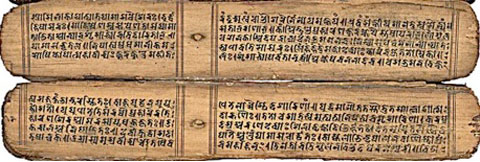 That said, western scholars were fascinated by Hinduism, and by the middle of the 19th century academics in a wide range of universities in England and Europe (and eventually America) were working on mastering Sanskrit (the sacred language of Hindu scriptures) and on translating and interpreting the mythology and theology of the tradition. Many of these scholars, reflecting a larger academic concern in the context of religion, were particularly concerned with the question of origins. Where did this tradition come from?
As a result, there was intense interest in what were understood to be the earliest Hindu texts, the Vedas. As early as the second half of the 19th century, scholars posited that the religious ideas of the Vedas were actually not Indian in origin, but European. Light-skinned Europeans invaded northern India, pushing the dark-skinned indigenous peoples to the south. These light-skinned warriors brought with them a new religion, based on ritual sacrifice.
 Recently a number of scholars, both within India and in the West, have challenged the Aryan Invasion Theory, charging that it is based on the flimsiest of historical and archaeological evidence and, more importantly, that it is the product of a colonialist/imperialist western ideology. The theory, its opponents charge, denies the Indian origins of India's own culture, and gives credit to the West for India's most important sacred scriptures and practices.
The debate over the merits of the Aryan Invasion Theory is embedded in a much larger controversy over whether the West, with its colonial legacy, should even attempt to represent Hinduism. Western scholars, many Indian (and western) critics argue, are so conditioned by colonial misrepresentations of Hinduism—sometimes consciously, sometimes unconsciously—that they cannot ever be anything but biased. These critiques argue that Hindus alone can properly describe and analyze the tradition.
The issues here will not go away anytime soon. One positive effect of these discussions and debates, however, is that it has forced many scholars in the West to be much more careful in their assumptions and representations of Hinduism, and to ask whether basic western (Christian) understandings of what religion is and what religion does really fits the Hindu context. Should European and American understandings of religion be taken as the norm? Should explanatory theories that are distinctly western—Freudian theories, say—be used to understand Hinduism? Or should scholars look to Hindu theories and Hindu explanations to understand the tradition?
Over the past two decades some (but certainly not all) historians and anthropologists in the West have addressed these questions and tried to be much more sensitive about perpetuating old stereotypes. Many have turned away from sweeping generalizations and looked instead at religion at the local, village level. Many western scholars have explicitly entered into dialogues with their Indian contemporaries. Although it may not be the case that scholarly depictions of Hinduism in the West are always more accurate than they have been in the past, they have at least become significantly more self-aware.
Study Questions:
1. Describe the relationship between colonialism and the Aryan Invasion Theory.
2. Why is Hinduism so fascinating to western scholars?
3. Why could Hinduism's role as a “religion” be contested?












 Ad-Free & Subscriber Log-In