Patheos Watermark

Islam

Islam Quick Facts

Formed 622 CE
Origin Arabian peninsula
Followers 1,500,000,000
Deity Allah
Sacred Texts Qur'an
Headquarters None

Islam

Islam Overview

Learn More

Islam is a monotheistic religious tradition that developed in the Middle East in the 7th century CE. Islam, which literally means "surrender" or "submission," was founded on the teachings of the Prophet Muhammad as an expression of surrender to the will of Allah - the creator and sustainer of the world. The Qur'an, the sacred text of Islam, contains the teachings of the Prophet that were revealed to him from Allah. Essential to Islam is the belief that Allah is the one and true God with no partner or equal. Islam has several branches and much variety within those branches. The two divisions within the tradition are the Sunni and Shi'a, each of which claims different means of maintaining religious authority. One of the unifying characteristics of Islam is the Five Pillars, the fundamental practices of Islam. These five practices include a ritual profession of faith, ritual prayer, the zakat (charity), fasting, and the hajj (a pilgrimage to Mecca). Many Muslims are characterized by their commitment to praying to Allah five times a day. One of the defining characteristics of Islam is the primacy of sacred places including Mecca, Medina, and Jerusalem. Muslims gather at mosques to worship Allah, pray, and study scripture. There is not a sharp distinction between the religious and secular aspects of life in Islam; all aspects of a Muslim's life are to be oriented to serving Allah. Islam expanded almost immediately beyond its birthplace in the Arabian peninsula, and now has significant influence in Africa, throughout Asia, Europe, and the Americas.

Contributors

Islam Origins

Islam Origins -- Islam Beginnings

Details

Muhammad received and preached the message of Islam to the people of the Arabia in the early 7th century C.E.

Islam Origins -- Islam Influences

Details

Islam emerged in the wealthy trading center of Mecca, and regards itself as the culmination of all previous monotheistic religions, including Judaism and Christianity.

Islam Origins -- Islam Founders

Details

The founder of Islam is the prophet Muhammad, who was born in Mecca in approximately 570 C.E.

Islam Origins -- Islam Scriptures

Details

The Quran is the sacred scripture of Islam and is believed to be the unaltered word of God. The Sunna, in its written form hadith, while not scripture, is part of the Islamic canon.

Islam Origins -- Islam Historical Perspectives

Details

Scholars have just begun the important task of addressing the stereotyping of Islam and Muslims in the journalistic and entertainment media and in scholarship.

Islam History

Islam History -- Islam Early Developments

Details

Immediately following Muhammad's death, the community was ruled by a succession of close companions to the Prophet chosen by a consensus of community elders.

Islam History -- Islam Schisms, Sects

Details

Islam is divided into two main groups, the Sunni and the Shi'a. The mystical dimension of Islam is called Sufism and attracts Sunni and Shi'i Muslims as well as non-Muslims.

Islam History -- Islam Exploration, Conquest, Empire

Details

Over the centuries, Muslims built a number of empires across large territories. Until 1258, the Islamic world was ruled by a single ruler, called a Caliph.

Islam History -- Islam Missions, Spread, Changes, Regional adaptations

Details

A thousand years after the death of the Prophet Muhammad, Islam had taken root in nearly every region of the globe and although varied in its theology, was not varied in practice.

Islam History -- Islam Modern Age

Details

The recent history of the Muslim world has been one of imperialism, war, and poverty. Islamic revival movements have emerged in various locales hoping to restore autonomy to their societies.

Islam Beliefs

Islam Beliefs -- Islam Sacred narratives

Details

The sacred stories of Islam include an account of the creation of the world, and stories of the prophets, especially Muhammad.

Islam Beliefs -- Islam Ultimate Reality and Divine Beings

Details

The foundation and core of Islam is Allah, the one and only God. God is the creator of all things, including supernatural beings like angels and jinn.

Islam Beliefs -- Islam Human Nature and the Purpose of Existence

Details

Islam teaches that the purpose of existence is to love and serve God through loving and serving others. People can forget this, but prophets bear God's revelation, which shows people the way.

Islam Beliefs -- Islam Suffering and the Problem of Evil

Details

Suffering has purpose in Islam; it tests our faith and corrects our unbelief.

Islam Beliefs -- Islam Afterlife and Salvation

Details

Muslims believe in the Day of Judgment and heaven and hell. Each person is responsible for the judgment he or she will receive. People are judged based on their intentions and their deeds.

Islam Ritual, Worship, Devotion, Symbolism

Islam Ritual, Worship, Devotion, Symbolism -- Islam Sacred Time

Details

The Islamic religious calendar follows a lunar pattern punctuated by a number of significant public feasts and celebrations that have both historical and theological roots.

Islam Ritual, Worship, Devotion, Symbolism -- Islam Sacred Space

Details

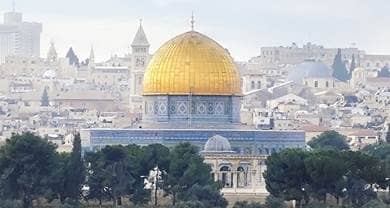
Muslims gather for prayer and community in mosques, and seek blessings at shrines. The Grand Mosque in Mecca, which holds the Kaaba, is the most sacred place in the world.

Islam Ritual, Worship, Devotion, Symbolism -- Islam Rites and Ceremonies

Details

Various rites and ceremonies accompany such important transitions as marriage, birth, and death.

Islam Ritual, Worship, Devotion, Symbolism -- Islam Worship and Devotion in Daily Life

Details

The heart of Islamic worship is found in the Five Pillars of bearing witness to the oneness of God, prayer, charity, fasting, and pilgrimage. Regular individual and group supplication is also core to Islamic worship.

Islam Ritual, Worship, Devotion, Symbolism -- Islam Ritual, Worship, Devotion, Symbolism

Details

The crescent moon and star is a widely-recognized symbol of Islam, while the colors green, white, black, red, and blue all have symbolic meaning.

Islam Ethics, Morality, Community

Islam Ethics, Morality, Community -- Islam Leadership/Clergy

Details

The different clerical functions within Islam are filled by a special religious class called the ulama, religious scholars with authority in law and doctrine.

Islam Ethics, Morality, Community -- Islam Community and Structure

Details

Muslims view themselves as part of a worldwide community, called the ummah, united in submission to God.

Islam Ethics, Morality, Community -- Islam Principles of Moral Thought and Action

Details

Muslims' ethical and moral commitments regulating their daily lives derive from their understanding of the demands of revelation and are referred to as the shariah.

Islam Ethics, Morality, Community -- Islam Vision for Society

Details

The ethical obligation to command the good and forbid the evil imposes upon Muslims the duty of realizing a just society.

Islam Ethics, Morality, Community -- Islam Gender and Sexuality

Details

Muslim women and men are working for gender equality within broad limits prescribed by Islam.

Recommended Islam Products

Shop More