Judaism
Judaism Quick Facts
| Formed | c. 2000 B.C.E. |
| Origin | Canaan |
| Followers | 14,000,000 |
| Deity | God (monotheistic) |
| Sacred Texts | Torah, Tanakh (Hebrew scriptures), Talmud |
| Headquarters | None |
Judaism

Judaism Overview
Judaism is a religious tradition with origins dating back nearly four thousand years, rooted in the ancient near eastern region of Canaan (which is now Israel). Originating as the beliefs and practices of the people known as "Israel," classical, or rabbinic, Judaism did not emerge until the 1st century C.E. Judaism traces its heritage to the covenant God made with Abraham and his lineage — that God would make them a sacred people and give them a holy land. The primary figures of Israelite culture include the patriarchs Abraham, Isaac, Jacob, and the prophet Moses, who received God's law at Mt. Sinai. Judaism is a tradition grounded in the religious, ethical, and social laws as they are articulated in the Torah — the first five books of the Hebrew Bible. Jews refer to the Bible as the Tanakh, an acronym for the texts of the Torah, Prophets, and Writings. Other sacred texts include the Talmud and Midrash, the rabbinic, legal, and narrative interpretations of the Torah. The contemporary branches of Judaism differ on their interpretations and applications of these texts. The four main movements within Judaism today are Orthodox, Conservative, Reform, and Reconstructionist, respectively ranging from traditional to liberal to religiously progressive in their application of Torah. While diverse in their views, Jews continue to be unified on the basis of their common connection to a set of sacred narratives expressing their relationship with God as a holy people. Judaism tends to emphasize practice over belief. Jewish worship is centered in synagogues, which completely replaced the Second Temple after its destruction in 70 C.E. Jewish religious leaders are called rabbis, who oversee the many rituals and ceremonies essential to Jewish religious practice.
Quick Fact Details:
- Formed: Though the Jewish calendar goes back more than 5000 years, most scholars date the beginning of the religion of the Israelites to their forefather in faith, Abraham, whose life is generally dated to circa 2000-1800 B.C.E.
- Origin: Canaan is the biblical name for the area between the Jordan River and the Mediterranean, approximately the equivalent of what today comprises the state of Israel and the Palestinian territories.
- Followers: The worldwide count of adherents of Judaism is difficult, as some Jewish movements dispute the legitimate Jewish identity of others. Many do not affiliate with any particular branch, and may then be left out of census reports.
- Sacred Texts: Tanakh is an acronym of Torah, Nevi'im, and Ketuvim. Torah is the name given to the first five books — Genesis, Exodus, Leviticus, Numbers, and Deuteronomy — also called the Pentateuch. The Nevi'im and Ketuvim are the books of history, prophecy, poetry, and other sacred writings. The Talmud is also called the Oral Torah, and is comprised of rabbinical commentary and interpretation on the Torah.
- Headquarters: While Jerusalem remains the center of Jewish spirituality, the lack of a Temple or any administrative or jurisdictional authority prevents it from being an organizational center.
Quick Fact Sources include www.adherents.com, www.bbc.co.uk/religion, The Oxford Handbook of Global Religions (2006), The Encyclopedia of Religion (2005), the Religious Movements Page at the University of Virginia, The Cambridge Illustrated History of Religions (2002), and the Encyclopedia of World Religions (1999).
The rabbis of the second century C.E. created Jewish culture by reunifying a fractured Judean community following the period of Israelite religion and the destruction of the Second Temple in Jerusalem.
Jewish identity was originally constructed out of an ongoing interaction with the cultures of the ancient near east, including Canaanite, Hittite, Babylonian, Hellenistic, and ultimately Christian.
While Judaism is historically associated with the rabbis of the 2nd century C.E., one may trace its foundations to the sage Hillel, a Pharisee, and his fundamental school of thought.
Jewish scriptures are grounded in Torah, the first five books of the Hebrew Bible, but the revelation of Torah extends indefinitely through the history of Jewish literature as commentary.
There is a contemporary shift away from the modern, essentialist study of Judaism toward a Jewish cultural history uncovering the historical construction of multiple Jewish identities through intercultural negotiation.
In the early stages of Judaism, the rabbis consolidated authority by establishing an apostolic succession and formulating a theology of "realistic messianism", channeling messianic expectations into a this-worldly political framework.
As the rabbis consolidated their power, they fought against internal opponents who either supplemented the Oral Torah with gnostic teachings or replaced it with the biblical literalism of the Karaites.
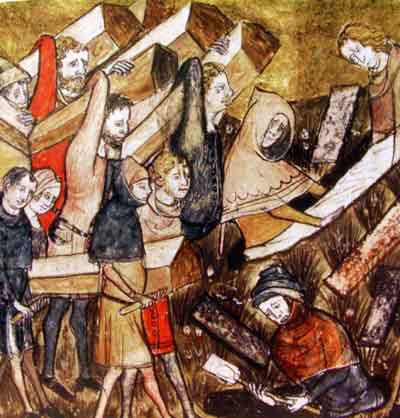
Medieval Jews depended upon protection from outside rulers to secure a semi-autonomous political empire, consequently walking a tightrope between persecution and coexistence with their non-Jewish neighbors in exile.
Following the period of Christian hegemony in 5th-century Palestine, Jews flourished in Babylonia, spread westward to medieval Spain, north and east to Europe, while continually adjusting their cultural bearings.
In modernity, Judaism has successfully met the challenges accompanying emancipation, assimilation, and antisemitism, by redefining itself as a multiplicity of cultures based on the triad: God, Torah, and Israel.
Jewish sacred narratives are reflected in the biblical framework of creation, revelation, and redemption in which God's relationship with Israel is played out in a cosmic drama.
While Jewish thinkers have traditionally associated ultimate reality with a theistic image of God, there has been an ongoing, vigorous debate about the nature of God and the Divine-human relationship.
For Jews, human nature is rooted in the divine image and therefore has infinite value. Consequently, the purpose of existence is to relate to the divine and human "other".
In wrestling with suffering and evil throughout history, Jewish thinkers have expressed a tension between "theodicy", justifying God's relationship to evil, and "antitheodicy," protesting God's involvement with human suffering.
Jewish attitudes toward afterlife and salvation reflect a variety of perspectives on what happens to body and soul after death based on various biblical, rabbinic, medieval folklore, and theological sources.
Judaism distinguishes between two essentially different forms of time: kodesh (holy) and chol (mundane). Jews consecrate the seventh day of the week, or Shabbat, as the epitome of Sacred Time. The Jewish calendar is replete with a rich array of festivals, most of which commemorate events in ancient Israelite history.
Observant Jews worship three times a day, throughout the year. While these daily services may be performed privately, the most important Shabbat and festival prayers are ideally, and most commonly, observed in public services, conducted by clergy in synagogues or temples.
Judaism places central emphasis in serving God on faithful adherence to a vast and complex system of biblical commandments, known as mitvot. This system of Jewish law, collectively known as halakha, is based on the rabbis' extensive legal exegesis of the Torah's 613 laws.
Jews seek constantly to remind themselves of God's presence in their lives through an elaborate system of daily prayers, benedictions for all occasions, no matter how ostensibly mundane, and a host of religious rituals.
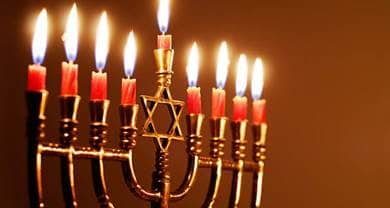
Judaism vigilantly avoids the use of any symbolic representation in worship, especially of humanlike figures. At the same time, there are a small number of prominent symbols that are prominently displayed in many synagogues and other Jewish institutions.
In ancient Israel, the clan descended from Moses' brother Aaron served as priests who administered all of the rituals, assisted in this role by the consecrated tribe of the Levites. After the destruction of the Jerusalem Temple in 70 C.E., the priestly rituals were replaced by verbal prayer, today led by cantors, and prophecy was replaced by the rabbis' scholarly expertise in the interpretation and adjudication of Torah law.
The Jewish community, representing both a religious faith-community and a national ethnic group, is organized along both spiritual and secular lines. Contemporary Jewish communities sponsor an array of organizations, from synagogues and Jewish community centers to regional and national organizations dedicated to a range of causes.
The source for Jewish moral and ethical norms is the system of rabbinical law, or halakha. The primary sources of this religious legal system are the Talmud, medieval codes of law, and ongoing rabbinical response.
Judaism is neither a universal nor an evangelizing religion. Jews believe that the Torah and its laws are the unique inheritance of a people elected, or chosen, by God for the purpose of forging a "kingdom of priests" whose mission is to spread the principles of ethical monotheism to all humankind.
Rabbinical Judaism has historically assigned distinct roles to the different genders, especially notable in the realms of public worship and ecclesiastical leadership. Judaism's positive attitude to sexuality has had the net effect of consigning women largely to domestic roles, as well as precluding women from attaining positions of ecclesiastical leadership.


Marc A. Krell
Allan Nadler