Patheos Watermark

Lutheran

Lutheran Quick Facts

Formed1517 CE
OriginGermany
Followers64,000,000
DeityGod (Trinity)
Sacred TextsBible
HeadquartersNone / multiple

Lutheran

Lutheran Overview

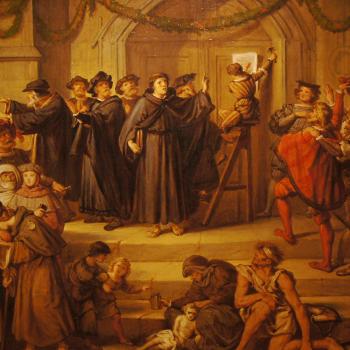
The Lutheran Church is the oldest Protestant Christian tradition, dating back to the Protestant Reformation and the person of Martin Luther. Lutherans are those Christians who choose to accept Martin Luther's teachings. On October 31, 1517, Luther, a Catholic monk, posted his 95 Theses as a challenge to the doctrine and practices of the Roman Catholic Church, hoping to reform the practices he felt were inconsistent with scripture. When the conflict escalated to a distinct separation with the Roman Catholic Church, those who accepted Luther's reforms became "Lutherans." Based on Luther's own writings, Lutherans still uphold Luther's theological teachings such as sola scriptura (scripture as the primary authority for faith and life), justification by the grace of God alone, and salvation through faith in Christ alone. Luther's many theological ideas have since been collected into the Book of Concord, which is still an authority in Lutheran doctrine and practice. Because of its initial grounding in the Roman Catholic Church, Lutheran worship, more than many other Protestant traditions, has many elements similar to the Catholic style of worship. Lutheranism spread from Germany to most countries across the globe and has become one of the largest Protestant denominations.


Lutheranism began as a reform movement within the Roman Catholic Church headed by a monk, Martin Luther.

Luther was influenced intellectually by Renaissance humanism and medieval nominalism. In addition, many social and cultural trends fed the Reformation, such as printing and literacy, urbanization, the growth of the middle class, and nationalism.

Lutheranism takes its name from Martin Luther. In addition to his dominating influence in the Lutheran movement, Philipp Melanchthon, Frederick the Wise of Saxony, and Luther's wife Katherine von Bora played key roles in the movement.

The Bible, in its Protestant canonical form, is the authoritative text for Lutherans. Luther is one of the originators of the Protestant list of books contained in the Bible, which differs from the Catholic list. In addition, important Lutheran texts are gathered in the Book of Concord.

The history of Lutheranism tends to see in Luther the reflection of the historian. Recent scholarship emphasizes its medieval (as opposed to modern) structures of thought, and his compatibility with liberation theologies.

After an initial burst of enthusiasm about Luther's message of radical forgiveness, Lutheranism experienced periods of heated doctrinal debates, of engaging Enlightenment rationalism, and of efforts to reinvigorate the experiential side of faith through pietism.

Lutheranism has experienced fewer schisms than some other Protestant groups because it has become the national or "folk" religion in the places it originally spread, many of which are relatively homogenous.

Germany did not become a colonial power until after other European countries. Beginning in the 1880s, it tried to make up for lost ground, becoming a major power in Africa. Lutherans and Lutheran missionaries played a large role, with all the negative consequences of colonialism, in these enterprises.

Until the late 19th century, Lutheranism spread mostly through emigration from northern European countries. Since then its missionaries have been effective in Africa and Asia.

Lutheranism is shrinking in Europe and North America, but growing in Africa and Asia.

Martin Luther's emphasis on the claim that forgiveness of sin is entirely a gracious (free) gift from God, and that humans can do nothing to earn or even prompt this gift, sets Lutherans' narrative of salvation off from that of many other Christians.

Lutherans believe in God, Jesus Christ, and angels. Some Lutherans continue to believe in angels, while for others they seem implausible or simply irrelevant.

Human nature was created good, but is sinful, that is, fundamentally self-centered, as a result of the fall. The purpose of existence is to enter heaven, which is possible only through God's free forgiveness for sin.

The origin of suffering and evil for Luther was to be attributed solely to human sin, a result of the work of the devil.

Martin Luther believed in a traditional idea of an immortal soul that spent eternity either in a literal place of blessedness called heaven or a literal place of torment called hell. Your destination depends on whether or not you are saved, that is, by God’' grace forgiven for sin.

Sacred time in Lutheranism is organized on an annual calendar of Festivals, Special Days of Devotion, Lesser Festivals, and Commemorations that celebrate important events in the life of Jesus and his disciples, and important people and events from the history of Lutheranism

Lutheran sacred space, especially worship space, is more similar to the worship space of Roman Catholicism than the worship space of other Protestant denominations.

One of the most profound changes Luther made in the rituals of Christianity was in the sacraments. Lutherans have two, in contrast to the seven of Roman Catholicism, and the theology used to understand what they mean differs significantly from the sacramental theology both of Roman Catholicism and of other Protestant denominations.

Lutheranism ushered in a change in the organization of everyday life. The shifts found in Lutheranism are largely the result of Luther's idea of a "vocation" or "calling", and the influence of pietism.

Lutheran symbolism resembles that of other Christian denominations. Of the Protestant denominations it remains perhaps the closest to Roman Catholic symbolism.

Lutheranism has a relationship of clergy to laity similar to most Protestant churches. For practical reasons many leadership functions are given to the clergy (performing sacraments, preaching, organizing the community), but, unlike priests, these clergy are ministers who enjoy no special religious privilege.

Lutherans define their denomination by doctrine rather than community structure. Lutheran churches have been organized on Episcopal (bishops), congregational, and Presbyterian (elected hierarchy) models.

Lutherans base moral thought and action on the Bible, the foundational doctrines found in the Book of Concord, and on the historical example of Martin Luther. They do not think it is possible to be sinless, but they expect acts of service from the redeemed. There is little consensus on what the Bible commands.

Lutherans' social vision is largely derived from Luther's "Two Kingdoms" theology, which argues that the Kingdom of God is present in this world, but paints a fairly realistic picture of the possibilities for love, justice, and mercy in the secular kingdom.

Lutherans are split on leadership roles for women, and on gay clergy and the blessing of same-sex unions. European churches tend to be liberal. In North America, the largest Lutheran denominations are fairly liberal (though divided), while the Lutheran Church-Missouri Synod is conservative.

Recommended Lutheran Products

Shop More


Most Popular on Facebook