Patheos Watermark

Theravada Buddhism

Theravada Buddhism Quick Facts

Formed 100 BCE
Origin India / Sri Lanka
Followers 124,000,000
Deity None (n/a) / pantheon of deities
Sacred Texts Pali Tipitaka, Jataka
Headquarters None

Theravada Buddhism

Theravada Buddhism Overview

Learn More

Theravada Buddhism, the "Doctrine of the Elders," is one of the three major sects of Buddhism. It emerged out of a series of schisms that began in the 4th century BCE in the Buddhist communities of India and became prominent in Sri Lanka and southeast Asia including Myanmar, Thailand, Cambodia, and Laos, which has led some to call it Southern Buddhism. Pejoratively labeled the "Hinayana" (the "Lesser Vehicle") by Mahayana Buddhism, Theravada schools claim to adhere most accurately to the original practices and doctrines taught by Buddha. The Theravada claims to trace their lineage back to the the original followers of the Buddha, to those who literally heard his sermons. The Theravada canonical writings, a collection of the Buddha's teachings written in the Pali language, are divided into the Buddha's sermons (the sutta pitaka), the monastic rules (the vinaya pitaka), and philosophical enumeration of the Buddha's teachings (the abhidamma pitaka). Theravada doctrine is founded on the distinction between samsara (the cyclic realm of suffering) and nirvana (or nibbana, release). The ultimate goal of the Theravada is to escape samsara and enter nirvana. This is accomplished by achieving the status of an arhat, a perfect saint who has been released from the cycle of samsara and will never be reborn again. The Theravada is typically understood to be a rigorous monastic tradition; however, laypeople actively participate in the religion by providing material support to the monks (which produces positive karma, or merit), meditating, and following the basic ethical principles of the Buddha's teachings.


Contributors

Theravada Buddhism Origins

Theravada Buddhism Origins -- Theravada Buddhism Beginnings

Details

Theravada began as one of many schools of Buddhism that emerged in India in the centuries after the Buddha's life. Theravada took on its distinctive form in Sri Lanka between the 3rd century B.C.E. and the 6th century C.E.

Theravada Buddhism Origins -- Theravada Buddhism Influences

Details

The early Theravada tradition was shaped by debates with other religious groups, especially other Buddhist schools, and by its relationship with its lay supporters.

Theravada Buddhism Origins -- Theravada Buddhism Founders

Details

Theravadins claim that their teachings and way of life were set out by the Buddha himself. Central figures in establishing Theravada as a distinct tradition were the editors of the Pali canon and its commentaries.

Theravada Buddhism Origins -- Theravada Buddhism Scriptures

Details

The Theravada scriptures are the Pali language recension of the Tipitaka, which consists of the Vinaya, the rules governing monastic life; the Suttas, the teachings of the Buddha; and the Abhidhamma, the systematic explanation of the Buddha's teachings.

Theravada Buddhism Origins -- Theravada Buddhism Historical Perspectives

Details

While some modern scholars accept traditional accounts of Theravada's beginnings as the school of Buddhism most faithful to the Buddha's original teachings, others argue that there is little reliable knowledge about the development of Theravada before the 5th and 6th centuries C.E.

Theravada Buddhism History

Theravada Buddhism History -- Theravada Buddhism Early Developments

Details

Continental southeast Asia had formerly been home to a variety of Brahmanical and Buddhist traditions including Mahayana and Vajrayana as well as Theravada, but between the 11th and 14th centuries Theravada became the established religion of Burma, Cambodia, Thailand, and Laos.

Theravada Buddhism History -- Theravada Buddhism Schisms, Sects

Details

A series of reform and revival movements led to the establishment of national hierarchies and multiple ordination lineages in the Theravada countries.

Theravada Buddhism History -- Theravada Buddhism Exploration, Conquest, Empire (incl. violence, persecution)

Details

Buddhism has become intimately tied to royal authority and national identity in Sri Lanka, Burma, Thailand, Cambodia, and Laos, sometimes in ways that are in tension with Buddhist values of detachment and non-violence.

Theravada Buddhism History -- Theravada Buddhism Missions, Spread, Changes, Regional adaptations

Details

Theravadins have incorporated several indigenous religious traditions as well as Mahayana, Vajrayana, and Brahmanical elements into their practice of Buddhism.

Theravada Buddhism History -- Theravada Buddhism Modern Age

Details

Since the 19th century, Theravada has included strong modernist movements emphasizing values of rationalism, individualism, and ecumenism. Many contemporary leaders promote meditation, including meditation by laypeople, and attempt to apply Buddhist principles to social and political action.

Theravada Buddhism Beliefs

Theravada Buddhism Beliefs -- Theravada Buddhism Sacred Narratives

Details

The most important Theravada stories are about the life of Gotama Buddha and his previous lives; especially popular is the story of his life as Prince Vessantara. Popular religious stories also include hagiographies, national histories, and tales of moral instruction.

Theravada Buddhism Beliefs -- Theravada Buddhism Ultimate Reality and Divine Beings

Details

In Theravada, nibbana is understood to be real and distinct from samsara. Although most Theravadins believe in and worship deities, deities are understood to be inferior to the Buddha, who is a perfected human being and not a god.

Theravada Buddhism Beliefs -- Theravada Buddhism Human Nature and the Purpose of Existence

Details

Because Theravadins do not believe in an omnipotent, benevolent deity, the existence of suffering and evil is not a theological problem but a practical problem to be overcome through loving kindness and pursuit of the Buddhist path.

Theravada Buddhism Beliefs -- Theravada Suffering and the Problem of Evil

Details

The human condition is characterized by dissatisfaction, impermanence, and the lack of an independently existing self. In the absence of a supreme deity, humans give purpose to their own lives, and the highest purpose is to seek nibbana.

Theravada Buddhism Beliefs -- Theravada Buddhism Afterlife and Salvation

Details

Although nibbana is their ultimate goal, most Theravadins' aspiration for their next life is to have a good rebirth as a human or deity. Many Theravadins hope to be reborn in the Tusita heaven and later to reborn on earth at the time of Buddha Metteyya.

Theravada Buddhism Ritual, Worship, Devotion, Symbolism

Theravada Buddhism Ritual, Worship, Devotion, Symbolism -- Theravada Buddhism Sacred Time

Details

The most auspicious times are the lifetimes of the Buddhas; second in auspiciousness are periods like the present in which a Buddha's religion remains in the world. Fortnightly and annual holidays focus on the Buddha, the Dhamma, and the Sangha.

Theravada Buddhism Ritual, Worship, Devotion, Symbolism -- Theravada Buddhism Sacred Space

Details

The sacred geography of the Buddha's north Indian homeland has been recreated in the Theravada countries through shrines that house relics or images of the Buddha or mark events in the history of Buddhism in those countries.

Theravada Buddhism Ritual, Worship, Devotion, Symbolism -- Theravada Buddhism Rites and Ceremonies

Details

Central components of Theravada rituals are preaching and chanting by monastics and giving offerings by laypersons. Rituals include the fortnightly uposatha observance, annual holidays such as Vesakha, and occasional rituals such as funerals and rites for the dead.

Theravada Buddhism Ritual, Worship, Devotion, Symbolism -- Theravada Buddhism Worship and Devotion in Daily Life

Details

Traditional daily observances for monastics include chanting, meditation, and observing the Vinaya. Traditional daily observances for laity are to observe the five precepts and to offer food to monastics, and in recent years meditation and devotional rituals have become regular practices for many laypersons.

Theravada Buddhism Ritual, Worship, Devotion, Symbolism -- Theravada Buddhism Symbolism

Details

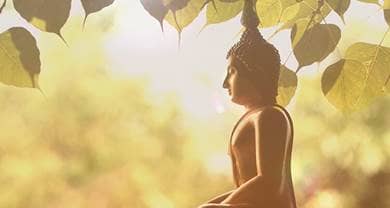
The Buddha image, thupa, wheel of the Dhamma, monastic robes and tonsure, bo tree, Buddhist flag, and other Theravada symbols represent Buddhism as a whole. Many of these symbols have characteristic regional forms, but not distinctively pan-Theravada forms.

Theravada Buddhism Ethics, Morality, Community

Theravada Buddhism Ethics, Morality, Community -- Theravada Buddhism Leadership/Clergy

Details

In some Theravada countries all ordained monks belong to a single national organization, while in others they do not. The governments of all Theravada nations play significant roles in the administration of the Sangha.

Theravada Buddhism Ethics, Morality, Community -- Theravada Buddhism Community Organization and Structure

Details

Traditionally religious leadership was exercised by monastics, although kings played important roles in the governance of the Sangha. Recent years have seen the rise of lay leaders and organizations as well as groups and individuals claiming a semi-monastic status.

Theravada Buddhism Ethics, Morality, Community -- Theravada Buddhism Principles of Moral Thought and Action

Details

Theravada includes many models for ethical reflection, including concepts of karma, understandings of the Buddhist path as a process of purification and perfection, and a concern with developing moral sentiments, such as loving kindness and devotion.

Theravada Buddhism Ethics, Morality, Community -- Theravada Buddhism Vision for Society

Details

Although the suttas reveal strongly utopian and countercultural themes, Theravada societies have developed a symbiotic relationship between Sangha and state in which the king is seen as the upholder of the Dhamma and the head of the Buddhist community.

Theravada Buddhism Ethics, Morality, Community -- Theravada Buddhism Gender and Sexuality

Details

Theravada holds that both women and men can become awakened, and a lineage of nuns existed until the 13th century or later. Today many women live as ascetics and there have been several attempts to reestablish nuns' ordination.

Recommended Theravada Buddhism Products

Shop More