Special Offers
Buddhist
Catholic
Contemplative
Evangelical
General Christian
Hindu
Jewish
Latter-day Saint
Muslim
New Visions
Progressive Christian
Beliefs
Buddhist
Catholic
Contemplative
Evangelical
General Christian
Hindu
Jewish
Latter-day Saint
More Voices
Muslim
New Visions
Pagan
Progressive Christian
Topics
Religion News
Food and Religion
Sports and Religion
Religious Art
Religious Music and Entertainment
Religious Events
History and Religion
Style and Religion
Politics and Religion
Women in Religion
Recreation Outdoors and Religion
Business Finance and Religion
Careers Workplace and Religion
Education and Religion
Family Parenting and Religion
Health Fitness and Religion
Home and Religion
Relationships and Religion
Technology and Religion
Travel and Religion
Columnists
Buddhist Columnists
Business Finance and Religion Columnists
Careers Workplace and Religion Columnists
Catholic Columnists
Contemplative Columnists
Education and Religion Columnists
Evangelists Columnists
Family Parenting and Religion Columnists
General Christian Columnists
Health Fitness and Religion Columnists
Hindu Columnists
History and Religion Columnists
Home and Religion Columnists
Jewish Columnists
More Voices Columnists
Latter Day Columnists
Muslim Columnists
New Visions Columnists
Nonreligious Columnists
Pagan Columnists
Politics and Religion Columnists
Progressive Columnists
Recreation Outdoors and Religion Columnists
Relationships and Religion Columnists
Religion News Columnists
Religious Art Columnists
Religious Events Columnists
Religious Music and Entertainment Columnists
Sports and Religion Columnists
Style and Religion Columnists
Technology and Religion Columnists
Travel and Religion Columnists
Women in Religion Columnists
Resource Library
2026 Calendar
Library of World Religions
The 100 Most Holy Places on Earth
Patheos Answers
Podcasts
Videos
Faith Leaders Database
Anglican Episcopalian
Bahai
Baptist
Buddhism
Christianity
Confucianism
Eastern Orthodoxy
Hinduism
Holiness and Pentecostal
ISKCON
Islam
Judaism
Lutheran
Methodist
The Church of Jesus Christ of Latter-day Saints
New Age
Paganism
Presbytarian and Reformed
Protestantism
Religion Behind the Scenes
Roman Catholic
Scientology
Shia Islam
Sikhism
Sufism
Sunni Islam
Taoism
Zen
See all religions
Research Tools
Comparison Lens
Preacher Resources
Teacher Resources
Video
Podcasts
Thought Readers
Faith In Media Tracker
E-Books and Other Special Offers
God's Cheat Sheet to Finances
Books of the Bible Study series
History of the Bible
7 Day Prayer Challenge for Spouses
A Different Kind of Christian
Jesus is Love
Prayer Devotional
The Saints We Love
FaithChatter Conversation Cards
Newsletters
Special Offers
Ad-Free & Subscriber Log-In
Subscription Support
Trending:
Forgiveness
|
Marriage
|
Afterlife
|
Trump
|
Pentecost
|
Deconstruction
RELIGION LIBRARY
Theravada Buddhism
Toggle navigation
Overview
Origins
History
Beliefs
Rituals and Worship
Ethics and Community
Sacred Time
The most auspicious times are the lifetimes of the Buddhas; second in auspiciousness are periods like the present in which a Buddha's religion remains in the world. Fortnightly and annual holidays focus on the Buddha, the Dhamma, and the Sangha.
Sacred Space
The sacred geography of the Buddha's north Indian homeland has been recreated in the Theravada countries through shrines that house relics or images of the Buddha or mark events in the history of Buddhism in those countries.
Rites and Ceremonies
Central components of Theravada rituals are preaching and chanting by monastics and giving offerings by laypersons. Rituals include the fortnightly uposatha observance, annual holidays such as Vesakha, and occasional rituals such as funerals and rites for the dead.
Worship and Devotion in Daily Life
Traditional daily observances for monastics include chanting, meditation, and observing the Vinaya. Traditional daily observances for laity are to observe the five precepts and to offer food to monastics, and in recent years meditation and devotional rituals have become regular practices for many laypersons.
Symbolism
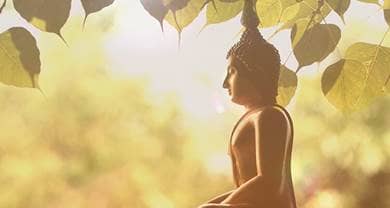
The Buddha image, thupa, wheel of the Dhamma, monastic robes and tonsure, bo tree, Buddhist flag, and other Theravada symbols represent Buddhism as a whole. Many of these symbols have characteristic regional forms, but not distinctively pan-Theravada forms.
Beliefs
Ethics and Community
Back to religion Library
editors picks
View All Columns
Evangelical
Before You Unplug or Sign Out for Good
Guest Contributor
Evangelical
What Is the Purpose of Spiritual Gifts, and How Do You Discover Yours?
Randy Alcorn
New Visions
5 Ways to Hear What God is Telling You
Tom Rapsas
Muslim
How Awake Are We? When Waking Up is Falling Asleep
Daniel Thomas Dyer
Latter-day Saint
"The Church supports the use of vaccinations"
Dan Peterson
Evangelical
Luther and the Beauty of Christ
Guest Contributor
Patheos
The Soul of Gospel Music Explored in New Netflix Series "Voices of Fire"
DeWayne Hamby
Patheos
Seven Ways to Think About Christian Mysticism
Carl McColman
Evangelical
Cancelling Alice Walker?
Philip Jenkins
Evangelical
Does God Have His Own Logic?
Roger E. Olson
Muslim
Imam Ali’s letter to the Governor- Everlasting Example of Good...
Ejaz Naqvi MD
Progressive Christian
Why Did Jesus Have To Die?
Keith Giles
Patheos
Explore the world's faith through different perspectives on religion and spirituality! Patheos has the views of the prevalent religions and spiritualities of the world.









 Ad-Free & Subscriber Log-In